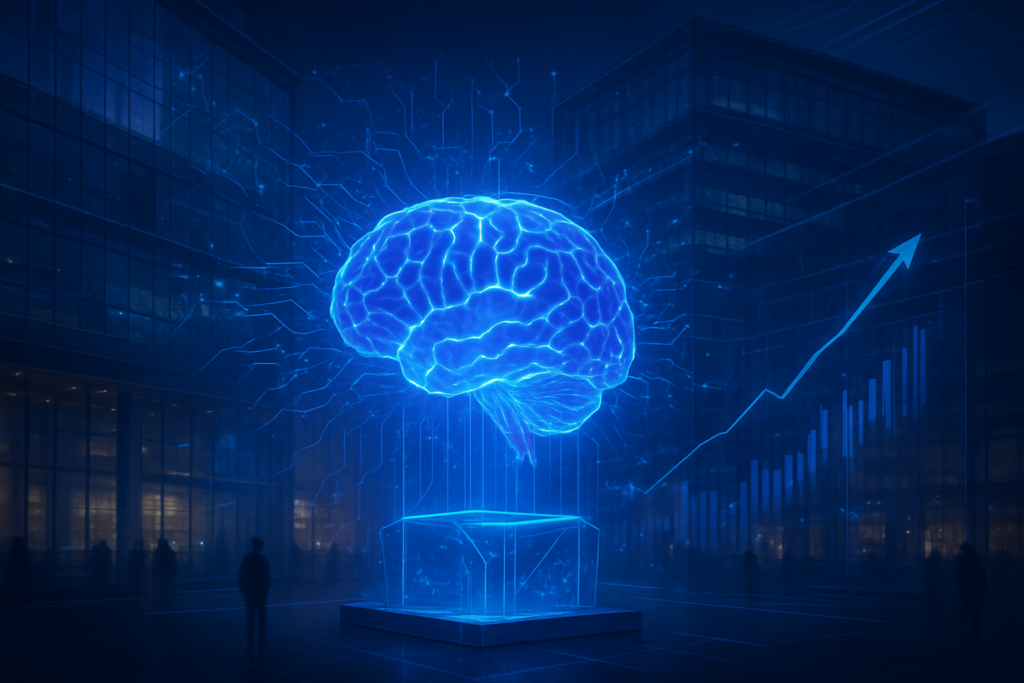
In a move that signals the transition of the generative AI era from speculative gold rush to institutional mainstay, Anthropic has reportedly begun formal preparations for an Initial Public Offering (IPO) slated for late 2026. Sources familiar with the matter indicate that the San Francisco-based AI safety leader has retained the prestigious Silicon Valley law firm Wilson Sonsini Goodrich & Rosati to spearhead the complex regulatory and corporate restructuring required for a public listing. The move comes as Anthropic’s valuation is whispered to have touched $350 billion following a massive $10 billion funding round in early January, positioning it as a potential cornerstone of the future S&P 500.
The decision to go public marks a pivotal moment for Anthropic, which was founded by former OpenAI executives with a mission to build "steerable" and "safe" artificial intelligence. By moving toward the public markets, Anthropic is not just seeking a massive infusion of capital to fund its multi-billion-dollar compute requirements; it is attempting to establish itself as the "blue-chip" standard for the AI industry. For an ecosystem that has been defined by rapid-fire research breakthroughs and massive private cash burns, Anthropic’s IPO preparations represent the first clear path toward financial maturity and public accountability for a foundation model laboratory.
Technical Prowess and the Road to Claude 4.5
The momentum for this IPO has been built on a series of technical breakthroughs throughout 2025 that transformed Anthropic from a research-heavy lab into a dominant enterprise utility. The late-2025 release of the Claude 4.5 model family—comprising Opus, Sonnet, and Haiku—introduced "extended thinking" capabilities that fundamentally changed how AI processes complex tasks. Unlike previous iterations that relied on immediate token prediction, Claude 4.5 utilizes an iterative reasoning loop, allowing the model to "pause" and use tools such as web search, local code execution, and file system manipulation to verify its own logic before delivering a final answer. This "system 2" thinking has made Claude 4.5 the preferred engine for high-stakes environments in law, engineering, and scientific research.
Furthermore, Anthropic’s introduction of the Model Context Protocol (MCP) in mid-2025 has created a standardized "plug-and-play" ecosystem for AI agents. By open-sourcing the protocol, Anthropic effectively locked in thousands of enterprise integrations, allowing Claude to act as a central "brain" that can seamlessly interact with diverse data sources and software tools. This technical infrastructure has yielded staggering financial results: the company’s annualized revenue run rate surged from $1 billion in early 2025 to over $9 billion by December, with projections for 2026 reaching as high as $26 billion. Industry experts note that while competitors have focused on raw scale, Anthropic’s focus on "agentic reliability" and tool-use precision has given it a distinct advantage in the enterprise market.
Shifting the Competitive Landscape for Tech Giants
Anthropic’s march toward the public markets creates a complex set of implications for its primary backers and rivals alike. Major investors such as Amazon (NASDAQ: AMZN) and Alphabet (NASDAQ: GOOGL) find themselves in a unique position; while they have poured billions into Anthropic to secure cloud computing contracts and AI integration for their respective platforms, a successful IPO would provide a massive liquidity event and validate their early strategic bets. However, it also means Anthropic will eventually operate with a level of independence that could see it competing more directly with the internal AI efforts of its own benefactors.
The competitive pressure is most acute for OpenAI and Microsoft (NASDAQ: MSFT). While OpenAI remains the most recognizable name in AI, its complex non-profit/for-profit hybrid structure has long been viewed as a hurdle for a traditional IPO. By hiring Wilson Sonsini—the firm that navigated the public debuts of Alphabet and LinkedIn—Anthropic is effectively attempting to "leapfrog" OpenAI to the public markets. If successful, Anthropic will establish the first public "valuation benchmark" for a pure-play foundation model company, potentially forcing OpenAI to accelerate its own corporate restructuring. Meanwhile, the move signals to the broader startup ecosystem that the window for "mega-scale" private funding may be closing, as the capital requirements for training next-generation models—estimated to exceed $50 billion for Anthropic’s next data center project—now necessitate the depth of public equity markets.
A New Era of Maturity for the AI Ecosystem
Anthropic’s IPO preparations represent a significant evolution in the broader AI landscape, moving the conversation from "what is possible" to "what is sustainable." As a Public Benefit Corporation (PBC) governed by a Long-Term Benefit Trust, Anthropic is entering the public market with a unique governance model designed to balance profit with AI safety. This "Safety-First" premium is increasingly viewed by institutional investors as a risk-mitigation strategy rather than a hindrance. In an era of increasing regulatory scrutiny from the SEC and global AI safety bodies, Anthropic’s transparent governance structure provides a more digestible narrative for public investors than the more opaque "move fast and break things" culture of its peers.
This move also highlights a growing divide in the AI startup ecosystem. While a handful of "sovereign" labs like Anthropic, OpenAI, and xAI are scaling toward trillion-dollar ambitions, smaller startups are increasingly pivoting toward the application layer or vertical specialization. The sheer cost of compute—highlighted by Anthropic’s recent $50 billion infrastructure partnership with Fluidstack—has created a high barrier to entry that only public-market levels of capital can sustain. Critics, however, warn of "dot-com" parallels, pointing to the $350 billion valuation as potentially overextended. Yet, unlike the 1990s, the revenue growth seen in 2025 suggests that the "AI bubble" may have a much firmer floor of enterprise utility than previous tech cycles.
The 2026 Roadmap and the Challenges Ahead
Looking toward the late 2026 listing, Anthropic faces several critical milestones. The company is expected to debut the Claude 5 architecture in the second half of the year, which is rumored to feature "meta-learning" capabilities—the ability for the model to improve its own performance on specific tasks over time without traditional fine-tuning. This development could further solidify its enterprise dominance. Additionally, the integration of "Claude Code" into mainstream developer workflows is expected to reach a $1 billion run rate by the time the IPO prospectus is filed, providing a clear "SaaS-like" predictability to its revenue streams that public market analysts crave.
However, the path to the New York Stock Exchange is not without significant hurdles. The primary challenge remains the cost of inference and the ongoing "compute war." To maintain its lead, Anthropic must continue to secure massive amounts of NVIDIA (NASDAQ: NVDA) H200 and Blackwell chips, or successfully transition to custom silicon solutions. There is also the matter of regulatory compliance; as a public company, Anthropic’s "Constitutional AI" approach will be under constant scrutiny. Any significant safety failure or "hallucination" incident could result in immediate and severe hits to its market capitalization, a pressure the company has largely been shielded from as a private entity.
Summary: A Benchmark Moment for Artificial Intelligence
The reported hiring of Wilson Sonsini and the formalization of Anthropic’s IPO path marks the end of the "early adopter" phase of generative AI. If the 2023-2024 period was defined by the awe of discovery, 2025-2026 is being defined by the rigor of industrialization. Anthropic is betting that its unique blend of high-performance reasoning and safety-first governance will make it the preferred AI stock for a new generation of investors.
As we move through the first quarter of 2026, the tech industry will be watching Anthropic’s S-1 filings with unprecedented intensity. The success or failure of this IPO will likely determine the funding environment for the rest of the decade, signaling whether AI can truly deliver on its promise of being the most significant economic engine since the internet. For now, Anthropic is leading the charge, transforming from a cautious research lab into a public-market titan that aims to define the very architecture of the 21st-century economy.
This content is intended for informational purposes only and represents analysis of current AI developments.
TokenRing AI delivers enterprise-grade solutions for multi-agent AI workflow orchestration, AI-powered development tools, and seamless remote collaboration platforms.
For more information, visit https://www.tokenring.ai/.