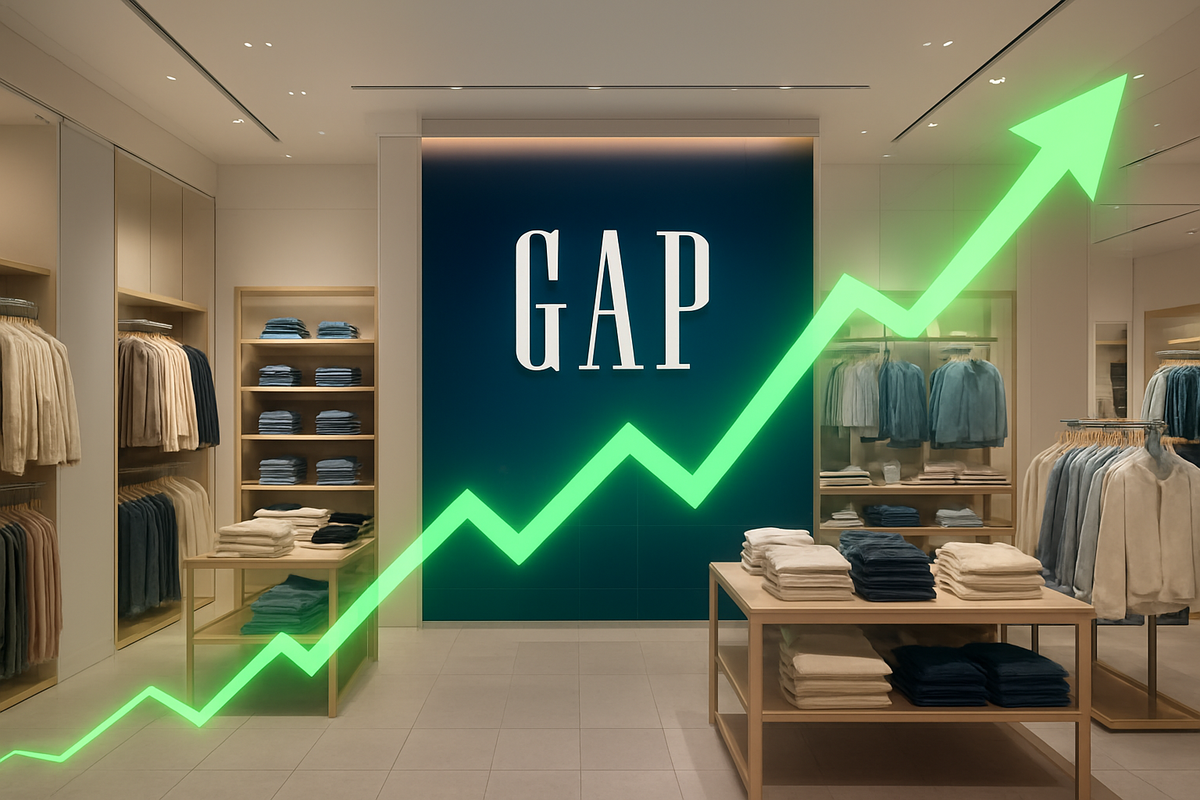
In a move that has sent ripples through the retail sector, UBS Group AG (NYSE: UBS) has officially upgraded Gap Inc. (NYSE: GAP) from "Neutral" to "Buy," signaling a robust vote of confidence in the apparel giant’s multi-year turnaround strategy. The upgrade, issued on January 8, 2026, comes with a substantial price target hike from $26 to $41, suggesting a projected upside of more than 50% from current trading levels. This bullish shift reflects a growing consensus among analysts that the company has finally reached a critical inflection point where operational stability is poised to transform into aggressive earnings growth.
The immediate market reaction has been palpably optimistic, as investors digest the implications of a legacy retailer successfully reinventing itself in a volatile macroeconomic environment. UBS analyst Jay Sole highlighted that the market is currently underestimating the scale of Gap’s "reinvigoration playbook," which has been spearheaded by CEO Richard Dickson. With the stock trading at a significant discount relative to its projected growth, the upgrade has positioned Gap as a top pick for the 2026 fiscal year.
A Turnaround Validated: The UBS Thesis
The upgrade is the culmination of a series of strategic maneuvers that began in late 2023 and gained significant momentum throughout 2025. According to the UBS report, Gap Inc. has successfully moved past its "inventory cleanup" phase, a period characterized by deep discounting and margin pressure. Instead, the company is now entering a phase of "accelerated growth," with UBS forecasting revenue to climb by 4.4% in fiscal year 2026, more than double the growth rate seen in the previous year.
Key to this inflection point is the stabilization of Gap’s four-brand portfolio. While Old Navy continues to serve as the company’s cash cow, the real story lies in the recovery of Athleta and the premium repositioning of Banana Republic. The UBS analysis points to seven consecutive quarters of positive comparable sales growth leading into early 2026 as proof that the "Dickson era" is delivering tangible results. Furthermore, the company’s recent Q3 earnings beat, which saw earnings per share (EPS) of $0.62 outperform consensus estimates, provided the fundamental floor necessary for UBS to issue its aggressive "Buy" rating.
The timeline of this resurgence is closely tied to the leadership of Richard Dickson, who joined from Mattel (NASDAQ: MAT) with a reputation for brand building. Under his tenure, Gap has transitioned from a fragmented group of apparel labels into a disciplined platform focused on cultural relevance and operational efficiency. Stakeholders, including major institutional investors and retail analysts, have noted that the company's discipline in cost management has allowed it to reinvest in high-margin categories, such as beauty and accessories, which are expected to be major growth drivers in the coming 18 months.
Winners and Losers in the Retail Shift
The primary winner of this upgrade is undoubtedly Gap Inc. itself, but the implications extend to its individual brands. Old Navy stands to benefit from improved supply chain efficiencies, while Athleta is expected to reclaim market share in the activewear space, a sector that has seen intense competition from players like Lululemon Athletica Inc. (NASDAQ: LULU). By stabilizing Athleta, Gap removes a significant drag on its consolidated margins, allowing the high-growth potential of its other divisions to shine through.
Conversely, competitors who have thrived during Gap’s years of stagnation may now face a more formidable rival. Companies like American Eagle Outfitters, Inc. (NYSE: AEO) and Abercrombie & Fitch Co. (NYSE: ANF) have enjoyed a period of dominance in the "mall-brand" category. However, as Gap recaptures consumer mindshare through celebrity partnerships and a refreshed aesthetic, these competitors may see their customer acquisition costs rise. Furthermore, the aggressive price target from UBS suggests that Gap may begin to trade at a premium valuation multiple, potentially drawing capital away from other retail stocks that have already peaked in their recovery cycles.
Logistics and technology partners are also poised to win. Gap’s recent multi-year partnership with Google Cloud, a subsidiary of Alphabet Inc. (NASDAQ: GOOGL), to integrate artificial intelligence into its supply chain and customer experience is a cornerstone of the UBS "Buy" thesis. This partnership is expected to drive long-term margin expansion, making Alphabet a silent beneficiary of Gap's digital transformation.
Broader Industry Trends and the "Reinvigoration Playbook"
Gap’s upgrade fits into a larger trend of legacy retailers utilizing "brand reinvigoration playbooks" to combat the rise of fast-fashion and direct-to-consumer startups. The success of Gap’s strategy serves as a blueprint for other struggling retail icons, demonstrating that a combination of disciplined inventory management, celebrity-led marketing, and high-margin category expansion can revive a stagnant brand. This mirrors the historical turnaround seen at Abercrombie & Fitch several years prior, providing a precedent for how a "Buy" upgrade can precede a massive multi-year rally.
The event also highlights the increasing importance of AI in the retail sector. Analysts are no longer just looking at same-store sales; they are looking at how companies leverage data to predict fashion trends and optimize markdowns. Gap’s pivot toward beauty and handbags—categories with traditionally higher margins and lower return rates than apparel—reflects a strategic move to insulate the business from the cyclicality of the clothing market. This diversification is likely to trigger similar strategic pivots among its peers as they look to shore up their own balance sheets.
From a regulatory and policy perspective, Gap’s recovery is a positive signal for the broader consumer economy. It suggests that despite inflationary pressures, American consumers are still willing to spend on "attainable luxury" and core wardrobe staples when the value proposition is clear. This resilience is a key indicator for the Federal Reserve and economic policymakers monitoring the health of the retail sector as a proxy for overall consumer confidence.
The Road Ahead: What to Expect in 2026
In the short term, investors should look for Gap to maintain its momentum through the upcoming spring and summer seasons. The stabilization of Athleta will be the most critical metric to watch in the next two quarters. If Athleta can return to double-digit growth, the UBS price target of $41 may prove to be conservative. Additionally, the initial rollout of the new beauty and handbag lines will provide a litmus test for whether Gap can successfully translate its brand equity into new, lucrative categories.
Long-term, the challenge for Gap will be sustaining its newfound operational discipline. Turnarounds are notoriously difficult to maintain once the initial "easy wins" of cost-cutting and inventory cleanup are exhausted. The company will need to prove that its AI-driven supply chain and marketing initiatives can deliver consistent results year-over-year. Strategic pivots toward international expansion, particularly in high-growth Asian markets, may also be on the horizon as the domestic business stabilizes.
The potential for a strategic acquisition also remains a possibility. With a strengthening balance sheet and a rising stock price, Gap could look to acquire smaller, digitally native brands to further bolster its portfolio and appeal to younger demographics. Conversely, if the company continues to outperform, it could once again become a target for private equity firms looking for stable, high-cash-flow retail assets.
Closing Thoughts for Investors
The UBS upgrade of Gap Inc. marks a definitive end to the company’s period of uncertainty and the beginning of what many hope will be a new era of growth. By raising its price target to $41 and identifying a clear sales and earnings inflection point, UBS has signaled that the "new Gap" is a force to be reckoned with. The combination of strong leadership under Richard Dickson, technological integration with Google Cloud, and a disciplined approach to brand management has created a compelling narrative for value and growth investors alike.
Moving forward, the market will be watching closely for any signs of slowing momentum. Key indicators will include quarterly comparable sales, the success of the Athleta brand's return to form, and the impact of new product categories on overall margins. While the retail sector remains inherently competitive and sensitive to economic shifts, Gap Inc. currently appears better positioned than it has been in over a decade to navigate these challenges and deliver significant returns to shareholders.
This content is intended for informational purposes only and is not financial advice.