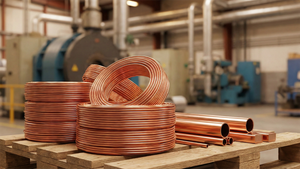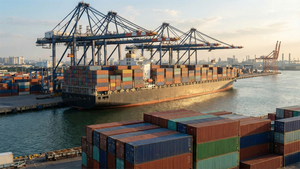
In a move that signals a tectonic shift in the global financial landscape, India has officially accelerated its mission to transform the Gujarat International Finance Tec-City (GIFT City) into a premier global commodity trading hub. As of January 2, 2026, the International Financial Services Centres Authority (IFSCA) has moved to implement a series of radical regulatory overhauls, most notably the formal notification of commodity trading as a "financial product." This reclassification is designed to consolidate the regulatory oversight of physical and derivative commodity markets under a single, unified framework, effectively "onshoring" the billions of dollars in trade that currently flow through international hubs like Singapore, Dubai, and London.
The implications of this shift are immediate and far-reaching. By treating commodity trading as a financial service within the tax-neutral environment of the GIFT-IFSC, India is positioning itself to capture the massive merchanting trade generated by its own status as one of the world's largest consumers of energy, metals, and agricultural products. For the first time, global trading giants and Indian conglomerates can manage their entire commodity lifecycle—from physical procurement and merchanting to complex derivatives hedging—within an Indian jurisdiction that offers international-standard ease of doing business and significant tax incentives.
The "Project ACE" Revolution: A New Regulatory Dawn
The current momentum is the culmination of a year-long strategic push known as "Project ACE" (Activating Commodity Trading Ecosystem). Initiated in May 2024, the project was spearheaded by an Expert Committee led by former Commerce Secretary Rajeev Kher. The committee’s landmark report, submitted in August 2025, provided the blueprint for the current overhaul. Central to this transformation is the transition to a "negative list" approach for commodities. Unlike the previous restrictive regime that permitted only specific commodities for trade, the new framework allows the trading of virtually any commodity unless explicitly prohibited, vastly expanding the market's scope.
The timeline leading to this moment has been rapid. Following the submission of the Project ACE report in late 2025, the IFSCA issued a series of Master Circulars in August 2025 to streamline capital market intermediaries. By December 2025, the government had cleared the path for INR-denominated invoicing for IFSC entities, a move that reduces foreign exchange risk for domestic participants. As of today, January 2, 2026, the updated IFSCA Act rules have come into full effect, granting the regulator the teeth to oversee merchanting trade—a domain previously entangled in the overlapping jurisdictions of the Reserve Bank of India (RBI) and the Directorate General of Foreign Trade (DGFT).
Key stakeholders, including the Ministry of Finance and the RBI, have aligned to grant GIFT-IFSC units "non-resident" status for foreign exchange purposes. This allows them to bypass the RBI’s restrictive merchanting trade rules, such as the mandatory nine-month transaction completion window and the prohibition on loss-making trades. These exemptions are critical for global trading houses that require high-velocity, high-volume trading capabilities to manage global supply chains.
Corporate Giants and Market Infrastructure: The Early Winners
The primary beneficiary of this regulatory shift is the Multi Commodity Exchange of India Ltd (NSE: MCX), which is expected to see a surge in international participation through its IFSC-based exchange. By providing a platform that mirrors global benchmarks but operates within the GIFT-IFSC's favorable tax regime, MCX is well-positioned to capture liquidity that was previously lost to the London Metal Exchange or COMEX. Similarly, the NSE International Exchange (NSEIX) and India INX (BSE) are poised to become the primary venues for this new wave of commodity-linked financial products.
India’s industrial heavyweights are already moving to capitalize on the new hub. The Adani Group, through Adani Energy Solutions Ltd (NSE: ADANIENSOL), incorporated ATSOL Global IFSC Limited in December 2025. This unit serves as a Global Treasury Centre, allowing the conglomerate to manage liquidity and hedge risks for its sprawling international ports and energy assets directly from GIFT City. Reliance Industries Ltd (NSE: RELIANCE) is also expected to be a major winner; the company’s massive oil and gas trading arm, which currently operates heavily out of Dubai and Singapore, now has a compelling reason to centralize its global operations in India to take advantage of the 25-year tax holiday proposed for IFSC units.
Public sector undertakings (PSUs) are also central to this transition. Companies like Oil and Natural Gas Corporation (NSE: ONGC), Indian Oil Corporation (NSE: IOC), Tata Steel Ltd (NSE: TATASTEEL), and NMDC Ltd (NSE: NMDC) were active participants in the Expert Committee. For these firms, the ability to hedge their massive import requirements at home—without the friction of cross-border capital controls—represents a significant reduction in operational costs and currency risk. Meanwhile, global trading giants like Vitol, Trafigura, and Glencore have begun scouting for office space in GIFT City, drawn by the "plug-and-play" infrastructure and a cost of operations that is significantly lower than that of their traditional hubs.
A Geopolitical Shift in Price Discovery
Beyond the immediate corporate gains, the push for a global commodity hub in GIFT-IFSC fits into a broader trend of "financial sovereignty." For decades, India has been a "price taker" in global markets, despite being a top consumer of commodities like gold, crude oil, and pulses. By establishing a robust trading hub, India aims to become a "price maker," shifting the center of gravity for price discovery to its own shores. This is particularly relevant for the "GIFT Nifty" model, which has already successfully migrated offshore liquidity from Singapore to India.
The regulatory move to notify commodity trading as a financial product mirrors successful models in Singapore and Dubai, where unified regulators provide a seamless interface for global traders. However, India offers a unique advantage: a massive domestic "hinterland" of consumption. Unlike Singapore, which is primarily a transit and financial hub, India is the end-destination for much of the world’s commodity trade. Integrating this physical demand with a sophisticated financial ecosystem creates a "sticky" liquidity pool that competitors may find hard to replicate.
Furthermore, this event marks a significant step in the internationalization of the Indian Rupee. By allowing INR-denominated invoicing and trading in the IFSC, India is creating a sandbox for the currency to be used in global trade settlements. This reduces the systemic dependency on the US Dollar for commodity transactions, aligning with the broader "de-dollarization" themes seen across emerging markets in recent years.
The Road Ahead: GSMC 2.0 and the 2047 Vision
The short-term focus for the IFSCA is the upcoming Global Securities Market Conclave (GSMC 2.0), scheduled for February 2026 in GIFT City. This event is expected to serve as the official "coming out party" for the commodity hub, where the first major licenses for Global/Regional Treasury and Commodity Trading Centres (GRCTCs) are likely to be announced. Investors should watch for the formal notification of the 25-year tax holiday, which would extend the current 10-year incentive and provide the long-term certainty required for multi-billion dollar trading desks to relocate permanently.
In the long term, the success of this initiative will depend on the seamless integration of the physical infrastructure—such as the India International Bullion Exchange (IIBX) and digital warehouse receipts—with the financial markets. The challenge will be to maintain a regulatory environment that is stringent enough to prevent market manipulation but flexible enough to compete with the "light-touch" regimes of rival hubs. If successful, the GIFT-IFSC could become the primary gateway for all commodity flows into and out of South Asia by 2030, fulfilling the government's "Viksit Bharat 2047" vision of a developed, self-reliant economy.
Market Outlook and Investor Takeaways
The transformation of GIFT-IFSC into a global commodity hub is no longer a theoretical exercise; it is an operational reality. For investors, the key takeaway is the emergence of a new asset class of "IFSC-linked" companies that will benefit from tax efficiencies and lower cost of capital. The immediate market to watch is the commodity derivatives space, where increased volume and liquidity are expected to drive valuations for exchange operators and financial service providers.
As we move through 2026, the primary indicators of success will be the volume of merchanting trade reported from GIFT City and the number of global trading houses that establish a physical presence. The transition from a domestic-focused market to a global hub will likely involve some growing pains, particularly regarding the synchronization of IFSC and domestic market rules. However, the strategic intent is clear: India is no longer content with just being a consumer; it intends to own the marketplace.
This content is intended for informational purposes only and is not financial advice.