The nature of cryptocurrency markets is volatile, and the rate of price fluctuations may introduce a high degree of both profit and risk. Volatility refers to the reaction to sudden macroeconomic news, fluctuations in investor sentiment, or liquidity shocks that increase market uncertainty. The slightest inconvenience in the order entry or cosmetic liquidity may lead to colossal losses in such periods. The structure of the exchanges and the localization of activities directly affect the way in which traders deal with these swings, where highly developed systems will offer stability and efficiency, but poorly developed systems will be prone to cascading liquidation. All exchanges do not necessarily survive extreme liquidity stress, or even normal operations, when the market is moving quickly.
Understanding Market Volatility in Crypto Derivatives
The volatility of cryptocurrency derivatives is influenced by a range of factors, including macroeconomic events, leverage, liquidity shocks, and abrupt sentiment shifts. Perpetual futures magnify such effects due to the leverage of traders; hence, even the slightest market fluctuations may result in enormous returns or losses. The stability of the exchange is needed during volatility spikes, when slippage may increase because of delays or system freezes, and where mispriced derivatives may cause unwanted liquidations. Credible derivatives systems should be able to provide quick processing and robust risk management to facilitate positions with minimal risk, even during market turbulence.
High Liquidity and Deep Order Books
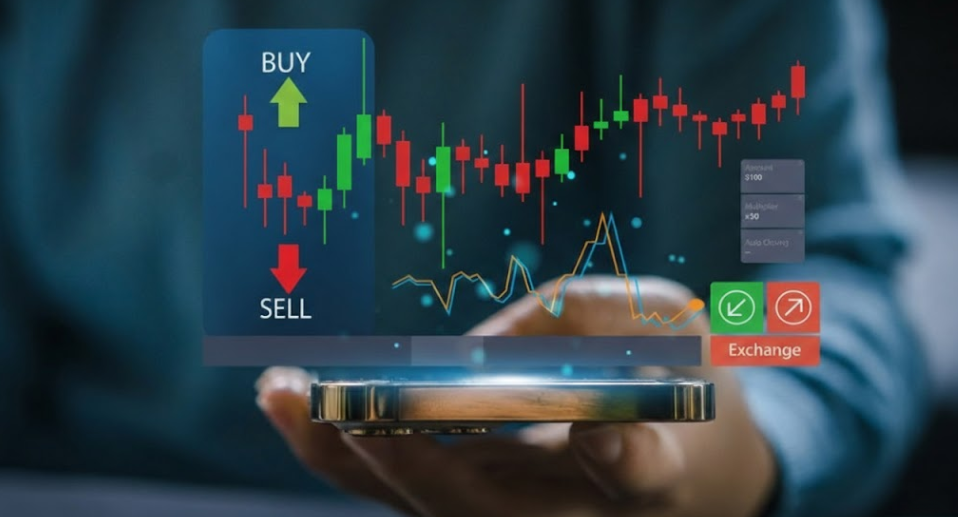
Large liquidity and deep books interest Zoomex Crypto Exchange, as these factors have a very low slippage and price impact in high-volume trading. Liquidity depth is the number of buy and sell orders at different price levels, which determines the accuracy of execution. Deep order books see to it that the trades do not result in sharp changes in price, even in high-volume cases. The aggregation of liquidity across trading pairs stabilizes prices, allowing traders to get in or out of a position with confidence. A very important feature of sustainable derivatives trading, particularly in volatile markets, is high liquidity and reliable execution, which reduces the risk of thin books.
Liquidity Performance Comparison Table
| Feature | High Liquidity Exchange | Low Liquidity Exchange | Trader Impact | Risk During Volatility |
| Order Book Depth | Thick multi-level bids and asks | Thin layered structure | Lower slippage | Reduced liquidation risk |
| Spread Width | Tight spreads | Wide spreads | Better entry pricing | Higher cost per trade |
| Market Impact | Minimal on large orders | Significant price distortion | Stable execution | Slippage spikes |
| Liquidation Cascade Risk | Lower due to depth | Higher due to gaps | Predictable behavior | Sudden volatility bursts |
| Price Stability | Reflects broader market | Isolated price deviations | Reliable indicators | Increased manipulation risk |
Advanced Risk Management Infrastructure
Risk management systems are advanced in volatile market exchanges to protect traders and maintain platform stability. Real-time risk engines are used to constantly monitor open positions and recalculate margin requirements to avoid unnecessary liquidations. The insurance funds and the process of auto-deleveraging offer security in the case when the positions are beyond the platform. Position management guidelines guarantee purposeful liquidations to reduce the ripple effects. This kind of infrastructure allows traders to cushion their exposure in the event of rapid market volatility, minimize the risk of unexpected losses, and provide them with security when trading large or leveraged markets, even in the most adverse of times.

Critical Risk Control Features
- Dynamic margin adjustment: This feature recalculates required margin as market volatility changes, preventing sudden liquidation events. It allows traders to maintain positions during temporary price shocks without compromising portfolio stability.
- Real-time liquidation alerts: Immediate notifications warn when margin levels approach critical thresholds. Traders can make proactive capital allocation decisions to protect positions.
- Cross and isolated margin options: Traders can manage risk at the portfolio level or limit exposure to individual positions. This flexibility prevents systemic losses and enhances strategic control.
- Transparent funding rate structure: Clearly defined costs for perpetual contracts reduce unexpected charges during volatile funding cycles, enabling predictable planning.
- Stable matching engine: Maintains high-speed order execution even during surges, ensuring system stability and preventing order backlogs or freezes.
Execution Speed and Matching Engine Performance
It has to be fast, especially in the cases of flash crash, and a latency under 10ms should prevent serious slippage. Late implementation exposes one to the risk of entering positions at an unacceptable price and thereby increasing losses. The matching is not disrupted during traffic bursts, and the system architecture effectively makes the right trading decisions. Low-latency interfaces allow traders to take advantage of temporary opportunities and maintain their portfolio constant even when markets are highly volatile. Platforms that lack an emphasis on speed might hamper strategic and responsive trading, especially when market conditions are unpredictable.
Multi-Layer Security in Turbulent Conditions
Security will never be overlooked in volatile markets as a means of raising funds and ensuring the integrity of the platform. Separating cold and hot wallets will ensure that the core reserves are not online and hence inaccessible to attackers. Multi-signature wallets require many approvals to transfer money, which is safer. Time-dependent abnormal patterns are recorded by monitors and alert to potential threats or manipulation. These measures, combined, strengthen defenses against cyber risks and enable liquidity for legitimate traders in the event of extreme market swings.
Diverse Trading Products to Hedge Volatility
The availability of various products allows traders to engage in hedging and strategic exposure. Long-term asset direct investment occurs via the spot markets. USDT perpetual contracts allow hedging the market without losing leverage. Coin-margined contracts are tied to a specific token and can be used to implement sophisticated strategies. Copy trading mimics the behavior of more seasoned traders and enables systematic trading in unstable environments. This diversity makes it more flexible, enabling risk coverage on a large scale and adaptation to changing circumstances.
How Zoomex Delivers Stability and Precision in Volatile Markets
Zoomex Crypto Exchange was established in 2021, and its team members have the most exchanges, which are speed-, security-, and liquidity-oriented. It has more than 590 perpetual contracts, a large order book, and minimal fees. No-KYC entry enables entry during market boom times. Response time on the interface is less than 10ms, thus allowing quick and correct performance. Multi-signature wallet infrastructure offers asset security and FINTRAC, AUSTRAC, and FinCEN licensing compliance. Traders are guided by integrated tutorials, and the official partnership with the Haas F1 Team guarantees accuracy, performance, and reliability.
Conclusion
Unpredictable markets value planning, infrastructure,, and consistent performance. Extreme price action cannot be navigated without features such as exchanges. Liquidity, security, and speed are the pillars of sustainable derivatives trading that enable risk control and benefit even in the event of radical market shifts. These factors are necessary to achieve the targeted performance and to protect capital where weaker systems can fail.