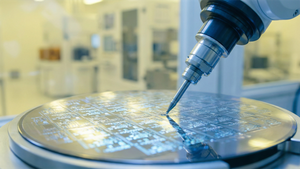
As of January 2026, the artificial intelligence industry has officially entered what architects are calling the "Era of Light." For years, the rapid advancement of Large Language Models (LLMs) was threatened by two looming physical barriers: the "memory wall"—the bottleneck where data cannot move fast enough between processors and memory—and the "copper wall," where traditional electrical wiring began to fail under the sheer volume of data required for trillion-parameter models. This week, a series of breakthroughs in Silicon Photonics (SiPh) and Optical I/O (Input/Output) have signaled the end of these constraints, effectively decoupling the physical location of hardware from its computational performance.
The shift is represented most poignantly by the mass commercialization of Co-Packaged Optics (CPO) and optical memory pooling. By replacing copper wires with laser-driven light signals directly on the chip package, industry giants have managed to reduce interconnect power consumption by over 70% while simultaneously increasing bandwidth density by a factor of ten. This transition is not merely an incremental upgrade; it is a fundamental architectural reset that allows data centers to operate as a single, massive "planet-scale" computer rather than a collection of isolated server racks.
The Technical Breakdown: Moving Beyond Electrons
The core of this advancement lies in the transition from pluggable optics to integrated optical engines. In the previous era, data was moved via copper traces on a circuit board to an optical transceiver at the edge of the rack. At the current 224 Gbps signaling speeds, copper loses its integrity after less than a meter, and the heat generated by electrical resistance becomes unmanageable. The latest technical specifications for January 2026 show that Optical I/O, pioneered by firms like Ayar Labs and Celestial AI (recently acquired by Marvell (NASDAQ: MRVL)), has achieved energy efficiencies of 2.4 to 5 picojoules per bit (pJ/bit), a staggering improvement over the 12–15 pJ/bit required by 2024-era copper systems.
Central to this breakthrough is the "Optical Compute Interconnect" (OCI) chiplet. Intel (NASDAQ: INTC) has begun high-volume manufacturing of these chiplets using its new glass substrate technology in Arizona. These glass substrates provide the thermal and physical stability necessary to bond photonic engines directly to high-power AI accelerators. Unlike previous approaches that relied on external lasers, these new systems feature "multi-wavelength" light sources that can carry terabits of data across a single fiber-optic strand with latencies below 10 nanoseconds.
Initial reactions from the AI research community have been electric. Dr. Arati Prabhakar, leading a consortium of high-performance computing (HPC) experts, noted that the move to optical fabrics has "effectively dissolved the physical boundaries of the server." By achieving sub-300ns latency for cross-rack communication, researchers can now train models with tens of trillions of parameters across "million-GPU" clusters without the catastrophic performance degradation that previously plagued large-scale distributed training.
The Market Landscape: A New Hierarchy of Power
This shift has created clear winners and losers in the semiconductor space. NVIDIA (NASDAQ: NVDA) has solidified its dominance with the unveiling of the Vera Rubin platform. The Rubin architecture utilizes NVLink 6 and the Spectrum-6 Ethernet switch, the latter of which is the world’s first to fully integrate Spectrum-X Ethernet Photonics. By moving to an all-optical backplane, NVIDIA has managed to double GPU-to-GPU bandwidth to 3.6 TB/s while significantly lowering the total cost of ownership for cloud providers by slashing cooling requirements.
Broadcom (NASDAQ: AVGO) remains the titan of the networking layer, now shipping its Tomahawk 6 "Davisson" switch in massive volumes. This 102.4 Tbps switch utilizes TSMC (NYSE: TSM) "COUPE" (Compact Universal Photonic Engine) technology, which heterogeneously integrates optical engines and silicon into a single 3D package. This integration has forced traditional networking companies like Cisco (NASDAQ: CSCO) to pivot aggressively toward silicon-proven optical solutions to avoid being marginalized in the AI-native data center.
The strategic advantage now belongs to those who control the "Scale-Up" fabric—the interconnects that allow thousands of GPUs to work as one. Marvell’s (NASDAQ: MRVL) acquisition of Celestial AI has positioned them as the primary provider of optical memory appliances. These devices provide up to 33TB of shared HBM4 capacity, allowing any GPU in a data center to access a massive pool of memory as if it were on its own local bus. This "disaggregated" approach is a nightmare for legacy server manufacturers but a boon for hyperscalers like Amazon and Google, who are desperate to maximize the utilization of their expensive silicon.
Wider Significance: Environmental and Architectural Rebirth
The rise of Silicon Photonics is about more than just speed; it is the industry’s most viable answer to the environmental crisis of AI energy consumption. Data centers were on a trajectory to consume an unsustainable percentage of global electricity by 2030. However, the 70% reduction in interconnect power offered by optical I/O provides a necessary "reset" for the industry’s carbon footprint. By moving data with light instead of heat-generating electrons, the energy required for data movement—which once accounted for 30% of a cluster’s power—has been drastically curtailed.
Historically, this milestone is being compared to the transition from vacuum tubes to transistors. Just as the transistor allowed for a scale of complexity that was previously impossible, Silicon Photonics allows for a scale of data movement that finally matches the computational potential of modern neural networks. The "Memory Wall," a term coined in the mid-1990s, has been the single greatest hurdle in computer architecture for thirty years. To see it finally "shattered" by light-based memory pooling is a moment that will likely define the next decade of computing history.
However, concerns remain regarding the "Yield Wars." The 3D stacking of silicon, lasers, and optical fibers is incredibly complex. As TSMC, Samsung (KOSPI: 005930), and Intel compete for dominance in these advanced packaging techniques, any slip in manufacturing yields could cause massive supply chain disruptions for the world's most critical AI infrastructure.
The Road Ahead: Planet-Scale Compute and Beyond
In the near term, we expect to see the "Optical-to-the-XPU" movement accelerate. Within the next 18 to 24 months, we anticipate the release of AI chips that have no electrical I/O whatsoever, relying entirely on fiber optic connections for both power delivery and data. This will enable "cold racks," where high-density compute can be submerged in dielectric fluid or specialized cooling environments without the interference caused by traditional copper cabling.
Long-term, the implications for AI applications are profound. With the memory wall removed, we are likely to see a surge in "long-context" AI models that can process entire libraries of data in their active memory. Use cases in drug discovery, climate modeling, and real-time global economic simulation—which require massive, shared datasets—will become feasible for the first time. The challenge now shifts from moving the data to managing the sheer scale of information that can be accessed at light speed.
Experts predict that the next major hurdle will be "Optical Computing" itself—using light not just to move data, but to perform the actual matrix multiplications required for AI. While still in the early research phases, the success of Silicon Photonics in I/O has proven that the industry is ready to embrace photonics as the primary medium of the information age.
Conclusion: The Light at the End of the Tunnel
The emergence of Silicon Photonics and Optical I/O represents a landmark achievement in the history of technology. By overcoming the twin barriers of the memory wall and the copper wall, the semiconductor industry has cleared the path for the next generation of artificial intelligence. Key takeaways include the dramatic shift toward energy-efficient, high-bandwidth optical fabrics and the rise of memory pooling as a standard for AI infrastructure.
As we look toward the coming weeks and months, the focus will shift from these high-level announcements to the grueling reality of manufacturing scale. Investors and engineers alike should watch the quarterly yield reports from major foundries and the deployment rates of the first "Vera Rubin" clusters. The era of the "Copper Data Center" is ending, and in its place, a faster, cooler, and more capable future is being built on a foundation of light.
This content is intended for informational purposes only and represents analysis of current AI developments.
TokenRing AI delivers enterprise-grade solutions for multi-agent AI workflow orchestration, AI-powered development tools, and seamless remote collaboration platforms.
For more information, visit https://www.tokenring.ai/.