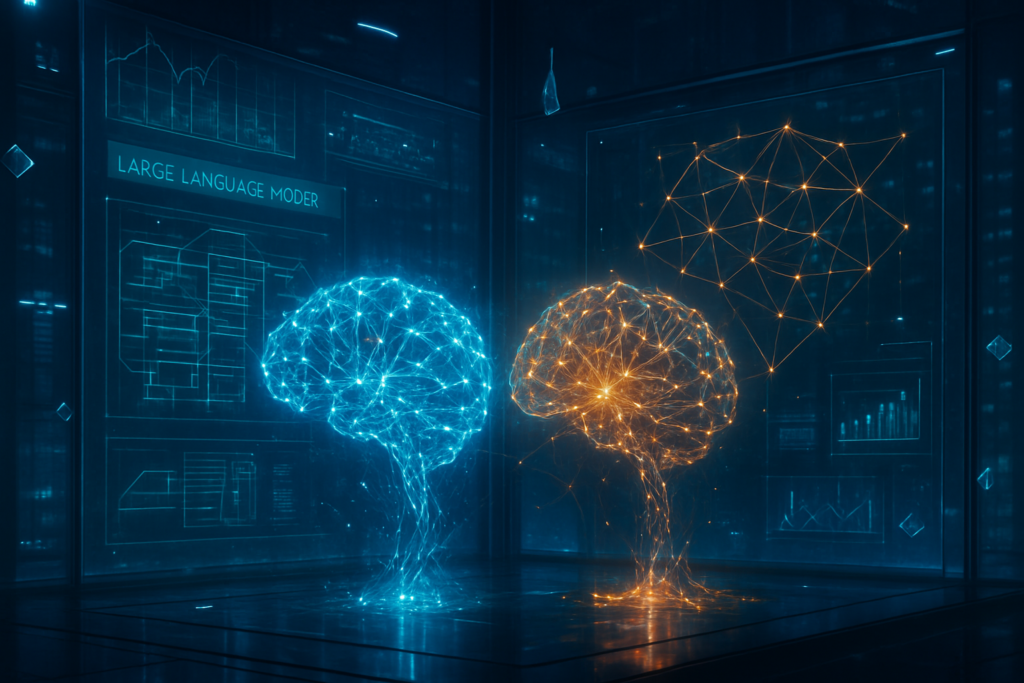
In a move that has sent shockwaves through the foundations of Silicon Valley’s established norms, Sequoia Capital has effectively ended the era of venture capital exclusivity. As of January 2026, the world’s most storied venture firm has transitioned from a cautious observer of the "AI arms race" to its primary financier, simultaneously anchoring massive funding rounds for both OpenAI and its chief rival, Anthropic. This strategy, which would have been considered a terminal conflict of interest just five years ago, marks a definitive shift in the global financial landscape: in the pursuit of Artificial General Intelligence (AGI), loyalty is no longer a virtue—it is a liability.
The scale of these investments is unprecedented. Sequoia’s decision to participate in Anthropic’s staggering $25 billion Series G round this month—valuing the startup at $350 billion—comes while the firm remains one of the largest shareholders in OpenAI, which is currently seeking a valuation of $830 billion in its own "AGI Round." By backing both entities alongside Elon Musk’s xAI, Sequoia is no longer just "picking a winner"; it is attempting to index the entire frontier of human intelligence.
From Exclusivity to Indexing: The Technical Tipping Point
The technical justification for Sequoia’s dual-investment strategy lies in the diverging specializations of the two AI titans. While both companies began with the goal of developing large language models (LLMs), their developmental paths have bifurcated significantly over the last year. Anthropic has leaned heavily into "Constitutional AI" and enterprise-grade reliability, recently launching "Claude Code," a specialized model suite that has become the industry standard for autonomous software engineering. Conversely, OpenAI has pivoted toward "agentic commerce" and consumer-facing AGI, leveraging its partnership with Microsoft (NASDAQ: MSFT) to integrate its models into every facet of the global operating system.
This divergence has allowed Sequoia to argue that the two companies are no longer direct competitors in the traditional sense, but rather "complementary pillars of a new internet architecture." In internal memos leaked earlier this month, Sequoia’s new co-stewards, Alfred Lin and Pat Grady, reportedly argued that the compute requirements for the next generation of models—exceeding $100 billion per cluster—are so high that the market can no longer be viewed through the lens of early-stage software startups. Instead, these companies are being treated as "sovereign-level infrastructure," more akin to competing utility companies or global aerospace giants than typical SaaS firms.
The industry reaction has been one of stunned pragmatism. While OpenAI CEO Sam Altman has historically been vocal about investor loyalty, the sheer capital requirements of 2026 have forced a "truce of necessity." Research communities note that the cross-pollination of capital, if not data, may actually stabilize the industry, preventing a "winner-takes-all" monopoly that could stifle safety research or lead to catastrophic market failures if one lab's architecture hits a scaling wall.
The Market Realignment: Exposure Over Information
The competitive implications of Sequoia’s move are profound, particularly for other major venture players like Andreessen Horowitz and Founders Fund. By abandoning the "one horse per race" rule, Sequoia has forced its peers to reconsider their own portfolios. If the most successful VC firm in history believes that backing a single AI lab is a fiduciary risk, then specialized AI funds may soon find themselves obsolete. This "index fund" approach to venture capital suggests that the upside of owning a piece of the AGI future is so high that the traditional benefits of a board seat—confidentiality and exclusive strategic influence—are worth sacrificing.
However, this strategy has come at a cost. To finalize its position in Anthropic’s latest round, Sequoia reportedly had to waive its information rights at OpenAI. In legal filings late last year, OpenAI stipulated that any investor with a "non-passive" stake in a direct competitor would be barred from sensitive technical briefings. Sequoia’s choice to prioritize "exposure over information" signals a belief that the financial returns of the sector will be driven by raw scaling and market capture rather than secret technical breakthroughs.
This shift also benefits the "Big Tech" incumbents. Companies like Nvidia (NASDAQ: NVDA), Alphabet (NASDAQ: GOOGL), and Amazon (NASDAQ: AMZN) now find themselves in a landscape where their venture partners are no longer acting as buffers between competitors, but as bridges. This consolidation of interest among the elite VC tier effectively creates a "G7 of AI," where a small group of investors and tech giants hold the keys to the most powerful technology ever created, regardless of which specific lab reaches the finish line first.
Loyalty is a Liability: The New Ethical Framework
The broader significance of this development cannot be overstated. For decades, the "Sequoia Way" was defined by the "Finix Precedent"—a 2020 incident where the firm forfeited a multi-million dollar stake in a startup because it competed with Stripe. The 2026 pivot represents the total collapse of that ethical framework. In the current landscape, "loyalty" to a single founder is seen as an antiquated sentiment that ignores the "Code Red" nature of the AI transition.
Critics argue that this creates a dangerous concentration of power. If the same group of investors owns the three or four major "brains" of the global economy, the competitive pressure to prioritize safety over speed could vanish. If OpenAI, Anthropic, and xAI are all essentially owned by the same syndicate, the "race to the bottom" on safety protocols becomes an internal accounting problem rather than a market-driven necessity.
Comparatively, this era mirrors the early days of the railroad or telecommunications monopolies, where the cost of entry was so high that competition eventually gave way to oligopolies supported by the same financial institutions. The difference here is that the "commodity" being traded is not coal or long-distance calls, but the fundamental ability to reason and create.
The Horizon: IPOs and the Sovereign Era
Looking ahead, the market is bracing for the "Great Unlocking" of late 2026 and 2027. Anthropic has already begun preparations for an initial public offering (IPO) with Wilson Sonsini, aiming for a listing that could dwarf any tech debut in history. OpenAI is rumored to be following a similar path, potentially restructuring its non-profit roots to allow for a direct listing.
The challenge for Sequoia and its peers will be managing the "exit" of these gargantuan bets. With valuations approaching the trillion-dollar mark while still in the private stage, the public markets may struggle to provide the necessary liquidity. We expect to see the rise of "AI Sovereign Wealth Funds," where nation-states directly participate in these rounds to ensure their own economic survival, further blurring the line between private venture capital and global geopolitics.
A Final Assessment: The Infrastructure of Intelligence
Sequoia’s decision to back both OpenAI and Anthropic is the final nail in the coffin of traditional venture capital. It is an admission that AI is not an "industry" but a fundamental shift in the substrate of civilization. The key takeaways for 2026 are clear: capital is no longer a tool for picking winners; it is a tool for ensuring survival in a post-AGI world.
As we move into the second half of the decade, the significance of this shift will become even more apparent. We are witnessing the birth of the "Infrastructure of Intelligence," where the competitive rivalries of founders are secondary to the strategic imperatives of their financiers. In the coming months, watch for other Tier-1 firms to follow Sequoia’s lead, as the "Loyalty is a Liability" mantra becomes the official creed of the Silicon Valley elite.
This content is intended for informational purposes only and represents analysis of current AI developments.
TokenRing AI delivers enterprise-grade solutions for multi-agent AI workflow orchestration, AI-powered development tools, and seamless remote collaboration platforms.
For more information, visit https://www.tokenring.ai/.