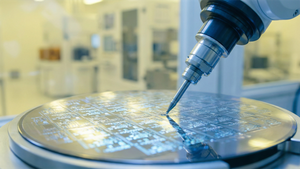
In a bold move to cement its position in the high-stakes artificial intelligence hardware race, Micron Technology (NASDAQ: MU) has announced a definitive agreement to acquire the P5 fabrication facility in Tongluo, Taiwan, from Powerchip Semiconductor Manufacturing Corp (TWSE: 6770) for $1.8 billion. This strategic acquisition, finalized in January 2026, is designed to drastically scale Micron’s production of High Bandwidth Memory (HBM), the critical specialized DRAM that powers the world’s most advanced AI accelerators and large language model (LLM) clusters.
The deal marks a pivotal shift for Micron as it transitions from a capacity-constrained challenger to a primary architect of the global AI supply chain. With the demand for HBM3E and the upcoming HBM4 standards reaching unprecedented levels, the acquisition of the 300,000-square-foot P5 cleanroom provides Micron with the immediate industrial footprint necessary to bypass the years-long lead times associated with greenfield factory construction. As the AI "supercycle" continues to accelerate, this $1.8 billion investment represents a foundational pillar in Micron’s quest to capture 25% of the HBM market share by the end of the year.
The Technical Edge: Solving the "Wafer Penalty"
The technical implications of the P5 acquisition center on the "wafer penalty" inherent to HBM production. Unlike standard DDR5 memory, HBM dies are significantly larger and require a more complex, multi-layered stacking process using Through-Silicon Vias (TSV). This architectural complexity means that producing HBM requires roughly three times the wafer capacity of traditional DRAM to achieve the same bit output. By taking over the P5 site—a facility that PSMC originally invested over $9 billion to develop—Micron gains a massive, ready-made environment to house its advanced "1-gamma" and "1-delta" manufacturing nodes.
The P5 facility is expected to be integrated into Micron’s existing Taiwan-based production cluster, which already includes its massive Taichung "megafab." This proximity allows for a streamlined logistics chain for the delicate HBM stacking process. While the transaction is expected to close in the second quarter of 2026, Micron is already planning to retool the facility for HBM4 production. HBM4, the next generational leap in memory technology, is projected to offer a 60% increase in bandwidth over current HBM3E standards and will utilize 2048-bit interfaces, necessitating the ultra-precise lithography and cleanroom standards that the P5 fab provides.
Initial reactions from the industry have been overwhelmingly positive, with analysts noting that the $1.8 billion price tag is exceptionally capital-efficient. Industry experts at TrendForce have pointed out that acquiring a "brownfield" site—an existing, modern facility—allows Micron to begin meaningful wafer output by the second half of 2027. This is significantly faster than the five-to-seven-year timeline required to build its planned $100 billion mega-site in New York from the ground up. Researchers within the semiconductor space view this as a necessary survival tactic in an era where HBM supply for 2026 is already reported as "sold out" across the entire industry.
Market Disruptions: Chasing the HBM Crown
The acquisition fundamentally redraws the competitive map for the memory industry, where Micron has historically trailed South Korean giants SK Hynix (KRX: 000660) and Samsung Electronics (KRX: 005930). Throughout 2024 and 2025, SK Hynix maintained a dominant lead, controlling nearly 57% of the HBM market due to its early and exclusive supply deals with NVIDIA (NASDAQ: NVDA). However, Micron’s aggressive expansion in Taiwan, which includes the 2024 purchase of AU Optronics (TWSE: 2409) facilities for advanced packaging, has seen its market share surge from a mere 5% to over 21% in just two years.
For tech giants like NVIDIA and Advanced Micro Devices (NASDAQ: AMD), Micron’s increased capacity is a welcome development that may ease the chronic supply shortages of AI GPUs like the Blackwell B200 and the upcoming Vera Rubin architectures. By diversifying the HBM supply chain, these companies gain more leverage in pricing and reduce their reliance on a single geographic or corporate source. Conversely, for Samsung, which has struggled with yield issues on its 12-high HBM3E stacks, Micron’s rapid scaling represents a direct threat to its traditional second-place standing in the global memory rankings.
The strategic advantage for Micron lies in its localized ecosystem in Taiwan. By centering its HBM production in the same geographic region as Taiwan Semiconductor Manufacturing Company (NYSE: TSM), the world’s leading chip foundry, Micron can more efficiently collaborate on CoWoS (Chip on Wafer on Substrate) packaging. This integration is vital because HBM is not a standalone component; it must be physically bonded to the AI processor. Micron’s move to own the manufacturing floor rather than leasing capacity ensures that it can maintain strict quality control and proprietary manufacturing techniques that are essential for the high-yield production of 12-layer and 16-layer HBM stacks.
The Global AI Landscape: From Code to Carbon
Looking at the broader AI landscape, the Micron-PSMC deal is a clear indicator that the "AI arms race" has moved from the software layer to the physical infrastructure layer. In the early 2020s, the focus was on model parameters and training algorithms; in 2026, the bottleneck is physical cleanroom space and the availability of high-purity silicon wafers. The acquisition fits into a larger trend of "reshoring" and "near-shoring" within the semiconductor industry, where proximity to downstream partners like TSMC and Foxconn (TWSE: 2317) is becoming a primary competitive advantage.
However, this consolidation of manufacturing power is not without its concerns. The heavy concentration of HBM production in Taiwan continues to pose a geopolitical risk, as any regional instability could theoretically halt the global supply of AI-capable hardware. Furthermore, the sheer capital intensity required to compete in the HBM market is creating a "winner-take-all" dynamic. With Micron spending billions to secure capacity that is already sold out years in advance, smaller memory manufacturers are being effectively locked out of the most profitable segment of the industry, potentially stifling innovation in alternative memory architectures.
In terms of historical milestones, this acquisition echoes the massive capital expenditures seen during the height of the mobile smartphone boom in the early 2010s, but on a significantly larger scale. The HBM market is no longer a niche segment of the DRAM industry; it is the primary engine of growth. Micron’s transformation into an AI-first company is now complete, as the company reallocates nearly all of its advanced research and development and capital expenditure toward supporting the demands of hyperscale data centers and generative AI workloads.
Future Horizons: The Road to HBM4 and PIM
In the near term, the industry will be watching for the successful closure of the deal in Q2 2026 and the subsequent retooling of the P5 facility. The next major milestone will be the transition to HBM4, which is expected to enter high-volume production later this year. This new standard will move the base logic die of the HBM stack from a memory process to a foundry process, requiring even closer collaboration between Micron and TSMC. If Micron can successfully navigate this technical transition while scaling the P5 fab, it could potentially overtake Samsung to become the world’s second-largest HBM supplier by 2027.
Beyond the immediate horizon, the P5 fab may also serve as a testing ground for experimental technologies like HBM4E and the integration of optical interconnects directly into the memory stack. As AI models continue to grow in size, the "memory wall"—the gap between processor speed and memory bandwidth—remains the greatest challenge for the industry. Experts predict that the next decade of AI development will be defined by "processing-in-memory" (PIM) architectures, where the memory itself performs basic computational tasks. The vast cleanroom space of the P5 fab provides Micron with the playground necessary to develop these next-generation hybrid chips.
Conclusion: A Definitive Stake in the AI Era
The acquisition of the P5 fab for $1.8 billion is more than a simple real estate transaction; it is a declaration of intent by Micron Technology. By securing one of the most modern fabrication sites in Taiwan, Micron has effectively bought its way to the front of the AI hardware revolution. The deal addresses the critical need for wafer capacity, positions the company at the heart of the world’s most advanced semiconductor ecosystem, and provides a clear roadmap for the rollout of HBM4 and beyond.
As the transaction moves toward its close in the coming months, the key takeaways are clear: the AI supercycle shows no signs of slowing down, and the battle for dominance is being fought in the cleanrooms of Taiwan. For investors and industry watchers, the focus will now shift to Micron’s ability to execute on its aggressive production targets and its capacity to maintain yields as HBM stacks become increasingly complex. In the historical narrative of artificial intelligence, the January 2026 acquisition of the P5 fab may well be remembered as the moment Micron secured its seat at the table of the AI elite.
This content is intended for informational purposes only and represents analysis of current AI developments.
TokenRing AI delivers enterprise-grade solutions for multi-agent AI workflow orchestration, AI-powered development tools, and seamless remote collaboration platforms.
For more information, visit https://www.tokenring.ai/.