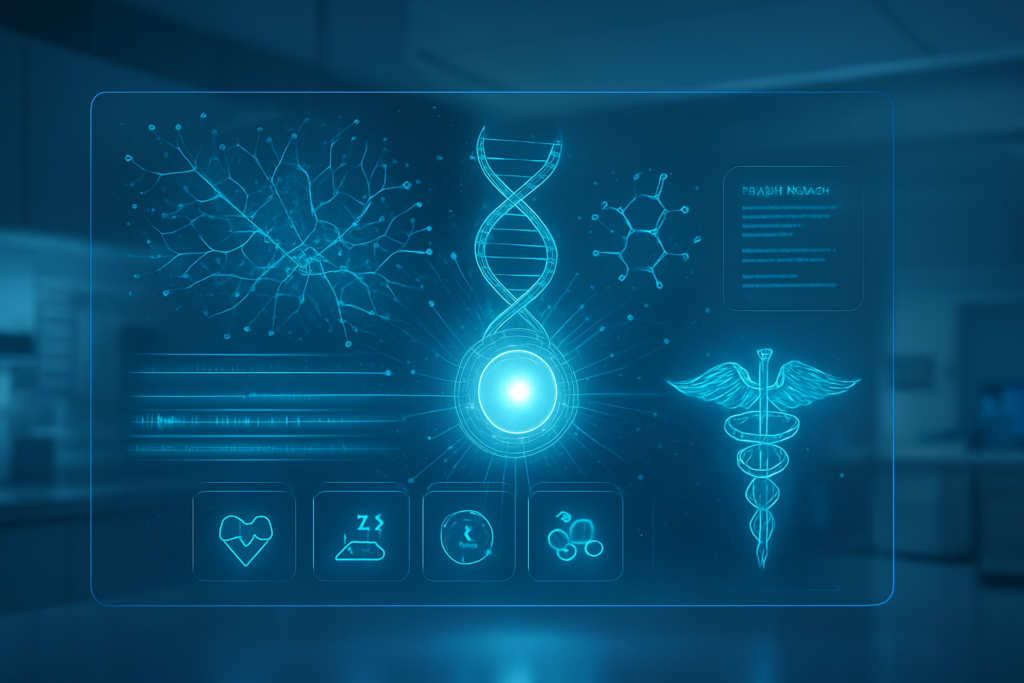
SAN FRANCISCO — In a move that signals the "Great Verticalization" of the artificial intelligence sector, Anthropic has officially launched its highly anticipated Claude for Healthcare and Claude for Lifesciences suites. Announced during the opening keynote of the 2026 J.P. Morgan Healthcare Conference, the new specialized offerings represent Anthropic’s most aggressive move toward industry-specific AI to date. By combining a "safety-first" architecture with deep, native hooks into the most critical medical repositories in the world, Anthropic is positioning itself as the primary clinical co-pilot for a global healthcare system buckling under administrative weight.
The announcement comes at a pivotal moment for the industry, as healthcare providers move beyond experimental pilots into large-scale deployments of generative AI. Unlike previous iterations of general-purpose models, Anthropic’s new suites are built on a bedrock of compliance and precision. By integrating directly with the Centers for Medicare & Medicaid Services (CMS) coverage database, PubMed, and consumer platforms like Apple Health (NASDAQ: AAPL) and Android Health Connect from Alphabet (NASDAQ: GOOGL), Anthropic is attempting to close the gap between disparate data silos that have historically hampered both clinical research and patient care.
At the heart of the launch is the debut of Claude Opus 4.5, a model specifically refined for medical reasoning and high-stakes decision support. This new model introduces an "extended thinking" mode designed to reduce hallucinations—a critical requirement for any tool interacting with patient lives. Anthropic’s new infrastructure is fully HIPAA-ready, enabling the company to sign Business Associate Agreements (BAAs) with hospitals and pharmaceutical giants alike. Under these agreements, patient data is strictly siloed and, crucially, is never used to train Anthropic’s foundation models, a policy designed to alleviate the privacy concerns that have stalled AI adoption in clinical settings.
The technical standout of the launch is the introduction of Native Medical Connectors. Rather than relying on static training data that may be months out of date, Claude can now execute real-time queries against the PubMed biomedical literature database and the CMS coverage database. This allows the AI to verify whether a specific procedure is covered by a patient’s insurance policy or to provide the latest evidence-based treatment protocols for rare diseases. Furthermore, the model has been trained on the ICD-10 and NPI Registry frameworks, allowing it to automate complex medical billing, coding, and provider verification tasks that currently consume billions of hours of human labor annually.
Industry experts have been quick to note the technical superiority of Claude’s context window, which has been expanded to 64,000 tokens for the healthcare suite. This allows the model to "read" and synthesize entire patient histories, thousands of pages of clinical trial data, or complex regulatory filings in a single pass. Initial benchmarks released by Anthropic show that Claude Opus 4.5 achieved a 94% accuracy rate on MedQA (medical board-style questions) and outperformed competitors in MedCalc, a benchmark specifically focused on complex medical dosage and risk calculations.
This strategic launch places Anthropic in direct competition with Microsoft (NASDAQ: MSFT), which has leveraged its acquisition of Nuance to dominate clinical documentation, and Google (NASDAQ: GOOGL), whose Med-PaLM and Med-Gemini models have long set the bar for medical AI research. However, Anthropic is positioning itself as the "Switzerland of AI"—a neutral, safety-oriented layer that does not own its own healthcare network or pharmacy, unlike Amazon (NASDAQ: AMZN), which operates One Medical. This neutrality is a strategic advantage for health systems that are increasingly wary of sharing data with companies that might eventually compete for their patients.
For the life sciences sector, the new suite integrates with platforms like Medidata (a brand of Dassault Systèmes) to streamline clinical trial operations. By automating the recruitment process and drafting regulatory submissions for the FDA, Anthropic claims it can reduce the "time to trial" for new drugs by up to 20%. This poses a significant challenge to specialized AI startups that have focused solely on the pharmaceutical pipeline, as Anthropic’s general-reasoning capabilities, paired with these new native medical connectors, offer a more versatile and consolidated solution for enterprise customers.
The inclusion of consumer health integrations with Apple and Google wearables further complicates the competitive landscape. By allowing users to securely port their heart rate, sleep cycles, and activity data into Claude, Anthropic is effectively building a "Personal Health Intelligence" layer. This moves the company into a territory currently contested by OpenAI, whose ChatGPT Health initiatives have focused largely on the consumer experience. While OpenAI leans toward the "health coach" model, Anthropic is leaning toward a "clinical bridge" that connects the patient’s watch to the doctor’s office.
The broader significance of this launch lies in its potential to address the $1 trillion administrative burden currently weighing down the U.S. healthcare system. By automating prior authorizations, insurance coverage verification, and medical coding, Anthropic is targeting the "back office" inefficiencies that lead to physician burnout and delayed patient care. This shift from AI as a "chatbot" to AI as an "orchestrator" of complex medical workflows marks a new era in the deployment of large language models.
However, the launch is not without its controversies. Ethical AI researchers have pointed out that while Anthropic’s "Constitutional AI" approach seeks to align the model with clinical ethics, the integration of consumer data from Apple Health and Android Health Connect raises significant long-term privacy questions. Even with HIPAA compliance, the aggregation of minute-by-minute biometric data with clinical records creates a "digital twin" of a patient that could, if mismanaged, lead to new forms of algorithmic discrimination in insurance or employment.
Comparatively, this milestone is being viewed as the "GPT-4 moment" for healthcare—a transition from experimental technology to a production-ready utility. Just as the arrival of the browser changed how medical information was shared in the 1990s, the integration of native medical databases into a high-reasoning AI could fundamentally change the speed at which clinical knowledge is applied at the bedside.
Looking ahead, the next phase of development for Claude for Healthcare is expected to involve multi-modal diagnostic capabilities. While the current version focuses on text and data, insiders suggest that Anthropic is working on native integrations for DICOM imaging standards, which would allow Claude to interpret X-rays, MRIs, and CT scans alongside patient records. This would bring the model into closer competition with Google’s specialized diagnostic tools and represent a leap toward a truly holistic medical AI.
Furthermore, the industry is watching closely to see how regulatory bodies like the FDA will react to "agentic" AI in clinical settings. As Claude begins to draft trial recruitment plans and treatment recommendations, the line between an administrative tool and a medical device becomes increasingly blurred. Experts predict that the next 12 to 18 months will see a landmark shift in how the FDA classifies and regulates high-reasoning AI models that interact directly with the electronic health record (EHR) ecosystem.
Anthropic’s launch of its Healthcare and Lifesciences suites represents a maturation of the AI industry. By focusing on HIPAA-ready infrastructure and native connections to the most trusted databases in medicine—PubMed and CMS—Anthropic has moved beyond the "hype" phase and into the "utility" phase of artificial intelligence. The integration of consumer wearables from Apple and Google signifies a bold attempt to create a unified health data ecosystem that serves both the patient and the provider.
The key takeaway for the tech industry is clear: the era of general-purpose AI dominance is giving way to a new era of specialized, verticalized intelligence. As Anthropic, OpenAI, and Google battle for control of the clinical desktop, the ultimate winner may be the healthcare system itself, which finally has the tools to manage the overwhelming complexity of modern medicine. In the coming weeks, keep a close watch on the first wave of enterprise partnerships, as major hospital networks and pharmaceutical giants begin to announce their transition to Claude’s new medical backbone.
This content is intended for informational purposes only and represents analysis of current AI developments.
TokenRing AI delivers enterprise-grade solutions for multi-agent AI workflow orchestration, AI-powered development tools, and seamless remote collaboration platforms. For more information, visit https://www.tokenring.ai/.