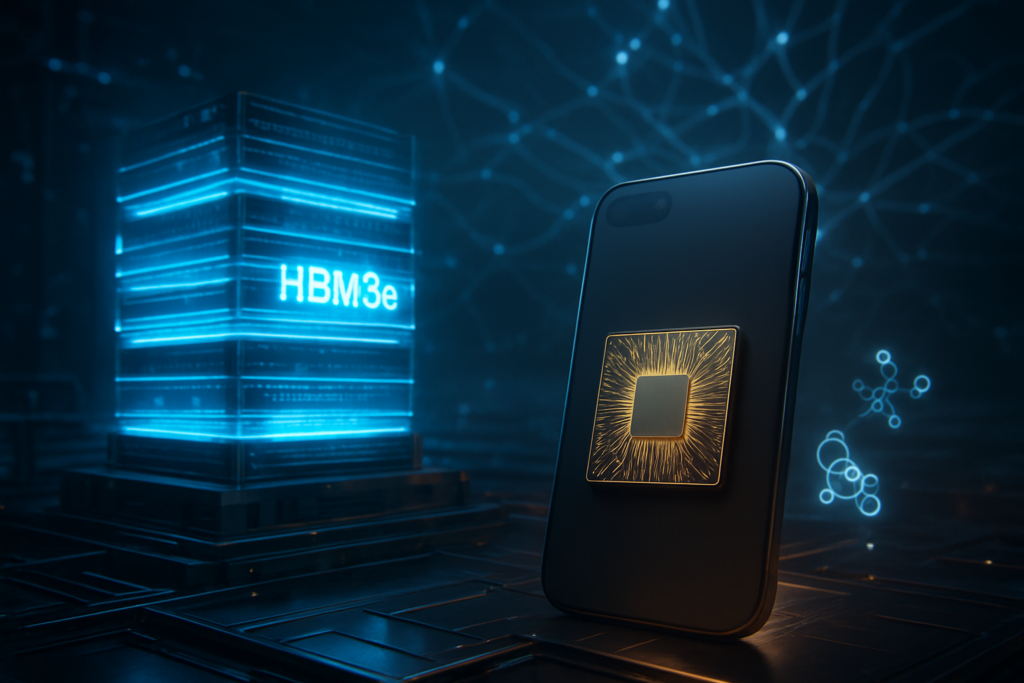
As of late 2025, the global semiconductor landscape has undergone a seismic shift, driven by the insatiable demand for High Bandwidth Memory (HBM3e) in AI data centers. This "Great Memory Capacity Pivot" has seen industry leaders SK Hynix (KRX: 000660) and Micron Technology (NASDAQ: MU) aggressively reallocate their production lines to serve the AI boom, inadvertently creating a massive supply vacuum in the mobile DRAM market. This strategic retreat by two of the "Big Three" memory makers has allowed Samsung Electronics (KRX: 005930) to step in as the primary, and in some cases exclusive, memory supplier for Apple (NASDAQ: AAPL) and its latest iPhone 17 and upcoming iPhone 18 lineups.
The significance of this development cannot be overstated. For years, Apple has maintained a diversified supply chain, meticulously balancing orders between the three major memory manufacturers to ensure competitive pricing and supply stability. However, the technical complexity and high profit margins of HBM3e have forced a choice: fuel the world’s AI supercomputers or support the next generation of consumer electronics. By choosing the former, SK Hynix and Micron have fundamentally altered the economics of the smartphone market, leaving Samsung to reap the rewards of its massive fabrication scale and commitment to mobile innovation.
The Technical Trade-off: HBM3e vs. Mobile DRAM
The manufacturing reality of HBM3e is the primary catalyst for this shift. High Bandwidth Memory is not just another chip; it is a complex stack of DRAM dies connected via Through-Silicon Vias (TSVs). Industry data from late 2024 and throughout 2025 reveals a punishing "wafer capacity trade-off." For every single bit of HBM produced, approximately three bits of standard mobile DRAM (LPDDR) capacity are lost. This 3:1 ratio is a result of the lower yields associated with vertical stacking and the sheer amount of silicon required for the advanced packaging of HBM3e, which is currently the backbone of Nvidia (NASDAQ: NVDA) Blackwell and Hopper architectures.
While SK Hynix and Micron pivoted their "wafer starts" toward these high-margin AI contracts, Samsung utilized its unparalleled production capacity to refine the LPDDR5X technology required for modern smartphones. The technical specifications of the memory found in the recently released iPhone 17 Pro are a testament to this focus. Samsung developed an ultra-thin LPDDR5X module measuring just 0.65mm—the thinnest in the industry. This engineering feat was essential for Apple's design goals, particularly for the rumored "iPhone 17 Air" model, which demanded a reduction in internal component height without sacrificing performance.
Initial reactions from hardware analysts suggest that Samsung’s technical edge in mobile DRAM has never been sharper. Beyond the thinness, the new 12GB LPDDR5X modules offer a 21.2% improvement in thermal resistance and a 25% reduction in power consumption compared to previous generations. These metrics are critical for "Apple Intelligence," the suite of on-device AI features that requires constant, high-speed memory access, which traditionally generates significant heat and drains battery life.
Strategic Realignment: Samsung’s Market Dominance
The strategic implications of this pivot are profound. By late 2025, reports indicate that Samsung has secured an unprecedented 60% to 70% of the memory orders for the iPhone 17 series. This dominance is expected to persist into the iPhone 18 cycle, as Apple has already requested large-scale supply commitments from the South Korean giant. For Samsung, this represents a major victory in its multi-year effort to regain market share lost during previous semiconductor cycles.
For SK Hynix and Micron, the decision to prioritize HBM3e was a calculated gamble on the longevity of the AI infrastructure boom. While they are currently enjoying record profits from AI server contracts, their reduced presence in the mobile market has weakened their leverage with Apple. This has led to a "RAM crisis" in the consumer sector; as supply dwindled, the cost of 12GB LPDDR5X modules surged from approximately $30 in early 2025 to nearly $70 by the end of the year. Apple, sensing this volatility, moved early to lock in Samsung’s capacity, effectively insulating itself from the worst of the price hikes while leaving competitors to scramble for remaining supply.
This disruption extends beyond just Apple. Startups and smaller smartphone manufacturers are finding it increasingly difficult to source high-specification DRAM, as the majority of the world's supply is now split between AI data centers and a few elite consumer electronics contracts. Samsung’s ability to serve both markets—albeit with a heavier focus on mobile for Apple—positions them as the ultimate gatekeeper of the "On-Device AI" era.
The Wider Significance: On-Device AI and the Memory Wall
The "Great Memory Capacity Pivot" fits into a broader trend where memory, rather than raw processing power, has become the primary bottleneck for AI. As "Apple Intelligence" matures, the demand for RAM has skyrocketed. The iPhone 17 Pro’s jump to 12GB of RAM was a direct response to the requirements of running large language models (LLMs) natively on the device. Without this memory overhead, the sophisticated generative AI features promised by Apple would be forced to rely on cloud processing, compromising privacy and latency.
This shift mirrors previous milestones in the AI landscape, such as the transition from CPU to GPU training. Now, the industry is hitting a "memory wall," where the ability to store and move data quickly is more important than the speed of the calculation itself. The scarcity of mobile DRAM caused by the HBM boom highlights a growing tension between centralized AI (the cloud) and decentralized AI (on-device). As more companies attempt to follow Apple’s lead in bringing GenAI to the pocket, the strain on global memory production will only intensify.
There are growing concerns about the long-term impact of this supply chain concentration. With Samsung holding such a large portion of the mobile DRAM market, any manufacturing hiccup or geopolitical tension in the region could have catastrophic effects on the global electronics industry. Furthermore, the rising cost of memory is likely to be passed on to consumers, potentially making high-end, AI-capable smartphones a luxury inaccessible to many.
Future Horizons: iPhone 18 and LPDDR6
Looking ahead to 2026, the roadmap for the iPhone 18 suggests an even deeper integration of Samsung’s memory technology. Early supply chain leaks from the spring of 2025 indicate that Apple is planning a move to a six-channel LPDDR5X configuration for the iPhone 18. This architecture would drastically increase memory bandwidth, potentially allowing for the native execution of even larger and more complex AI models that currently require "Private Cloud Compute."
The industry is also closely watching the development of LPDDR6. While LPDDR5X is the current standard, the next generation of mobile memory is expected to enter mass production by late 2026. Experts predict that Samsung will use its current momentum to lead the LPDDR6 transition, further cementing its role as the primary partner for Apple’s long-term AI strategy. However, the challenge remains: as long as HBM3e and its successors (like HBM4) continue to offer higher margins, the tension between AI servers and consumer devices will persist.
The next few months will be critical as manufacturers begin to finalize their 2026 production schedules. If the AI boom shows any signs of cooling, SK Hynix and Micron may attempt to pivot back to mobile DRAM, but by then, Samsung’s technological and contractual lead may be insurmountable.
Summary and Final Thoughts
The "Great Memory Capacity Pivot" represents a fundamental restructuring of the semiconductor industry. Driven by the explosive growth of AI, the shift of manufacturing resources toward HBM3e has created a vacuum that Samsung has expertly filled, securing its position as the primary architect of Apple’s mobile memory future. The iPhone 17 and 18 are not just smartphones; they are the first generation of devices born from a world where memory is the most precious commodity in tech.
The key takeaways from this shift are clear:
- Samsung’s Dominance: By maintaining mobile DRAM scale while others pivoted to HBM, Samsung has secured 60-70% of the iPhone 17/18 memory supply.
- The AI Tax: The 3:1 production trade-off between HBM and DRAM has led to a significant price increase for high-end mobile RAM.
- On-Device AI Requirements: The move to 12GB of RAM and advanced six-channel architectures is a direct result of the "Apple Intelligence" push.
As we move into 2026, the industry will be watching to see if Samsung can maintain this dual-track success or if the sheer weight of AI demand will eventually force even them to choose between the data center and the smartphone. For now, the "Great Memory Capacity Pivot" has a clear winner, and its name is etched onto the 12GB modules inside the latest iPhones.
This content is intended for informational purposes only and represents analysis of current AI developments.
TokenRing AI delivers enterprise-grade solutions for multi-agent AI workflow orchestration, AI-powered development tools, and seamless remote collaboration platforms.
For more information, visit https://www.tokenring.ai/.