Financial technology platform Intuit (NASDAQ: INTU) reported revenue ahead of Wall Street’s expectations in Q4 CY2025, with sales up 17.4% year on year to $4.65 billion. The company expects next quarter’s revenue to be around $8.54 billion, close to analysts’ estimates. Its non-GAAP profit of $4.15 per share was 12.7% above analysts’ consensus estimates.
Is now the time to buy Intuit? Find out by accessing our full research report, it’s free.
Intuit (INTU) Q4 CY2025 Highlights:
- Revenue: $4.65 billion vs analyst estimates of $4.54 billion (17.4% year-on-year growth, 2.5% beat)
- Adjusted EPS: $4.15 vs analyst estimates of $3.68 (12.7% beat)
- Adjusted Operating Income: $1.55 billion vs analyst estimates of $1.39 billion (33.3% margin, 11.1% beat)
- The company reconfirmed its revenue guidance for the full year of $21.09 billion at the midpoint
- Management reiterated its full-year Adjusted EPS guidance of $23.08 at the midpoint
- Operating Margin: 18.4%, up from 15% in the same quarter last year
- Free Cash Flow Margin: 32.8%, up from 15.4% in the previous quarter
- Billings: $4.75 billion at quarter end, up 15.8% year on year
- Market Capitalization: $106.1 billion
Company Overview
Originally named after its founding product "Intuitive for the first-time user," Intuit (NASDAQ: INTU) provides financial management software and services including TurboTax, QuickBooks, Credit Karma, and Mailchimp to help consumers and small businesses manage their finances.
Revenue Growth
A company’s long-term sales performance is one signal of its overall quality. Any business can put up a good quarter or two, but many enduring ones grow for years. Luckily, Intuit’s sales grew at a decent 21.1% compounded annual growth rate over the last five years. Its growth was slightly above the average software company and shows its offerings resonate with customers.
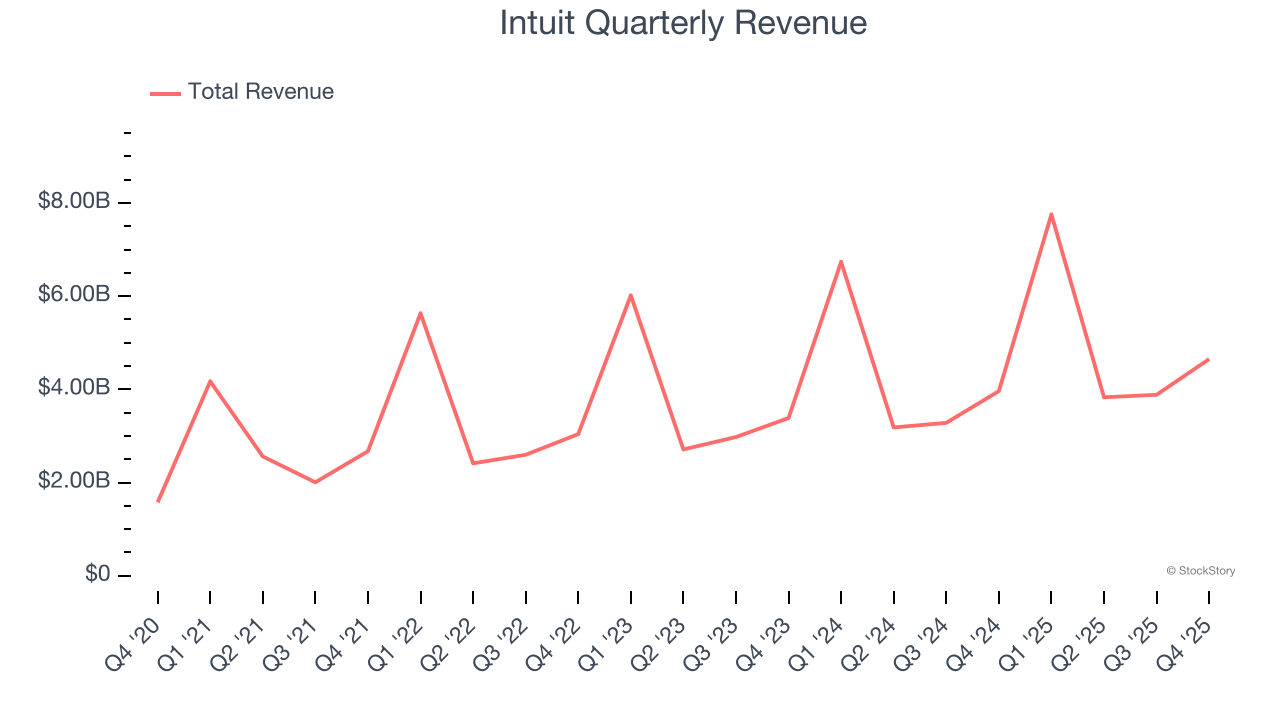
We at StockStory place the most emphasis on long-term growth, but within software, a half-decade historical view may miss recent innovations or disruptive industry trends. Intuit’s annualized revenue growth of 15.5% over the last two years is below its five-year trend, but we still think the results were respectable. 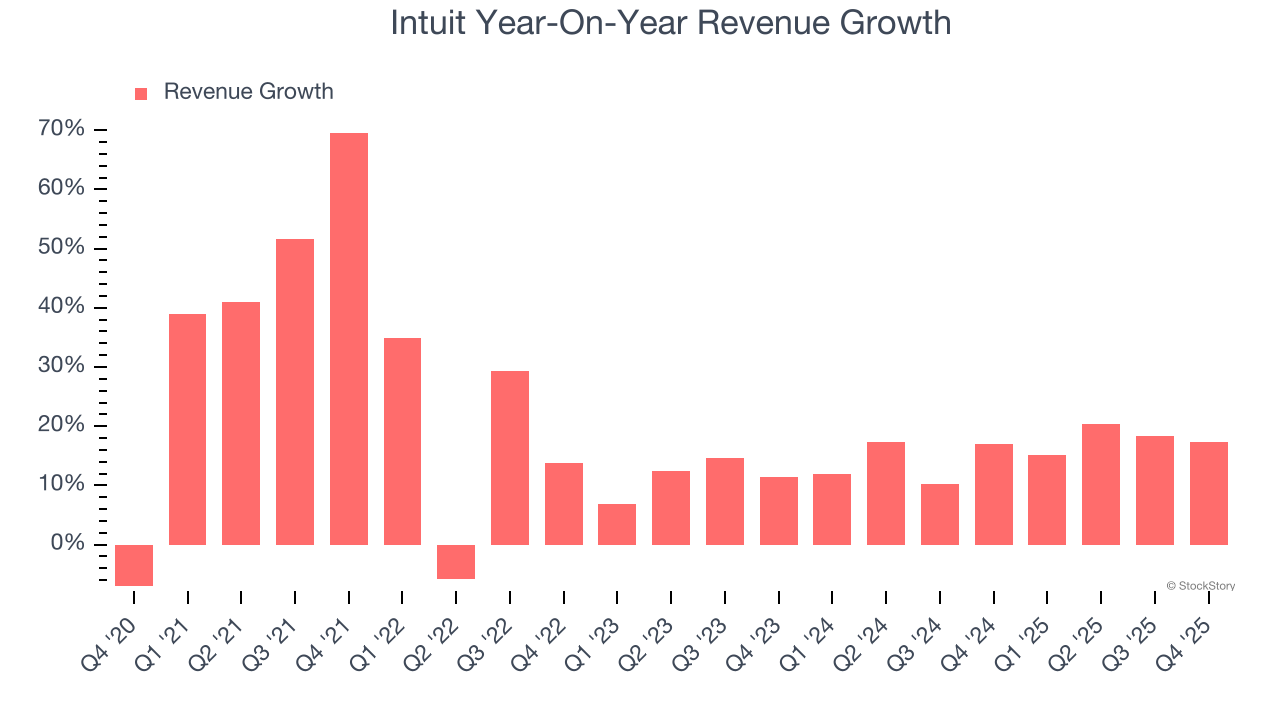
This quarter, Intuit reported year-on-year revenue growth of 17.4%, and its $4.65 billion of revenue exceeded Wall Street’s estimates by 2.5%. Company management is currently guiding for a 10.1% year-on-year increase in sales next quarter.
Looking further ahead, sell-side analysts expect revenue to grow 11.1% over the next 12 months, a deceleration versus the last two years. This projection doesn't excite us and implies its products and services will face some demand challenges. At least the company is tracking well in other measures of financial health.
While Wall Street chases Nvidia at all-time highs, an under-the-radar semiconductor supplier is dominating a critical AI component these giants can’t build without. Click here to access our free report one of our favorites growth stories.
Billings
Billings is a non-GAAP metric that is often called “cash revenue” because it shows how much money the company has collected from customers in a certain period. This is different from revenue, which must be recognized in pieces over the length of a contract.
Intuit’s billings punched in at $4.75 billion in Q4, and over the last four quarters, its growth was solid as it averaged 17.6% year-on-year increases. This performance aligned with its total sales growth, indicating robust customer demand. The cash collected from customers also enhances liquidity and provides a solid foundation for future investments and growth. 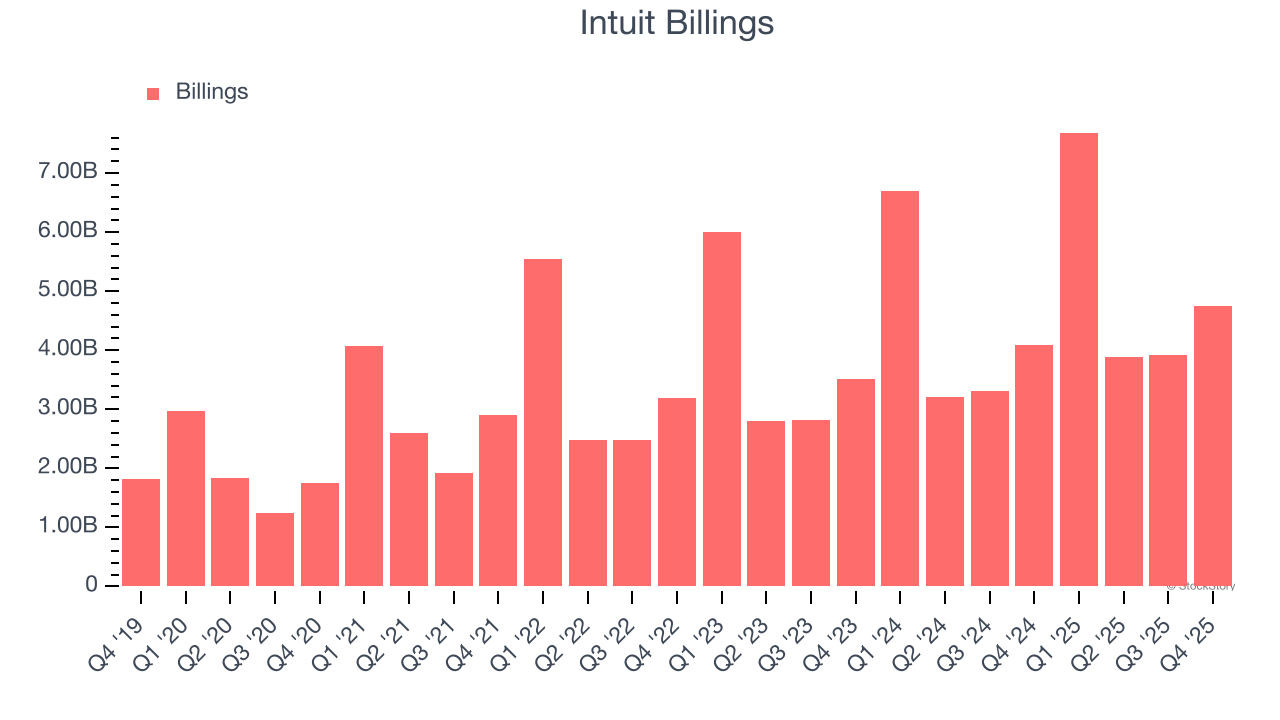
Customer Acquisition Efficiency
The customer acquisition cost (CAC) payback period represents the months required to recover the cost of acquiring a new customer. Essentially, it’s the break-even point for sales and marketing investments. A shorter CAC payback period is ideal, as it implies better returns on investment and business scalability.
Intuit is very efficient at acquiring new customers, and its CAC payback period checked in at 23.4 months this quarter. The company’s rapid recovery of its customer acquisition costs indicates it has a highly differentiated product offering and a strong brand reputation due to its scale. These dynamics give Intuit more resources to pursue new product initiatives while maintaining the flexibility to increase its sales and marketing investments.
Key Takeaways from Intuit’s Q4 Results
It was good to see Intuit narrowly top analysts’ billings expectations this quarter. We were also happy its revenue outperformed Wall Street’s estimates. On the other hand, its EPS guidance for next quarter missed and its full-year revenue guidance fell slightly short of Wall Street’s estimates. Overall, this quarter could have been better. The stock remained flat at $381.54 immediately after reporting.
Intuit didn’t show it’s best hand this quarter, but does that create an opportunity to buy the stock right now? When making that decision, it’s important to consider its valuation, business qualities, as well as what has happened in the latest quarter. We cover that in our actionable full research report which you can read here (it’s free).