Cabinet manufacturing company American Woodmark (NASDAQ: AMWD) missed Wall Street’s revenue expectations in Q4 CY2025, with sales falling 18.4% year on year to $324.3 million. Its non-GAAP profit of $0.45 per share was significantly above analysts’ consensus estimates.
Is now the time to buy American Woodmark? Find out by accessing our full research report, it’s free.
American Woodmark (AMWD) Q4 CY2025 Highlights:
- Revenue: $324.3 million vs analyst estimates of $359.7 million (18.4% year-on-year decline, 9.8% miss)
- Adjusted EPS: $0.45 vs analyst estimates of $0.11 (significant beat)
- Adjusted EBITDA: $21.59 million vs analyst estimates of $23.67 million (6.7% margin, 8.8% miss)
- Operating Margin: -10.4%, down from 5.3% in the same quarter last year
- Free Cash Flow was -$21.88 million, down from $1.35 million in the same quarter last year
- Market Capitalization: $757 million
Company Overview
Starting as a small millwork shop, American Woodmark (NASDAQ: AMWD) is a cabinet manufacturing company that helps customers from inspiration to installation.
Revenue Growth
A company’s long-term sales performance can indicate its overall quality. Any business can experience short-term success, but top-performing ones enjoy sustained growth for years. American Woodmark struggled to consistently generate demand over the last five years as its sales dropped at a 1.8% annual rate. This wasn’t a great result and suggests it’s a low quality business.
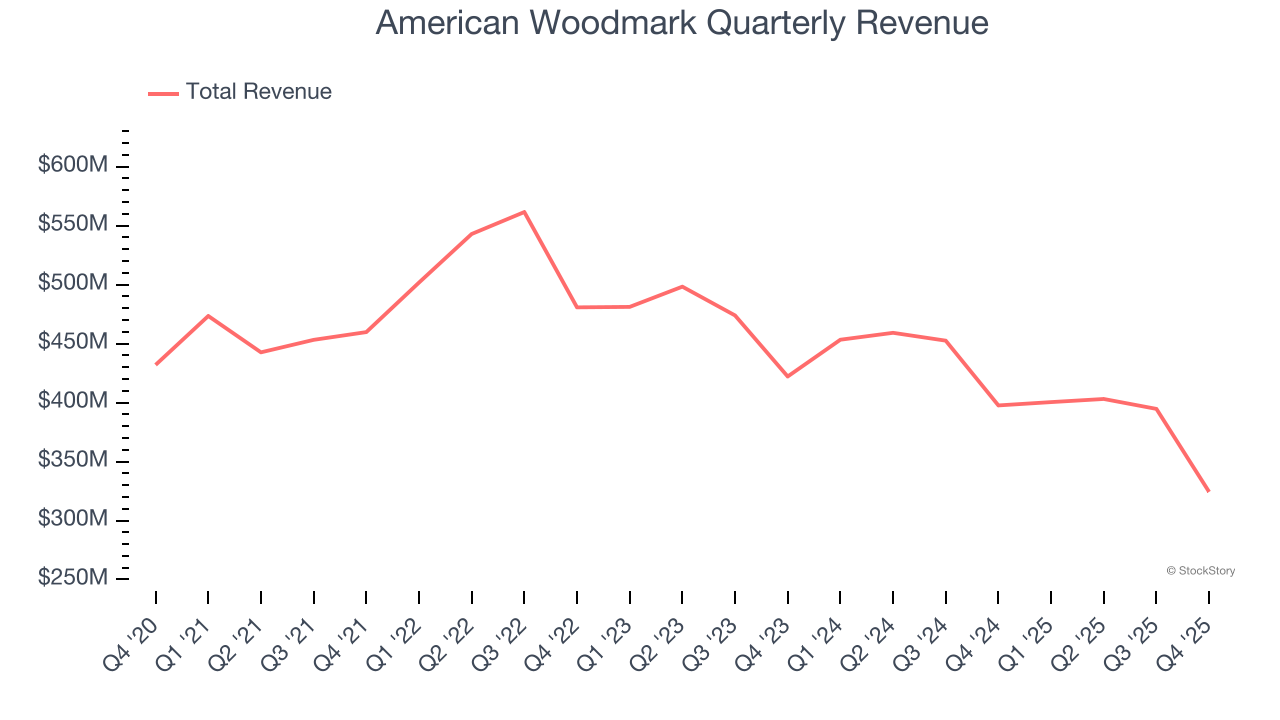
Long-term growth is the most important, but within industrials, a half-decade historical view may miss new industry trends or demand cycles. American Woodmark’s recent performance shows its demand remained suppressed as its revenue has declined by 9.9% annually over the last two years. 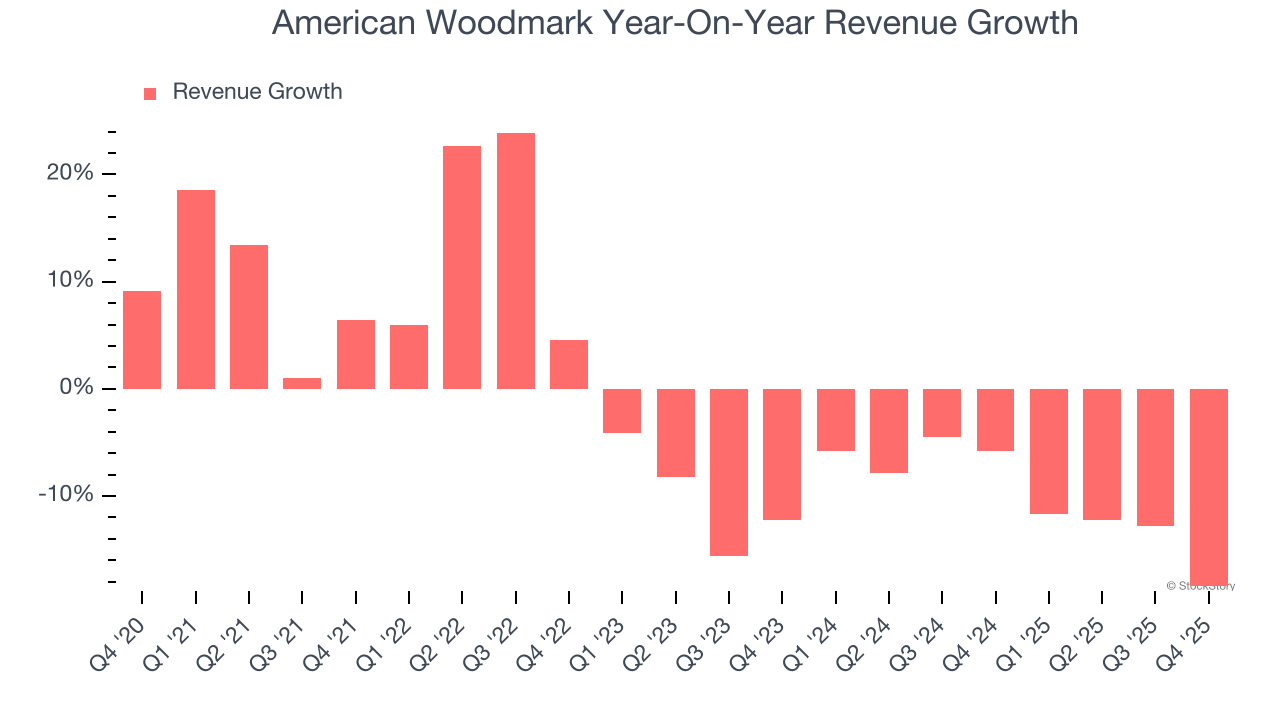
This quarter, American Woodmark missed Wall Street’s estimates and reported a rather uninspiring 18.4% year-on-year revenue decline, generating $324.3 million of revenue.
Looking ahead, sell-side analysts expect revenue to remain flat over the next 12 months. Although this projection suggests its newer products and services will spur better top-line performance, it is still below average for the sector.
Software is eating the world and there is virtually no industry left that has been untouched by it. That drives increasing demand for tools helping software developers do their jobs, whether it be monitoring critical cloud infrastructure, integrating audio and video functionality, or ensuring smooth content streaming. Click here to access a free report on our 3 favorite stocks to play this generational megatrend.
Operating Margin
American Woodmark’s operating margin might fluctuated slightly over the last 12 months but has remained more or less the same, averaging 5.5% over the last five years. This profitability was paltry for an industrials business and caused by its suboptimal cost structureand low gross margin.
Analyzing the trend in its profitability, American Woodmark’s operating margin might fluctuated slightly but has generally stayed the same over the last five years, which doesn’t help its cause.
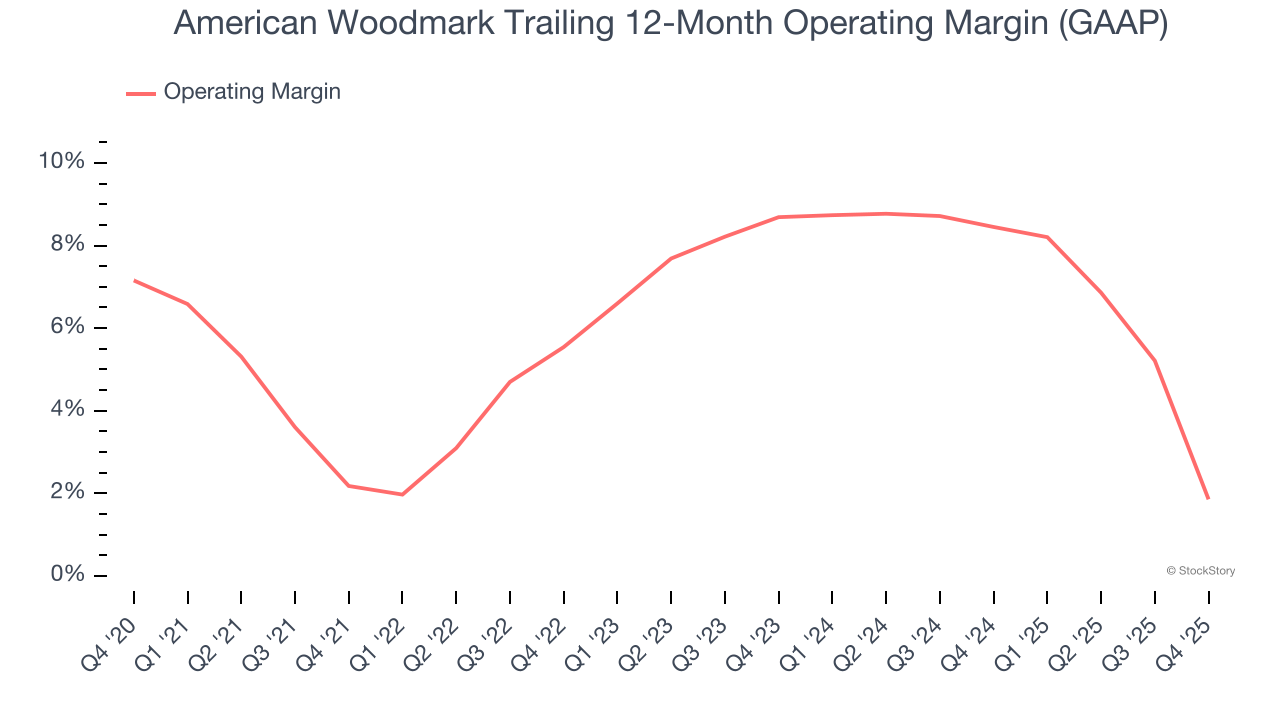
This quarter, American Woodmark generated an operating margin profit margin of negative 10.4%, down 15.7 percentage points year on year. Since American Woodmark’s operating margin decreased more than its gross margin, we can assume it was less efficient because expenses such as marketing, R&D, and administrative overhead increased.
Earnings Per Share
Revenue trends explain a company’s historical growth, but the long-term change in earnings per share (EPS) points to the profitability of that growth – for example, a company could inflate its sales through excessive spending on advertising and promotions.
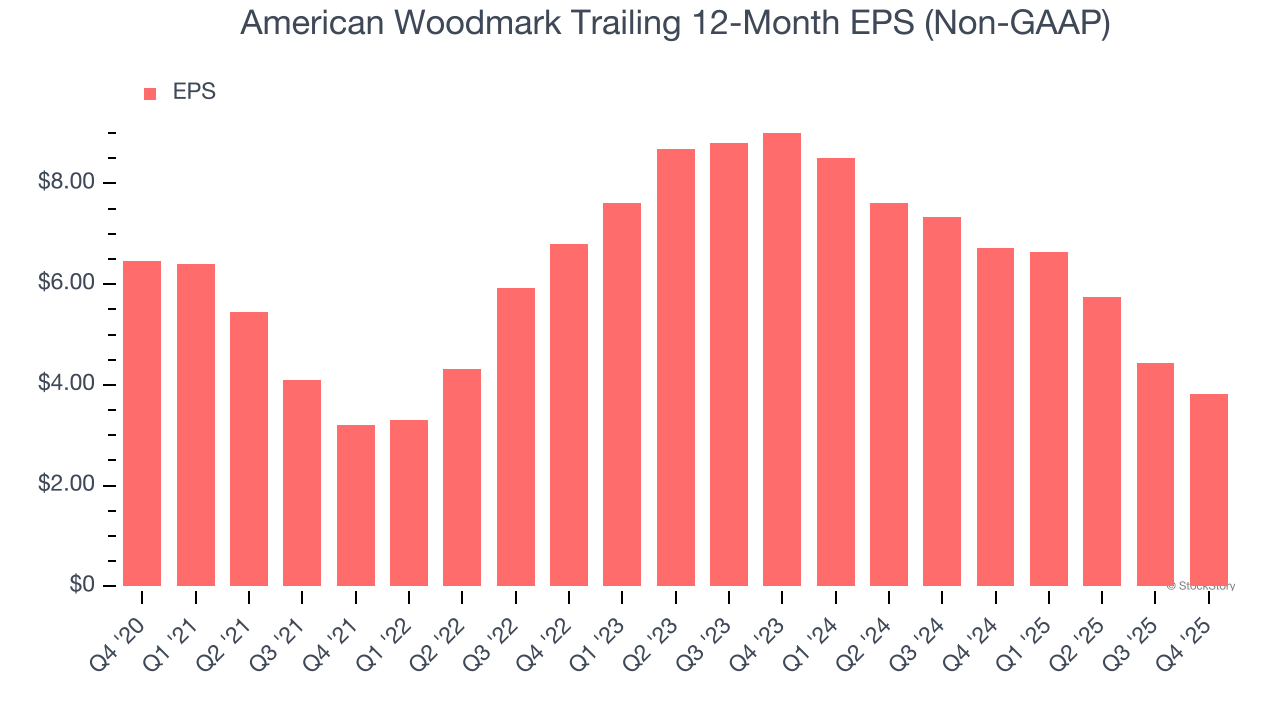
Sadly for American Woodmark, its EPS declined by 9.9% annually over the last five years, more than its revenue. This tells us the company struggled because its fixed cost base made it difficult to adjust to shrinking demand.
Like with revenue, we analyze EPS over a more recent period because it can provide insight into an emerging theme or development for the business.
For American Woodmark, its two-year annual EPS declines of 34.8% show it’s continued to underperform. These results were bad no matter how you slice the data.
In Q4, American Woodmark reported adjusted EPS of $0.45, down from $1.05 in the same quarter last year. Despite falling year on year, this print easily cleared analysts’ estimates. Over the next 12 months, Wall Street expects American Woodmark’s full-year EPS of $3.83 to shrink by 43.8%.
Key Takeaways from American Woodmark’s Q4 Results
It was good to see American Woodmark beat analysts’ EPS expectations this quarter. On the other hand, its revenue missed and its EBITDA fell short of Wall Street’s estimates. Overall, this was a softer quarter. The stock remained flat at $51.66 immediately after reporting.
American Woodmark may have had a tough quarter, but does that actually create an opportunity to invest right now? The latest quarter does matter, but not nearly as much as longer-term fundamentals and valuation, when deciding if the stock is a buy. We cover that in our actionable full research report which you can read here (it’s free).