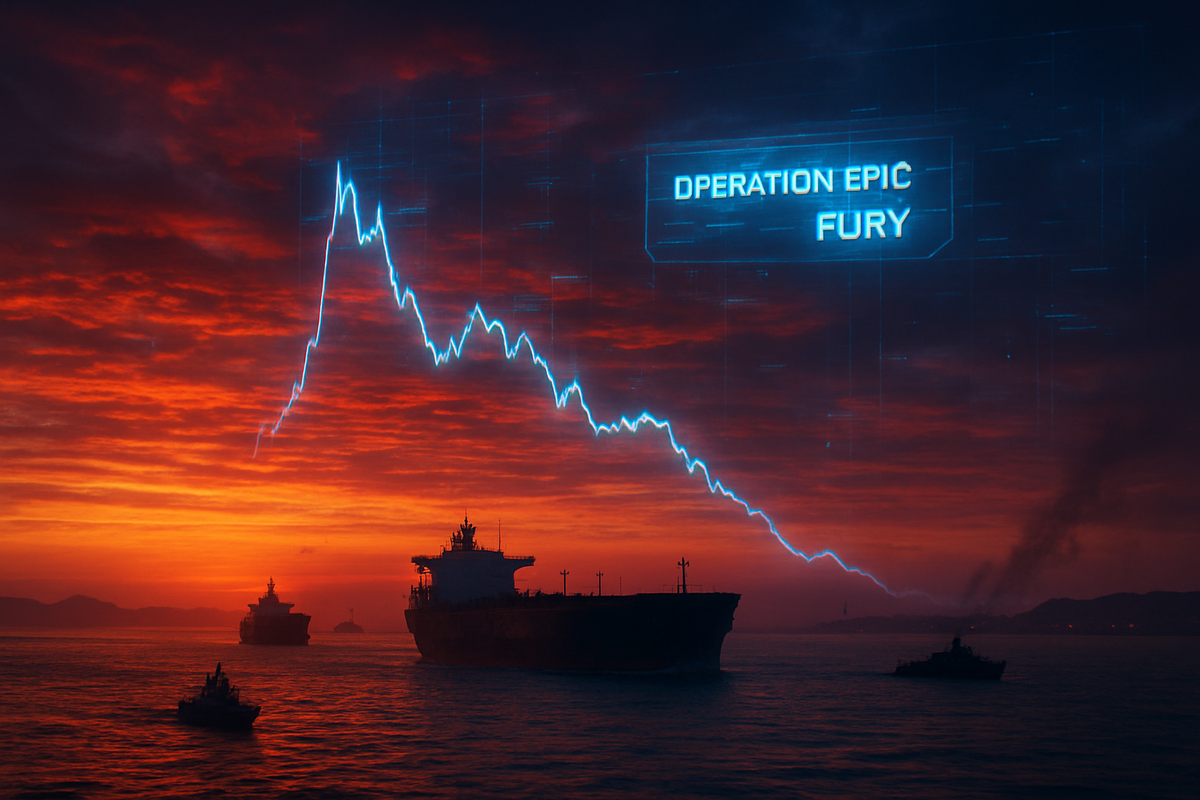
Energy markets witnessed a dramatic reversal on Wednesday as West Texas Intermediate (WTI) crude oil prices tumbled below the $75 mark, settling near $72.40 per barrel. This sharp decline effectively halted a blistering 14% three-day rally that had sent shockwaves through global commodities desks, fueled by the explosive escalation of military conflict in the Middle East and a tightening noose around the world’s most critical maritime chokepoint.
The retreat in prices comes as a relief to a global economy that, just 48 hours ago, seemed poised for a return to triple-digit oil. The volatility highlights the high-stakes "risk premium" currently baked into energy assets, as traders weigh the structural threat of a closed Strait of Hormuz against the emerging possibility of a diplomatic off-ramp. While the immediate panic has subsided, the floor for energy prices remains fragile, resting on the precarious stability of backchannel negotiations.
The Fog of War and the Thaw of Diplomacy
The recent price action is the direct result of "Operation Epic Fury," a massive, coordinated campaign of US and Israeli airstrikes launched late last month against Iranian military and nuclear infrastructure. The operation, characterized by its unprecedented use of AI-integrated precision targeting, aimed to neutralize the Islamic Revolutionary Guard Corps’ (IRGC) command capabilities. In retaliation, Tehran moved to block the Strait of Hormuz, a move that historically threatens nearly 20% of the world’s daily oil consumption. The tension reached a fever pitch yesterday when the IRGC issued a chilling communique threatening to "set ablaze" any commercial or military vessels attempting to traverse the waterway.
However, the narrative shifted overnight. According to high-level intelligence reports, Iranian officials reached out to Washington through the intelligence agency of a neutral third-party nation—speculated by many to be Oman or Switzerland—to discuss terms for immediate de-escalation. This unexpected outreach suggested that the internal pressure from "Operation Epic Fury" may have forced Tehran’s hand faster than analysts originally anticipated. As word of these "spy-to-spy" communications reached trading floors, the geopolitical risk premium began to evaporate, triggering a massive sell-off from the week's highs.
The timeline of the last 72 hours has been a whirlwind for market participants. Following the initial strikes on February 28, WTI jumped from $66 to over $75 in a matter of hours. The subsequent blockade sent insurance premiums for tankers into the stratosphere, effectively grounding maritime traffic. But with today’s reports of a potential ceasefire framework, the market is beginning to price in a "short-war" scenario. This shift reflects a cautious optimism that the conflict may be contained before it inflicts permanent damage on the region’s massive energy export infrastructure.
Winners and Losers in a Volatile Energy Landscape
The whipsaw in oil prices has created a stark divide among public companies. The domestic "supermajors," ExxonMobil (NYSE: XOM) and Chevron (NYSE: CVX), saw their shares retreat slightly today after a strong week. These companies had initially benefitted from the rally as investors sought refuge in firms with significant production assets in the Permian Basin and Guyana—regions entirely insulated from the physical risks of the Persian Gulf. Despite the $75 break, analysts suggest these firms remain well-positioned due to their lower break-even costs and robust balance sheets.
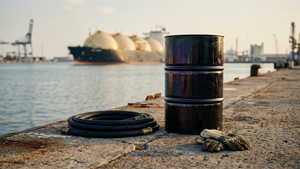
In the shipping sector, the impact has been even more pronounced. Tanker giants like Frontline (NYSE: FRO) and DHT Holdings (NYSE: DHT) experienced a surge in interest during the blockade. The closure of the Strait of Hormuz forces vessels to take the long route around the Cape of Good Hope, adding thousands of miles to their journeys. This increase in "ton-mile" demand typically sends freight rates soaring. While the de-escalation reports have tempered some of the speculative gains in these stocks today, the lingering threat to the Strait maintains a high floor for charter rates.
Conversely, the drop below $75 is a vital lifeline for the aviation sector. Major carriers like Delta Air Lines (NYSE: DAL) and United Airlines (NASDAQ: UAL) saw their stock prices bounce off weekly lows as the prospect of sustained $100+ oil faded. For these companies, fuel represents upwards of 20% of total operating expenses. The 14% rally had threatened to wipe out quarterly margins; however, the cooling of tensions provides some breathing room for management teams currently navigating a high-inflation environment and shifting consumer travel patterns.
A New Era of Geopolitical Risk
The events of March 2026 fit into a broader trend of "weaponized energy" that has come to define this decade. Unlike the oil shocks of the 20th century, the current market must contend with the hyper-speed of information and the integration of advanced technologies like AI in military planning. "Operation Epic Fury" demonstrated that while military objectives can be achieved with surgical precision, the economic fallout remains a blunt instrument. The 14% rally was not just a reaction to lost barrels, but a reaction to the loss of certainty in a globalized supply chain.
This episode also highlights the evolving role of the US as both a military superpower and a dominant energy producer. Unlike the 1970s, the US is no longer solely reliant on Middle Eastern imports, yet the global nature of oil pricing means that domestic consumers at the pump are still tethered to the IRGC’s rhetoric. Regulatory bodies and policymakers are now looking closer at the "Strategic Petroleum Reserve" (SPR) policies, with renewed calls to modernize the reserve to act as a more effective buffer against the kind of flash-volatility seen this week.
Comparisons are already being drawn to the 2019 Abqaiq attacks in Saudi Arabia, where prices spiked and then normalized within two weeks. However, the 2026 crisis is distinct because of the direct involvement of US-Israeli kinetic forces and the overt threat to global shipping lanes. The market is learning that in the modern era, de-escalation can happen as quickly as escalation, often mediated by digital backchannels and intelligence agencies rather than traditional statecraft.
Looking Ahead: The Fragile Path Forward
In the short term, the market will remain fixated on the legitimacy of the de-escalation reports. If a formal ceasefire is not announced within the next 48 hours, or if an IRGC "rogue element" follows through on the threat to "set ablaze" a tanker, oil could easily vault back above $80. Traders are watching for a "confirmation signal" from the White House or a formal statement from Tehran. Until then, volatility will be the only constant, and the $70–$75 range for WTI appears to be the new battleground for price discovery.
Longer-term, this crisis may accelerate the strategic pivot toward energy independence and diversified supply chains. Companies that can provide alternative energy solutions or more efficient logistics will likely find a more receptive market. For the oil majors, the lesson of "Operation Epic Fury" is the continued importance of non-OPEC+ production. We may see a renewed wave of investment in offshore Atlantic projects and North American shale as a direct response to the persistent instability of the Persian Gulf.
Market Wrap-Up and Investor Outlook
The retreat of WTI crude below $75 marks a critical turning point in the March 2026 energy crisis. The 14% rally served as a stark reminder of the world’s continued dependence on the Strait of Hormuz, while the current pullback illustrates the power of clandestine diplomacy in an interconnected world. The key takeaway for investors is that the "geopolitical premium" is no longer a static figure but a fluid metric that can be erased by a single encrypted message between spy agencies.
Moving forward, the market will likely remain in a "wait-and-see" mode. While the immediate threat of a total regional war has diminished, the underlying tensions remain unresolved. Investors should keep a close eye on weekly inventory reports and, more importantly, any movement of the US 5th Fleet in the region. The ability of the Strait to remain open is the single most important factor for global price stability in the coming months.
As the smoke clears from "Operation Epic Fury," the energy sector remains the epicenter of global macro-trends. Whether the drop below $75 is a temporary reprieve or a permanent shift depends entirely on whether the secret dialogues reported today can translate into a lasting regional peace.
This content is intended for informational purposes only and is not financial advice