As of March 3, 2026, the global financial landscape is grappling with a sudden and severe contraction. In a day characterized by panic selling and a flight to safety, approximately 86% of the stocks in the S&P 500 closed in the red, following a weekend of escalating geopolitical conflict and a subsequent energy crisis. While the broader indices suffered their worst single-day losses in years, one retail giant has not only held its ground but flourished, cementing its reputation as the market’s premier defensive anchor.
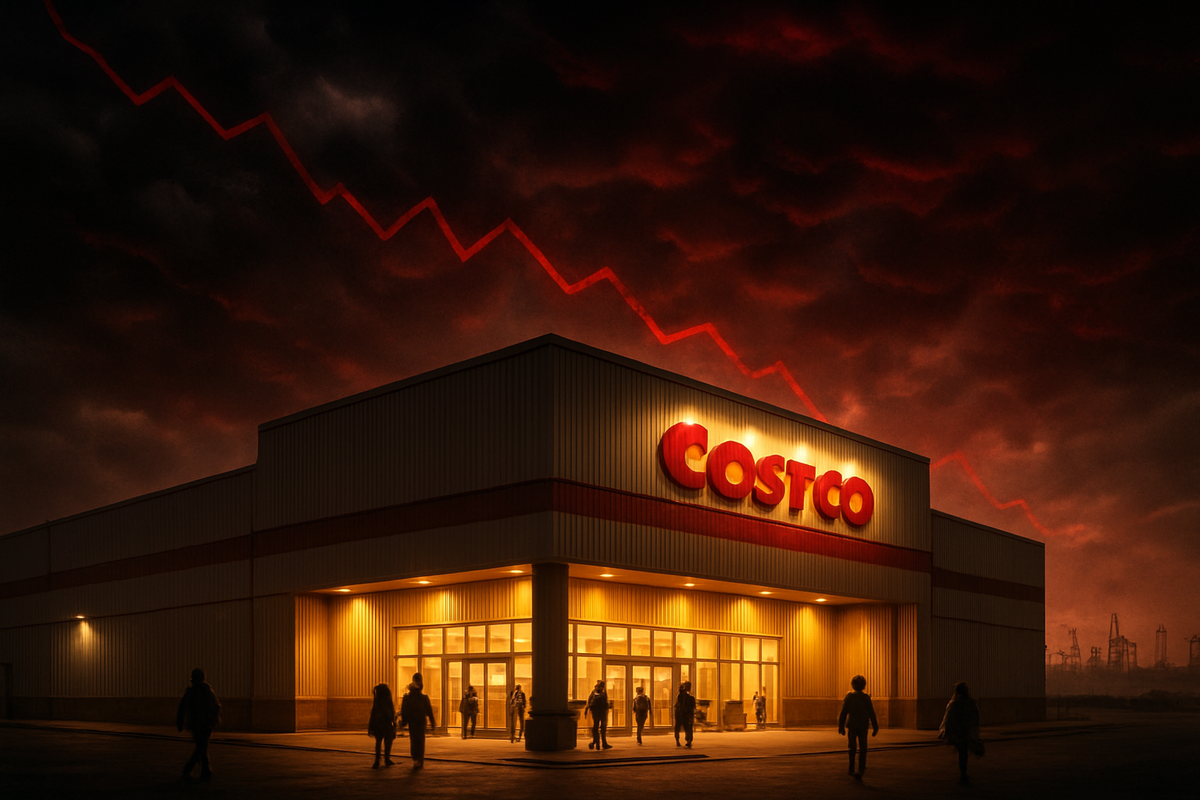
Costco Wholesale Corp. (NASDAQ: COST) stood as a stark outlier during Tuesday’s trading session. While the Dow Jones Industrial Average plummeted over 1,050 points and the Nasdaq shed more than 2.4%, Costco’s shares remained firmly in the green, trading near $1,002.77 with a year-to-date return of over 16%. This divergence highlights a growing sentiment among institutional and retail investors alike: in times of war-induced inflation and supply chain collapse, the warehouse model isn't just a retail strategy—it is a financial safe haven.
The Catalyst: A Weekend of Conflict and the "Epic Fury" Fallout
The immediate trigger for the current market bloodbath was the launch of "Operation Epic Fury" over the weekend of February 28, 2026. Coordinated strikes by U.S. and Israeli forces on critical Iranian infrastructure led to a formal declaration of "total war" from Tehran. By Monday morning, the Strait of Hormuz—a vital chokepoint for 20% of the world’s oil—was effectively closed to transit. This sent Brent crude prices surging by 13% in a single session, with prices fluctuating wildly between $82 and $118 per barrel.
The fallout was instantaneous for global logistics. Major shipping hubs like Jebel Ali in Dubai suspended operations following drone strikes, and logistics giants began rerouting vessels around the Cape of Good Hope, adding nearly two weeks to transit times. As air freight costs spiked 400%, investors spent the early days of March dumping discretionary and tech stocks, fearing a return to the stagflation that plagued the early 2020s. Amidst this chaos, Costco’s Q1 2026 earnings data—which showed a 14% surge in membership fee income to $1.33 billion—provided a "bulletproof" narrative that resonated with a terrified market.
Winners and Losers: The Great Retail Divide
In this volatile environment, the gap between "essential" and "discretionary" retailers has widened into a chasm. Walmart Inc. (NYSE: WMT) has managed to stay relatively resilient, gaining roughly 11.8% year-to-date, as its massive scale allows it to absorb some inflationary pressure. However, it lacks the high-margin predictability of Costco’s membership model. Meanwhile, Target Corp. (NYSE: TGT) has struggled significantly, with its stock price sliding into negative territory for the year as consumers pivot away from the style-heavy, discretionary goods that define Target’s brand in favor of bulk essentials.
Other players like BJ's Wholesale Club Holdings, Inc. (NYSE: BJ) have seen modest gains of 10.8% YTD, benefiting from the broader "warehouse boom," yet they remain overshadowed by Costco’s global footprint and superior pricing power. Recent price surveys indicate that Costco has officially overtaken Walmart as the "Cheapest Grocer in the U.S.," with a standard basket of goods costing roughly 21.4% less than its competitors. This pricing "moat" has made it the destination of choice for families looking to hedge against the rapidly rising costs of fuel and food.
The Membership Firewall: A Historical Perspective on Significance
The resilience of Costco is not a new phenomenon; it is the culmination of a business model designed to thrive in adversity. During the 2008 Financial Crisis, Costco’s stock saw a drawdown of only 34% compared to the S&P 500’s 57% collapse. Similarly, during the 2020 COVID-19 pandemic, it was one of the first stocks to recover, as the membership fee acted as a "sunk cost" that drove loyalty during periods of panic-buying. In 2026, this "Membership Firewall" is stronger than ever, with U.S. and Canadian renewal rates hitting an all-time high of 92.2%.
This event fits into a broader industry trend where "predictable income" is valued over "speculative growth." Because membership fees constitute more than 50% of Costco’s operating profit, the company can afford to keep its product margins at a razor-thin 11%. This creates a virtuous cycle: as inflation rises due to the conflict in the Middle East, Costco keeps prices low, which drives more memberships, which in turn provides more cash to navigate the 400% spike in shipping costs. Unlike traditional retailers who must choose between raising prices or losing margin, Costco’s membership revenue acts as a shock absorber for the entire enterprise.
The Road Ahead: Strategic Pivots and Market Challenges
Looking into the remainder of 2026, the primary challenge for Costco will be navigating the physical disruption of its supply chain. While its $14.16 billion cash pile provides a massive cushion, the closure of the Strait of Hormuz will necessitate a shift in sourcing strategy. Analysts expect the company to leverage its private label, Kirkland Signature, to a greater degree, potentially shifting production to more localized Western Hemisphere suppliers to mitigate the risks of Middle Eastern and Asian transit.
In the short term, the market will be watching for potential "special dividends" or further membership fee adjustments. Historically, Costco has used its excess cash to reward shareholders during periods of market stability; however, in this high-volatility environment, that capital may instead be deployed into digital transformation. Digitally enabled sales already grew by 20.5% in late 2025, and further investment in automated last-mile delivery could help Costco maintain its dominance if the energy crisis makes physical trips to the warehouse more expensive for members.
Summary: What Investors Should Watch
The events of March 3, 2026, serve as a masterclass in defensive investing. While 86% of the market was dragged down by the weight of global conflict and an energy shock, Costco proved that a loyal, recurring revenue base is the ultimate hedge. The key takeaways for investors are the sheer power of the membership renewal rate and the company's ability to maintain a pricing edge even when logistics costs are spiraling out of control.
Moving forward, the market will likely remain in a state of flux as the geopolitical situation in the Middle East evolves. Investors should keep a close eye on Brent crude prices and the potential for a prolonged closure of the Strait of Hormuz. For Costco, the metrics to watch are the sustained growth of membership fee income and any shifts in the Kirkland Signature product mix. As the "fortress in the storm," Costco’s performance today suggests that in an era of uncertainty, the most valuable commodity a company can own is the trust and recurring commitment of its customers.
This content is intended for informational purposes only and is not financial advice.