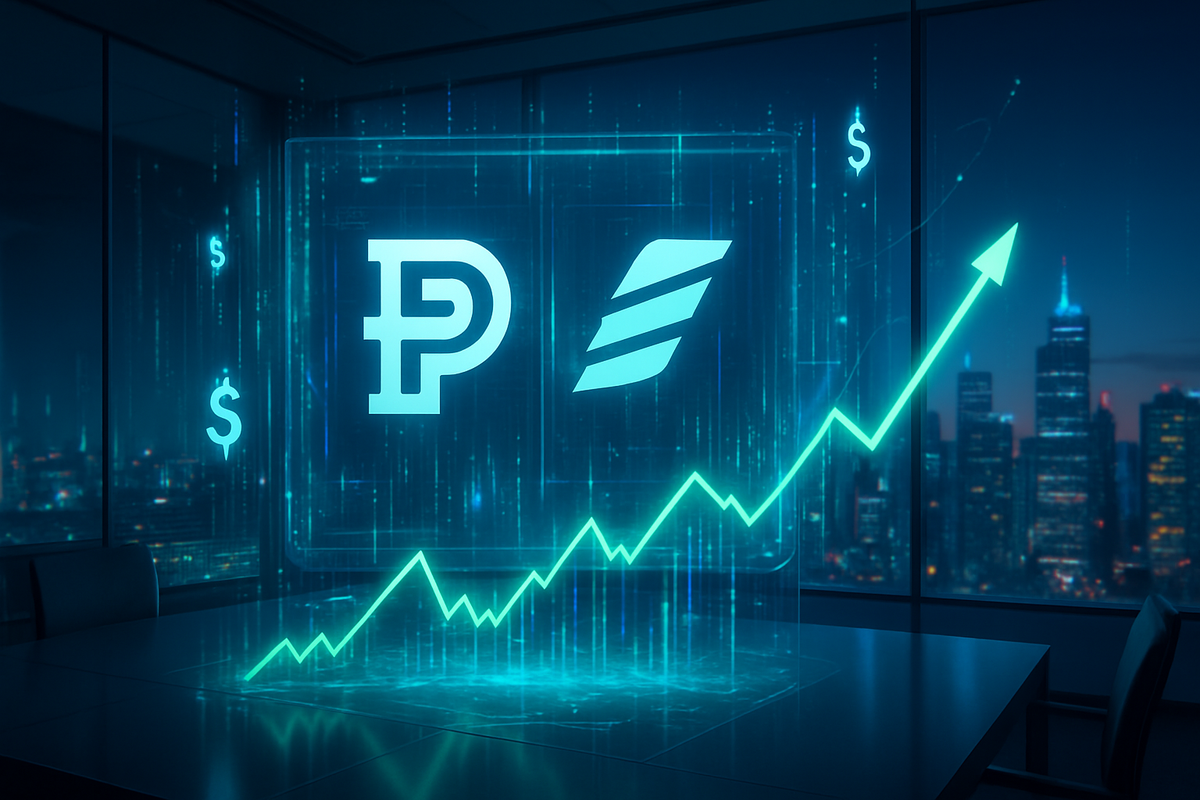
Shares of PayPal Holdings, Inc. (NASDAQ: PYPL) surged by more than 10% in early trading on March 2, 2026, as the market reacted to a dual-threat of major corporate developments. The rally followed the official first day of Enrique Lores as the company’s new President and CEO, a transition that investors hope will signal a turnaround for the beleaguered payments pioneer. Simultaneously, speculative fervor reached a boiling point following a series of reports suggesting that the private fintech titan Stripe is in advanced preliminary discussions for a strategic acquisition or massive "merger of giants" with PayPal.
The combination of a fresh leadership mandate under Lores—a veteran executive formerly at the helm of HP Inc. (NYSE: HPQ)—and the prospect of a buyout has injected a rare dose of optimism into a stock that has been described by many on Wall Street as a "distressed value" play. With PayPal’s valuation sitting at levels not seen since 2017, the sudden price action reflects a market desperate for a catalyst to unlock the dormant power of the company’s massive, yet stagnant, 440-million-user ecosystem.
A Perfect Storm: Lores Takes the Helm While Stripe Circles
The 10% jump in share price on March 2 is the culmination of a volatile week for the San Jose-based company. On March 1, 2026, Enrique Lores officially succeeded Alex Chriss as CEO, a move the Board of Directors fast-tracked after a disappointing 2025 fiscal year that saw revenue growth stall at a mere 4%. Lores, who previously transformed HP into an AI-driven services powerhouse, is widely viewed as a "fixer" capable of streamlining PayPal's bloated cost structure and re-accelerating its lagging innovation in branded checkout.
However, it was the "Stripe Factor" that truly set the tape on fire. Reports first surfaced on February 24 via Bloomberg that Stripe—recently valued at a staggering $159 billion in a private tender offer—had initiated talks to explore a deal. The rumored structure of the deal remains fluid; some insiders suggest a full-scale acquisition of PayPal’s merchant-facing assets, including the unbranded processing arm Braintree, while others point toward a complete merger that would consolidate the two largest players in the online payment space.
The initial market reaction was electric, triggering a brief volatility circuit breaker on the Nasdaq as trading volume surged to nearly triple its daily average. For the "PayPal faithful," the news is a validation of the company's underlying assets, which many believe have been unfairly punished by the market. Before this rally, PayPal shares had collapsed more than 80% from their 2021 pandemic-era highs, trading at a price-to-earnings ratio of just 8x—a valuation typically reserved for declining legacy industries rather than global fintech leaders.
Winners and Losers: A Reshuffled Fintech Deck
Should a deal with Stripe materialize, the ripple effects would create a new hierarchy in the global financial ecosystem. PayPal (NASDAQ: PYPL) shareholders are the most immediate winners, seeing a significant premium on a stock that had been "dead money" for years. A combined entity would command an estimated $3.7 trillion in annual payment volume, creating a "super-processor" that would have the leverage to negotiate unprecedented terms with banks and retailers alike.
Conversely, specialized competitors such as Adyen N.V. (AMS: ADYEN) could find themselves in a precarious position. A Stripe-PayPal behemoth would possess double the processing volume of Adyen, allowing it to aggressively underbid the Dutch firm on enterprise pricing. Similarly, Block, Inc. (NYSE: SQ), the parent of Square and Cash App, would face a more formidable merchant-facing rival, although it could benefit if regulators force PayPal to divest its social-payment crown jewel, Venmo, to clear antitrust hurdles.
The traditional financial guard—namely Visa Inc. (NYSE: V) and Mastercard Incorporated (NYSE: MA)—stands to lose the most in terms of strategic leverage. A "Super-Processor" of this scale could eventually bypass traditional card rails for a larger portion of its transactions, settling "on-us" payments within its own internal ledger. This would directly threaten the interchange fee revenue that has been the bedrock of the credit card industry for decades. Meanwhile, Big Tech players like Apple Inc. (NASDAQ: AAPL) and Alphabet Inc. (NASDAQ: GOOGL) remain well-positioned, as their frictionless mobile wallets continue to dominate the physical point-of-sale market, a territory where PayPal has historically struggled.
The "Antitrust Wall" and the Death of Fragmented Checkout
The significance of a potential Stripe-PayPal tie-up extends far beyond stock prices; it represents the inevitable consolidation of a maturing fintech sector. For years, the industry has been defined by fragmentation, with dozens of "Buy Now, Pay Later" (BNPL) firms and niche wallets competing for space on the merchant's checkout page. This merger would signal the end of that era, potentially consolidating the "buy button" into a single, dominant technical standard.
Historically, this situation draws direct comparisons to the early 2000s, when PayPal itself was acquired by eBay to solidify the e-commerce giant’s payment infrastructure. However, the scale today is vastly different. A combined Stripe-PayPal would control nearly 65% of the global online payment market, a figure that is certain to trigger intense scrutiny from the Federal Trade Commission (FTC) and the Department of Justice (DOJ). Under the "America First Antitrust" policies of 2026, regulators may be more open to business consolidation, but only if significant divestitures—such as Braintree or Venmo—are on the table.
Beyond regulation, this event underscores the shift toward "agentic commerce." By 2026, the industry is moving away from manual entry toward AI assistants that complete purchases for users. By combining Stripe's world-class developer tools and technical optimization with PayPal's massive consumer database, the merged entity would have the data advantage necessary to train the most effective AI shopping agents, effectively "closing the loop" on the entire commerce lifecycle from discovery to settlement.
What Comes Next: Integration or Intervention?
In the short term, all eyes are on Enrique Lores. His first 100 days as CEO will be defined by whether he can stabilize PayPal’s core metrics—such as transactions per active account, which fell to 57.7 earlier this year—while simultaneously managing the high-stakes dance with Stripe’s leadership. If a deal is not reached quickly, the 10% "buyout premium" currently baked into the stock could evaporate, leaving Lores to face a disgruntled investor base demanding immediate operational turnarounds.
Looking further ahead, the most likely scenario involves a "strategic carve-out" rather than a total merger. Analysts speculate that Stripe may be most interested in PayPal’s enterprise-grade Braintree infrastructure to bolster its own "Stripe Connect" offering, while leaving the consumer-facing PayPal wallet as a standalone entity. Such a move might satisfy regulators while allowing both companies to focus on their respective strengths. However, any deal of this magnitude will likely be tied up in court for at least 12 to 18 months, creating a prolonged period of uncertainty for employees and partners.
The Bottom Line for Investors
The surge in PayPal’s shares marks a potential turning point for a company that had become a "textbook value trap." The arrival of Enrique Lores provides the operational credibility the company has lacked, while the Stripe rumors provide the strategic floor that investors have been seeking. The "distressed value" label is finally being challenged by the realization that PayPal’s massive network remains one of the most valuable assets in the digital economy.
Moving forward, investors should closely monitor regulatory filings and any official "letters of intent" regarding the Stripe talks. The key metrics to watch will be the stabilization of branded checkout market share and any signs of aggressive cost-cutting under Lores. While the road to a $3.7 trillion "super-processor" is paved with regulatory and integration challenges, the current market excitement suggests that the fintech industry’s long winter of stagnation may finally be coming to an end.
This content is intended for informational purposes only and is not financial advice.