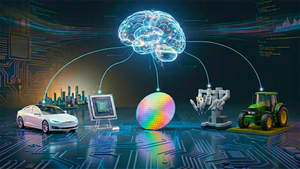
On February 25, 2026, Nvidia (NASDAQ: NVDA) delivered what would have been a historic "triple beat" in any other market cycle, surpassing revenue, earnings, and guidance expectations by significant margins. However, instead of the usual victory lap on Wall Street, the semiconductor giant saw its stock price crater by 5.5% in the following sessions, wiping out approximately $255 billion in market capitalization. This paradoxical reaction signals a profound shift in investor sentiment as the market transitions from the "construction phase" of artificial intelligence to a more cynical "efficiency phase."
The immediate fallout of the earnings report suggests that investors are becoming increasingly difficult to please. Despite reporting a staggering $68.13 billion in quarterly revenue—a 94% increase year-over-year—Nvidia’s stock fell victim to a growing "AI reality check." Analysts are now warning of a deteriorating near-term risk-reward setup, citing concerns over customer concentration and the elusive return on investment (ROI) for the firms spending billions on Nvidia’s Blackwell and Rubin chips.
The Triple Beat That Failed to Ignite
Nvidia’s fiscal fourth-quarter 2026 results were objectively spectacular. The company posted an adjusted earnings per share (EPS) of $1.62, beating the $1.53 consensus, while its Data Center revenue alone hit $62.3 billion. Furthermore, Jensen Huang’s team issued a robust first-quarter 2027 revenue guidance of approximately $78 billion, comfortably ahead of the $72.6 billion expected by analysts. Yet, the stock's 5.5% decline on February 27, 2026, revealed cracks in the "AI bull" thesis.
The timeline of the sell-off began almost immediately after the initial after-hours spike. As analysts poured over the regulatory filings, a sobering detail emerged: just two anonymous hyperscale customers accounted for a massive 36% of Nvidia’s total sales. This revelation reignited fears that Nvidia is overly dependent on a handful of tech giants—likely Microsoft (NASDAQ: MSFT) and Meta Platforms (NASDAQ: META)—who are simultaneously racing to develop their own internal custom silicon to reduce their reliance on the Nvidia ecosystem.
Market participants also pointed to a slight deceleration in sequential growth. While year-over-year numbers remained high, the 22% sequential growth in the Data Center segment was a step down from the 25% seen in the previous quarter. This subtle cooling led many to conclude that the stock had been "priced to perfection," leaving no room for even the slightest hint of a plateau in the feverish pace of data center expansion.
Winners, Losers, and the Shifting AI Ecosystem
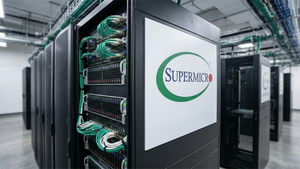
The ripple effects of Nvidia’s stumble were felt across the entire technology sector. The PHLX Semiconductor Index (SOX) dropped 3% in sympathy, dragging down critical partners like Taiwan Semiconductor Manufacturing Company (NYSE: TSM), which saw its shares fall 3.2%. Server infrastructure providers like Super Micro Computer (NASDAQ: SMCI) and Dell Technologies (NYSE: DELL) also faced intense selling pressure, as investors questioned if the "Gold Rush" for AI hardware was nearing its peak.
Conversely, some software firms managed to weather the storm by demonstrating tangible AI utility. Salesforce (NYSE: CRM) bucked the downward trend by reporting $800 million in Annual Recurring Revenue (ARR) for its "Agentforce" platform, showcasing that it could successfully monetize the AI infrastructure built by Nvidia. Meta Platforms also remained a relative favorite among investors; by integrating AI into its core advertising business via Advantage+, it achieved an 18% increase in ad impressions, proving that AI ROI is achievable for companies with established monetization flywheels.
Meanwhile, Microsoft found itself in a "wait-and-see" category. Although its Azure AI growth remained strong at 40%, the massive depreciation costs associated with its multi-billion dollar capital expenditures have begun to weigh on margins. The market is now pressuring the Redmond-based giant to show more than just "capacity growth," demanding clear evidence that AI is fundamentally transforming its bottom line.
The ‘AI Scare Trade’ vs. The ‘Efficiency Phase’
During the earnings call, CEO Jensen Huang dismissed the market jitters as part of what he termed the "AI scare trade." Huang argued that the market is misinterpreting AI as an existential threat to software companies when it should be viewed as an "integration opportunity." He emphasized that the industry is moving toward "Agentic AI"—autonomous reasoning agents that don't just generate content but execute complex business workflows.
This transition marks the end of the "Year of Experimentation" and the beginning of the "Year of Proof." A recent PwC 2026 CEO Survey highlighted a widening "ROI Gap," noting that while AI adoption is ubiquitous, only 12% of CEOs have reported both increased revenue and decreased costs from their investments. This gap has created a "valuation fatigue" where investors are no longer willing to reward "compute-heavy" stories unless they are accompanied by "revenue-heavy" results.
Historical precedents, such as the fiber-optic build-out of the late 1990s, are being frequently cited by bears who fear a "demand cliff." The concern is that once the initial infrastructure for the world’s most advanced Large Language Models (LLMs) is built, Nvidia will face a cyclical downturn as customers pivot toward "inference" efficiency and the utilization of their own custom-designed chips.
Looking Ahead: The Road to ‘Vera Rubin’
The central question for the remainder of 2026 is whether Nvidia can successfully bridge the gap between the current Blackwell architecture and the upcoming "Vera Rubin" platform. Scheduled for mass production in mid-2026, the Rubin architecture is expected to offer a 5x boost in inference efficiency. Bulls, including analysts at Goldman Sachs (NYSE: GS), argue that this will spark a fresh upgrade cycle, silencing "demand cliff" fears by proving that the market for AI inference is significantly larger than the market for training.
However, the short-term outlook remains cautious. Investors should watch for the "DeepSeek Effect"—a trend named after the breakthrough efficiency models of 2025—where software developers find ways to achieve frontier-level performance using significantly less compute power. If the industry moves toward smaller, more efficient models, the insatiable demand for Nvidia’s high-end H100 and B200 chips could normalize faster than anticipated.
A New Era of Scrutiny for the AI King
The February 2026 sell-off marks a turning point in the AI narrative. For the first time, Nvidia’s ability to beat financial targets was overshadowed by the market's anxiety over its customers' profitability. The "AI reality check" suggests that the era of blind investment in infrastructure is over, replaced by a disciplined focus on "Auditable Outcomes" and "Agentic Work Units."
Moving forward, investors should keep a close eye on customer concentration and the pace of "insourcing" among the Magnificent Seven. While Nvidia remains the undisputed king of AI hardware, its stock price is no longer governed solely by its own engineering prowess, but by the ability of the broader economy to turn silicon into sustainable profit. The "Vera Rubin" launch will be the next major litmus test for the company, determining if Nvidia can maintain its stratospheric growth or if it must finally reconcile with the gravity of a maturing market.
This content is intended for informational purposes only and is not financial advice.