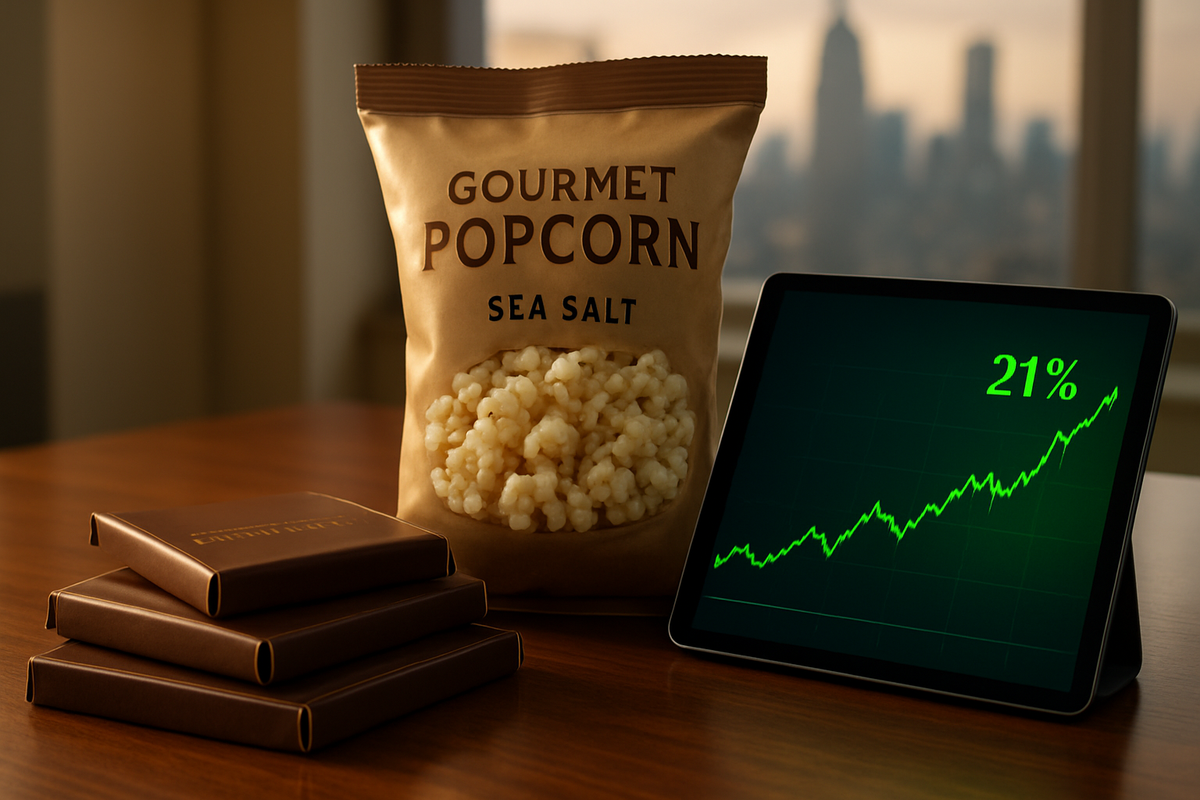
As the financial markets cross the midpoint of March 2026, The Hershey Company (NYSE: HSY) has emerged as one of the most compelling recovery stories in the consumer staples sector. After two years of grappling with unprecedented volatility in the commodities market, the confectionery giant’s stock has climbed a remarkable 21% year-to-date. This rally, which has pushed share prices into the $217–$235 range, signals a definitive shift in investor sentiment from caution to optimism as the company prepares for its highly anticipated Investor Day on March 31.
The surge is not merely a technical bounce but a reflection of Hershey’s successful navigation through a "perfect storm" of high input costs and shifting consumer habits. With gross margins beginning to stabilize following a period of intense compression, Wall Street is now looking toward the upcoming summit at the New York Stock Exchange to understand how CEO Kirk Tanner intends to transform the "Great American Chocolate Bar" company into a diversified, multi-category snacking powerhouse.
Resurrecting Margins from a Bitter Commodity Crisis
The path to Hershey’s current 21% YTD gain was paved with significant challenges, most notably the 2024–2025 cocoa crisis. During that period, cocoa futures skyrocketed to historic highs, peaking above $12,000 per metric ton due to severe crop disease and climate-driven supply failures in West Africa. This commodity spike dealt a heavy blow to Hershey’s bottom line, causing annual gross margins to plummet from a healthy 47.3% in 2024 to a sobering 33.5% in 2025. The company’s net income followed suit, dropping nearly 60% during what management termed its "reset year."
In response, Hershey leadership implemented a series of aggressive strategic pivots. The company realized 9%–10% in price increases through mid-2025, a move that tested brand loyalty but ultimately proved successful as consumers proved remarkably "sticky" even at higher price points. Simultaneously, the company launched its "AAA" (Agility, Automation, and Analytics) initiative, targeting $230 million in incremental savings for 2026. These internal efficiencies, combined with the moderation of cocoa spot prices to approximately $4,110 per ton in early 2026, have provided the fuel for the current stock rally.
The Winners and Losers of the Snacking Sector Reset
Hershey’s aggressive recovery has allowed it to outperform its primary competitors as of March 2026. While Mondelez International (NASDAQ: MDLZ) has posted a respectable 14% YTD gain, it remains hindered by a more conservative outlook. Mondelez’s heavy hedging strategy, which protected it during the initial stages of the cocoa spike, has ironically delayed its ability to benefit from the recent price normalization, with analysts expecting the full impact of lower costs to hit their books only in 2027.
Meanwhile, Nestle (OTC: NSRGY) has struggled to keep pace, with its stock remaining largely flat YTD. The Swiss conglomerate is currently in the midst of a painful restructuring under CEO Philipp Navratil, which has included cutting 16,000 positions globally and navigating a high-profile infant formula recall in early 2026. Hershey has capitalized on this period of competitor distraction by aggressively expanding into non-chocolate categories. The late 2025 acquisition of LesserEvil, an organic popcorn brand, for $750 million, alongside the 2024 purchase of Sour Strips, has successfully diversified Hershey's portfolio. Salty and "better-for-you" snacks now account for nearly 20% of the company's total revenue, reducing its sensitivity to future cocoa shocks.
Broader Significance: The Evolution of the "Unified Snacking" Model
Hershey’s recovery is indicative of a broader trend within the consumer packaged goods (CPG) industry: the move toward a "unified" commercial model. On March 16, 2026, just days before the current rally peaked, Hershey announced a major restructuring to integrate its Sweet, Salty, and Protein portfolios into a single U.S. commercial unit. This move is designed to streamline marketing and retail execution, allowing the company to capture "cross-aisle" opportunities that were previously missed under siloed operations.
This shift is also a defensive measure against the rise of GLP-1 weight-loss medications, which began impacting the snack industry's volume growth in 2025. By pivoting toward smaller "portion-controlled" packs and expanding into the protein and salty snack segments, Hershey is positioning itself to remain relevant to a more health-conscious consumer base. This strategy mirrors historical precedents where major tobacco and soda companies diversified into broader categories to mitigate regulatory and health-related headwinds.
What Lies Ahead: The March 31 Investor Day
The upcoming Investor Day at the New York Stock Exchange will be a "prove-it" moment for the 2026 recovery thesis. Investors are specifically looking for a roadmap that returns gross margins to the historic 45%+ range. While the moderation in cocoa prices is a tailwind, the company must demonstrate that it can maintain its higher price points without triggering a significant volume decline. CEO Kirk Tanner is expected to present a long-term growth algorithm targeting 2%–4% organic sales growth and mid-to-high single-digit EPS growth.
Potential challenges remain, however. If cocoa prices experience a secondary spike due to ongoing geopolitical instability in West Africa, or if the U.S. consumer finally reaches a "breaking point" regarding food inflation, the current 21% YTD gains could be vulnerable. Furthermore, the integration of the unified snacking unit carries execution risks that could lead to short-term logistical disruptions in the second half of 2026.
Final Assessment for Investors
The Hershey Company’s performance in the first quarter of 2026 represents a masterclass in crisis management and strategic adaptation. By balancing aggressive pricing with structural cost-cutting and a smart diversification into salty snacks, the company has managed to turn a commodity nightmare into a catalyst for institutional change. The 21% YTD rise suggests that the market has already "priced in" a successful margin recovery, leaving the onus on management to deliver during the March 31 presentation.
In the coming months, investors should closely monitor Hershey’s volume trends to ensure that the higher prices aren't eroding the core brand equity. Additionally, the pace at which high-cost cocoa inventory is flushed out of the system will be the primary driver of earnings beats or misses through the remainder of the year. For now, the "Sweet Rebound" appears to be on firm ground, but the true test will be Hershey's ability to maintain its momentum in an increasingly health-aware and price-sensitive retail environment.
This content is intended for informational purposes only and is not financial advice