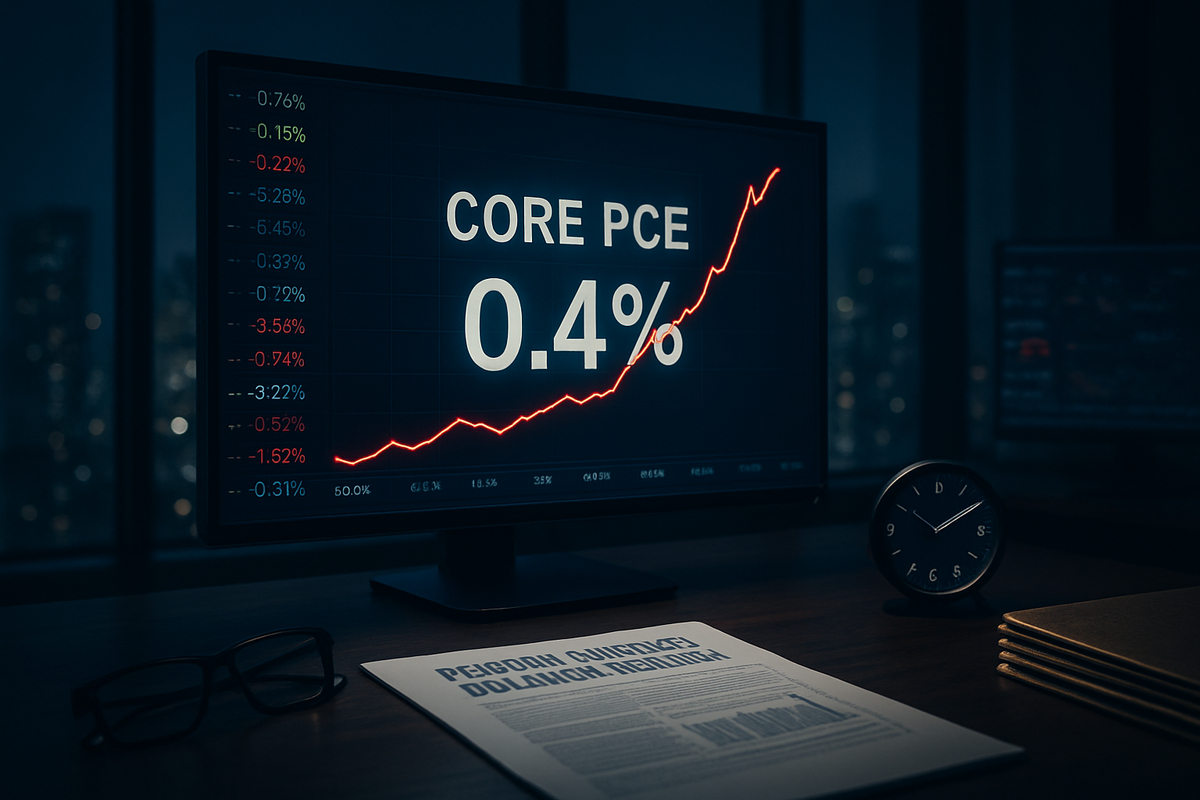
The Federal Reserve’s preferred inflation gauge, the Core Personal Consumption Expenditures (PCE) price index, delivered a sobering message to Wall Street this past Friday. Data released on March 13, 2026, revealed that core prices rose by 0.4% in January, a figure that matched the previous month’s high and signaled that the "last mile" of the inflation fight is proving to be a marathon. The reading has effectively dismantled the prevailing market narrative that a series of interest rate cuts would begin as early as May, forcing investors to grapple with a "higher-for-longer" reality that many had hoped was in the rearview mirror.
As the data permeated trading desks, the immediate implications were clear: the prospect of a spring pivot by the Federal Reserve is now a distant memory. By the close of the week, federal funds futures markets had aggressively repriced, shifting the consensus for the first rate reduction from June to September. With inflation figures remaining sticky and the labor market showing unexpected resilience, the central bank appears to have little incentive to ease its restrictive stance, leaving the broader economy to navigate a complex environment of elevated borrowing costs and persistent price pressures.
Persistent Pressures and the 0.4% Reality
The January Core PCE report, which excludes the volatile food and energy sectors, arrived on the heels of a similarly robust December, marking a period of sustained price increases that have caught policymakers’ attention. Year-over-year, the core index climbed 3.1%, the highest annual reading in nearly two years and well above the Federal Reserve's long-term 2% target. While headline inflation saw a modest tempering due to a temporary lull in energy prices earlier in the winter, the core data—often viewed as a more accurate predictor of future inflation trends—points to a structural stickiness in the services and healthcare sectors.
The timeline leading up to this release was marked by growing optimism throughout late 2025, as many analysts predicted that cooling rental costs and a stabilizing supply chain would bring the PCE closer to the target by early 2026. However, the "super-core" services index, which ignores housing as well as energy, rose by 0.4% in January alone. This surge was primarily driven by rising medical costs and professional services fees, reflecting a tight labor market where wage growth continues to feed into consumer pricing.
Key stakeholders, including Federal Reserve Chair Jerome Powell and various regional bank presidents, have spent the last several weeks signaling caution, but the market had largely ignored these warnings in favor of a more bullish outlook. This latest report has validated the Fed’s hawkish stance. Initial market reactions saw a sharp sell-off in short-term government bonds, with the 2-year Treasury yield—the most sensitive to interest rate expectations—climbing back toward levels not seen since the peak of the 2024 tightening cycle.
Winners, Losers, and the High-Rate Divide
In this prolonged high-interest-rate environment, the market is increasingly bifurcated between companies with fortress balance sheets and those reliant on cheap credit. The technology sector, led by giants like Nvidia Corp (NASDAQ: NVDA) and Microsoft Corp (NASDAQ: MSFT), has shown remarkable resilience. These firms continue to benefit from a secular boom in Artificial Intelligence and data center infrastructure. Because they possess significant cash reserves and command high margins, they are less vulnerable to the cost-of-capital pressures that plague smaller peers. For these "winners," the delay in rate cuts is an inconvenience rather than a fundamental threat.
Conversely, the retail and logistics sectors are feeling the pinch. Amazon.com Inc (NASDAQ: AMZN) and Walmart Inc (NYSE: WMT) are navigating a landscape where rising transportation costs—compounded by a 20% surge in gasoline prices due to Middle East tensions—are squeezing margins. Furthermore, low-to-middle-income consumers are increasingly "trading down" as the cumulative effect of inflation and high credit card interest rates erodes discretionary spending power. Retailers are finding it harder to pass on costs to a consumer base that is reaching its breaking point.
The healthcare sector is also seeing a mixed bag of results. While rising service costs contributed to the PCE spike, companies like UnitedHealth Group Inc (NYSE: UNH) are facing a delicate balancing act. While they can eventually raise premiums to match rising medical costs, the lag in doing so can temporarily depress earnings. Meanwhile, the banking sector, including JPMorgan Chase & Co. (NYSE: JPM) and Goldman Sachs Group Inc (NYSE: GS), remains in a state of flux. While higher rates can boost net interest income, the prolonged lack of volatility in the investment banking space and the threat of rising loan defaults in commercial real estate continue to weigh on long-term outlooks.
The Macro Picture: Geopolitics and Policy Shifts
The January PCE data does not exist in a vacuum; it fits into a broader, more volatile economic trend that some analysts are beginning to label "soft stagflation." The convergence of persistent 3% inflation and a projected peak in the unemployment rate of 4.6% suggests that the Federal Reserve's dual mandate of price stability and maximum employment is being pulled in opposite directions. This is further complicated by recent geopolitical shifts, specifically the escalating conflict in the Middle East that has sent Brent crude forecasts toward the $100-per-barrel mark. Every sustained 10% increase in oil prices is estimated to add 0.04 percentage points to the core PCE, creating an external inflationary pressure that the Fed cannot control through interest rates alone.
Policy implications from the 2025 Reconciliation Act and newly implemented broad-based tariffs have also begun to manifest in the data. These fiscal measures, aimed at bolstering domestic manufacturing, have the unintended side effect of keeping import prices high. Historically, such "sticky" periods of inflation have often required a more significant economic slowdown to fully break the cycle. Comparisons are already being drawn to the late 1970s, where several "false dawns" of cooling inflation were followed by secondary spikes that necessitated even more aggressive central bank intervention.
Furthermore, the "wealth effect" among high-income households remains a significant driver of service inflation. Despite stock market volatility, home equity and investment portfolios remain near historic highs, allowing the top 20% of earners to continue spending on travel, dining out, and luxury services. This divergence in consumer behavior makes the Fed's job increasingly difficult, as the segments of the economy most sensitive to interest rates are already struggling, while the segments driving inflation remain relatively insulated.
Navigating the Road to September
Looking ahead, the road to a more accommodative monetary policy is fraught with obstacles. In the short term, investors should expect continued volatility as every subsequent economic data point—from non-farm payrolls to the Consumer Price Index (CPI)—is scrutinized for signs of a cooling or heating economy. If February and March data mirror January’s core strength, the conversation may shift from "when will the Fed cut?" to "is the Fed’s current rate high enough?" While a rate hike remains a remote possibility, the mere suggestion of it could trigger significant market corrections.
Strategic pivots are already underway among institutional investors. We are seeing a shift toward defensive positioning, with an increased focus on "quality" stocks—those with low debt and reliable dividends. The "growth-at-any-price" mentality of the early 2020s has been replaced by a rigorous focus on valuation and cash flow. For corporations, the strategy for the remainder of 2026 will likely involve aggressive cost-cutting and a focus on operational efficiency to preserve margins in an environment where the cost of debt is no longer a rounding error.
Closing Thoughts for the Informed Investor
The January PCE report is a stark reminder that the battle against inflation is far from over. The 0.4% core increase has reset the clock for the markets, pushing the dream of a spring rate cut into the latter half of the year. The key takeaway for investors is that the "Goldilocks" scenario—where inflation vanishes without an economic slowdown—is becoming increasingly unlikely. Instead, the market must learn to thrive in a more traditional economic environment where money has a real cost and growth must be earned through productivity rather than liquidity.
Moving forward, the primary metric to watch will be the "super-core" services inflation. Until that figure begins to show a consistent downward trend, the Federal Reserve is unlikely to blink. Investors should also keep a close eye on geopolitical developments in the Middle East, as energy prices remain the largest "wild card" for the 2026 economic outlook. While the current data is a setback for those hoping for an immediate rally, it also provides a clearer, albeit more difficult, map of the economic terrain for the months ahead.
This content is intended for informational purposes only and is not financial advice.