Axon Enterprise (NASDAQ: AXON) has solidified its position as the undisputed leader of the public safety technology sector, reporting a massive 39% year-over-year revenue beat for the fourth quarter of 2025. The company announced on February 24, 2026, that quarterly revenue reached $797 million, significantly outpacing Wall Street’s consensus estimate of $755 million. This performance was anchored by an aggressive pivot toward artificial intelligence and high-margin subscription services, which have transformed the former hardware manufacturer into a dominant software-as-a-service (SaaS) powerhouse.
The immediate market reaction was swift and decisive. Shares of Axon surged between 16% and 19% in the following trading sessions as investors digested the company’s robust 2026 guidance and a staggering $14.4 billion backlog in contracted bookings. Beyond the headline numbers, the report signals a fundamental shift in how law enforcement and emergency services operate, with technology now serving as a critical solution to the chronic staffing shortages and administrative burdens facing agencies globally.
A Breakthrough Quarter Driven by Software and AI
The fourth quarter of 2025 was defined by the rapid adoption of Axon’s integrated ecosystem. While hardware remains a vital entry point, the real story lies in the Software & Services segment, which grew 40% year-over-year to $343 million. This growth was fueled by the scaling of "Draft One," an AI-powered tool that automatically generates initial police reports from body-worn camera audio. By early 2026, Draft One has become a central piece of the Axon value proposition, with some agencies reporting a reduction in administrative paperwork of up to 80%, allowing officers to spend more time on community patrol.
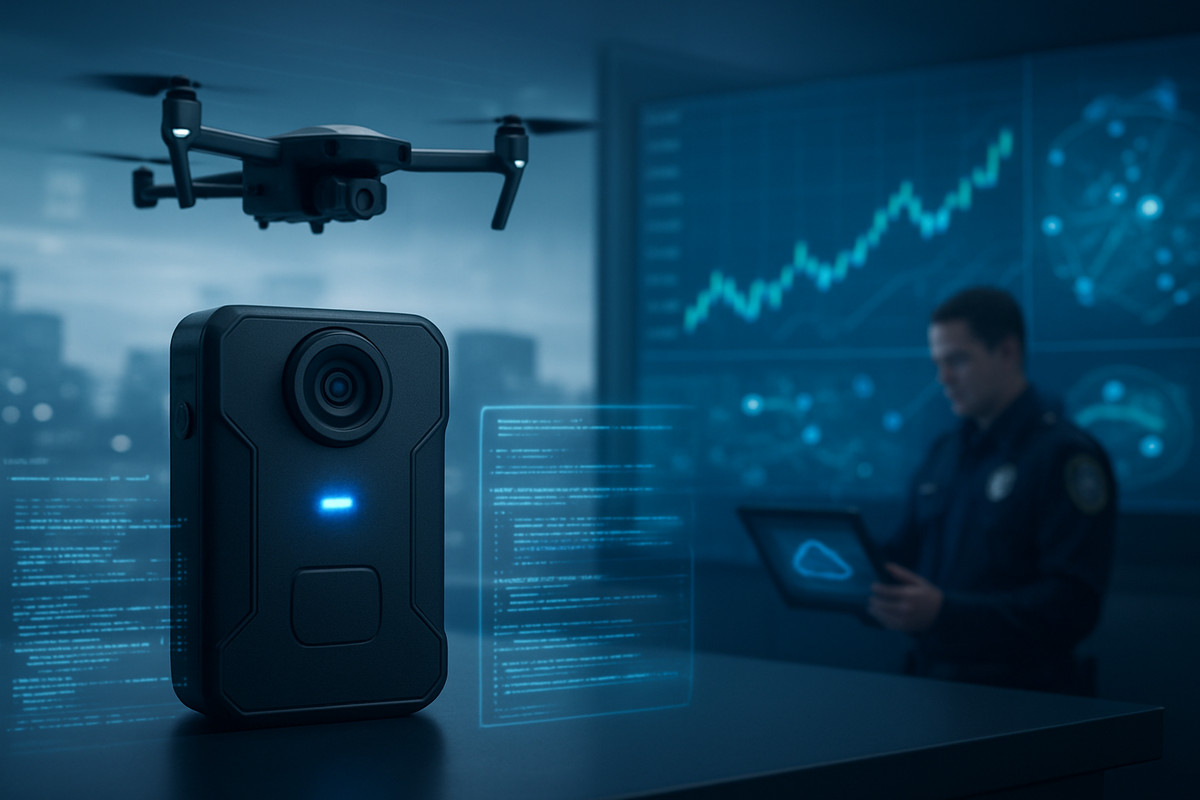
The hardware side of the business also saw significant momentum with the continued rollout of the TASER 10 and the Axon Body 4 camera. These devices are no longer viewed as standalone tools but as sensors within a broader network. Annual Recurring Revenue (ARR) surpassed $1.3 billion, a 35% increase from the previous year, while the Net Revenue Retention (NRR) climbed to 125%. This indicates that existing customers are not just staying with Axon but are aggressively expanding their spend to include new AI capabilities and cloud-based data management through Axon Evidence.
The timeline leading up to this earnings beat was marked by strategic R&D investments and a series of tactical acquisitions in the drone and flight-tracking space. These moves allowed Axon to capitalize on the "Drones as First Responders" (DFR) trend, which has moved from experimental pilots to a standard operational procedure in 76% of large U.S. law enforcement agencies by early 2026. Management's ability to cross-sell these advanced technologies into their existing base of over 10,000 agencies has created a "revenue moat" that few competitors can breach.
The Ecosystem War: Winners, Losers, and the Competition
Axon’s dominance in the Q4 report places it in a league of its own, but it also highlights the widening gap between "ecosystem" providers and pure-play hardware vendors. The primary winner remains Axon itself, which has successfully transitioned its valuation from a cyclical hardware provider to a high-multiple growth tech company. However, the ripple effects are felt across the industry. Motorola Solutions (NYSE: MSI), a long-time incumbent in the public safety radio and video space, remains a formidable competitor but increasingly finds itself defending its territory against Axon’s aggressive expansion into CAD (Computer-Aided Dispatch) and records management systems.
On the losing side of this shift are legacy hardware manufacturers and smaller regional tech firms that lack the capital to compete with Axon’s $1 billion-plus annual R&D budget. Companies that focus solely on "dumb" cameras or traditional TASER alternatives are finding it difficult to secure contracts as procurement officers increasingly prioritize integrated data workflows. For these smaller players, the barrier to entry is no longer the physical device, but the massive cloud infrastructure and AI processing power required to manage the petabytes of data generated by modern police departments.
Stakeholders such as municipal governments and taxpayers are also key players in this narrative. While Axon’s subscription costs are substantial, the ROI is being framed through the lens of labor efficiency. With nearly 65% of police departments reporting personnel shortages in early 2026, the ability to "automate" the role of a report writer or a dispatcher through AI is becoming a fiscal necessity rather than a luxury. This has shifted the bargaining power toward Axon, as their products are now viewed as essential infrastructure rather than discretionary equipment.
Beyond the Body Cam: The Broader Shift in Public Safety
The surge in Axon’s valuation and revenue fits into a broader industry trend where public safety is becoming a data-centric enterprise. Historically, policing was a manual, paper-heavy profession. The 2025 results confirm that the "Digitization of the Shield" is now complete. Axon’s success mirrors the path taken by companies like Salesforce or Palantir Technologies (NYSE: PLTR), which embed themselves deeply into the operational fabric of their clients, making the cost of switching prohibitively high.
This shift toward AI-driven policing is not without regulatory and policy implications. As Axon scales its "Draft One" and facial recognition-adjacent technologies, legislative scrutiny regarding AI bias and data privacy is reaching a fever pitch. However, Axon has been proactive in establishing ethics boards and "human-in-the-loop" requirements for its AI products, a strategy that has so far neutralized significant regulatory pushback and allowed for faster adoption than more controversial tech sectors.
Furthermore, the "Drones as First Responders" (DFR) movement represents a major historical precedent. Just as the introduction of the patrol car in the early 20th century revolutionized response times, the integration of drones and real-time situational awareness software is redefining the first-mile response. Axon’s ability to own the software layer that manages these drones—linking them directly to 911 dispatch—positions the company as the primary operating system for the modern smart city.
The 2026 Trajectory: Scaling to the "North Star"
Looking forward through the remainder of 2026, Axon has set an ambitious trajectory. Management issued guidance for 27% to 30% revenue growth for the full year, the strongest initial outlook in the company’s history. This is part of a broader "North Star" strategy aimed at reaching $6 billion in annual revenue by 2028. To achieve this, Axon will likely need to continue its international expansion, as the U.S. market for body cameras nears saturation, and the focus shifts to software upgrades and secondary international markets in Europe and Asia.
However, the path is not without obstacles. Analysts have pointed to potential margin pressures stemming from global tariffs and the rising cost of high-performance memory chips and sensors. While Axon’s shift to software helps insulate its margins, the hardware component remains the "trojan horse" that gets the software into the agency. Additionally, recent insider selling by top executives, while common in high-growth companies, has prompted some caution among institutional investors regarding the short-term ceiling for the stock’s valuation.
The next 12 to 18 months will likely see Axon pivot more heavily into "Axon 911" and real-time operations centers. The goal is to move from being a record-keeping company (post-incident) to a real-time intervention company (during incident). This evolution will require significant strategic adaptations in how the company handles real-time data streaming and will likely lead to further partnerships with telecommunications giants and cloud providers.
A Large-Cap Growth Story with Staying Power
Axon Enterprise’s Q4 2025 results mark a transition point where the company has moved from a speculative "safety tech" play to a foundational large-cap growth stock. With a 39% revenue beat and a massive $14.4 billion backlog, the financial health of the organization is at an all-time high. The key takeaway for the market is that public safety is no longer just about hardware; it is about the intelligent application of data to solve the most pressing human capital crises in government.
Moving forward, investors should keep a close eye on the adoption rates of the "Draft One" AI software and the expansion of Adjusted EBITDA margins, which are targeted at 25.5% for 2026. The ability to maintain these margins in the face of inflationary pressures will be the ultimate test of Axon’s pricing power. As the company marches toward its $6 billion revenue goal, its status as the "Microsoft of Public Safety" seems increasingly secure.
In the coming months, the focus will shift to how well Axon can navigate the international regulatory landscape and whether it can maintain its innovation pace as it scales. For now, the Q4 beat serves as a powerful reminder that in an era of labor shortages and rising complexity, technology that provides "more eyes and fewer pens" is a winning formula for both agencies and shareholders alike.
This content is intended for informational purposes only and is not financial advice