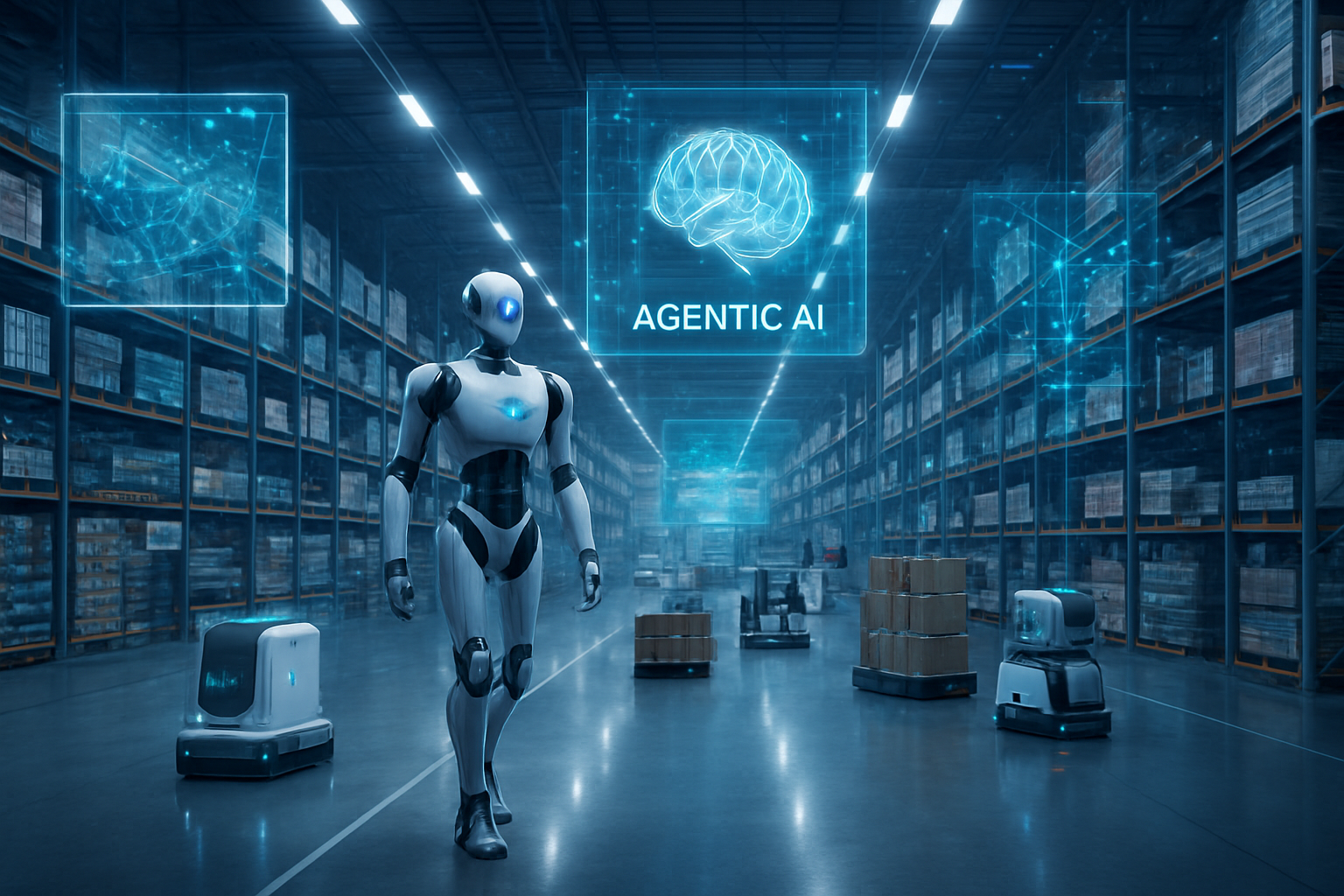
BENTONVILLE, AR — As of February 25, 2026, the retail landscape has reached a historic turning point. Walmart (NYSE: WMT) has officially crossed the $1 trillion market capitalization threshold, a milestone fueled not just by grocery sales, but by its emergence as a global leader in "Agentic AI" and autonomous logistics. By integrating advanced data analytics and predictive modeling into every facet of its operations, the retail giant has effectively solved the age-old "out-of-stock" problem, setting a new gold standard for the industry’s modernization.
The immediate implications are profound. Walmart’s shift toward a tech-first infrastructure has allowed it to grow sales by 5% over the past fiscal year while keeping inventory growth to a lean 2.6%. This surgical precision in supply chain management has fundamentally altered consumer expectations, as the company now reaches 95% of the U.S. population with sub-three-hour delivery windows. The "Walmart Effect" is no longer just about low prices; it is now about absolute availability and predictive fulfillment.
The Rise of the "Self-Healing" Supply Chain
The catalyst for this transformation was a series of aggressive technological deployments initiated between 2024 and early 2025. At the heart of this shift is "Wally," a proprietary Merchant AI Agent that identifies the root causes of inventory imbalances in real-time. Unlike traditional software that merely flags a shortage, Wally autonomously analyzes local weather patterns, social media trends, and logistical bottlenecks to reroute stock before a shelf ever goes empty. This "Self-Healing Inventory System" was credited with saving the company over $55 million in waste during its 2025 rollout, particularly within the volatile perishables category.
The timeline of this evolution reached a crescendo on February 1, 2026, when John Furner officially succeeded Doug McMillon as President and CEO. Furner, the architect of Walmart’s "Adaptive Retail" strategy, has overseen the completion of an automated distribution network that now services 60% of all U.S. stores. This transition was supported by the launch of "Scintilla In-Store" in early 2026, a platform providing field representatives with live, granular data to ensure replenishment occurs exactly when and where it is needed.
Market reactions have been overwhelmingly bullish. Analysts at major firms have noted that Walmart’s pivot from "probabilistic predictions" to "precision decision-making" has reduced out-of-stock rates by an unprecedented 20–25%. The integration of Ambient IoT technology through a partnership with Wiliot has further solidified this, with Walmart on track to track 90 million pallets in real-time by the end of 2026.
Winners and Losers in the AI Arms Race
Walmart’s (NYSE: WMT) dominance has created a ripple effect across the sector, identifying clear winners in the tech-retail ecosystem. Microsoft (NASDAQ: MSFT) and Alphabet Inc. (NASDAQ: GOOGL) have emerged as essential partners; Walmart utilizes Microsoft’s Azure OpenAI Service to power its internal "super agents" and Google’s Gemini for "Agentic Commerce" integrations. Smaller, specialized firms like Pactum AI have also seen a surge in relevance as their chatbots now handle autonomous negotiations with thousands of Walmart's mid-tier suppliers, achieving cost savings that were previously unreachable.
However, the rapid shift has placed immense pressure on competitors. Target (NYSE: TGT) has chosen a "human-centric" counter-strategy, investing $100 million in its "Store-as-Hub" model and AI-enabled sortation centers to compete on speed without the same level of capital intensity as Walmart. While Target’s strategy focuses on improving the "baseline experience," it faces a widening gap in predictive capabilities. Amazon (NASDAQ: AMZN), meanwhile, has responded by doubling down on its "Robot Nation" initiative, allocating $200 billion to infrastructure and its new "Sequoia" warehouse system. For smaller regional retailers, the cost of entry for this level of AI integration is becoming a barrier that may lead to further market consolidation.
The Broader Significance: "Agentic Commerce" and the Regulatory Shadow
This event marks the beginning of the "Retail 4.0" era, where AI has transitioned from a backend tool to an autonomous operator. Walmart’s success is a blueprint for how legacy companies can use "Agentic AI" to bypass the inefficiencies of human-led logistics. Historically, retailers struggled with the "last-mile" problem; Walmart has countered this by turning its 4,700 stores into high-tech fulfillment nodes, effectively monetizing its physical proximity to the American consumer in a way that digital-only players cannot match.
Yet, this progress is not without friction. The rise of "surveillance pricing"—where AI adjusts costs based on individual shopper data—has sparked a legislative firestorm. The proposed "Stop Price Gouging Act of 2026" and New York’s "Preventing Algorithmic Pricing Discrimination Act" are direct responses to the data-driven strategies Walmart and others are employing. Furthermore, the debate over labor displacement has intensified. As 65% of Walmart’s stores become serviced by automation, labor unions are increasingly demanding "AI Consultation Rights," and states are considering tax incentives to tie corporate relief to employee upskilling programs.
What Comes Next: The Path to $2 Trillion
In the short term, Walmart is expected to refine its "Trend-to-Product" engine, an AI-driven system that identifies emerging consumer needs on social media and shrinks the timeline from product concept to shelf-placement from months to weeks. The company’s focus will likely shift toward "Ambient AI" in the home, using its "Sparky" GenAI assistant to manage household inventory automatically for Walmart+ subscribers.
Strategic pivots may be required as federal AI regulations crystallize. Investors should watch for how Walmart navigates the potential ban on certain algorithmic pricing models and whether it can successfully transition its warehouse workforce into more technical roles without significant labor unrest. The emergence of a "Certified Upskilling" model could become a necessary prerequisite for maintaining its current growth trajectory.
The Bottom Line
Walmart’s transformation into an AI-native powerhouse is more than a corporate success story; it is a fundamental shift in the global supply chain. By crossing the $1 trillion mark on the back of autonomous logistics and predictive analytics, Walmart has proven that the future of retail belongs to those who can master "proximity dominance" through technology.
Moving forward, the market will be defined by the tension between AI efficiency and regulatory oversight. For investors, the key metrics to watch over the coming months will be the continued reduction in unit costs and the speed of the "Trend-to-Product" cycle. Walmart has set the pace for the modernization of the retail sector, and the rest of the market is now in a race to catch up before the gap becomes permanent.
This content is intended for informational purposes only and is not financial advice.