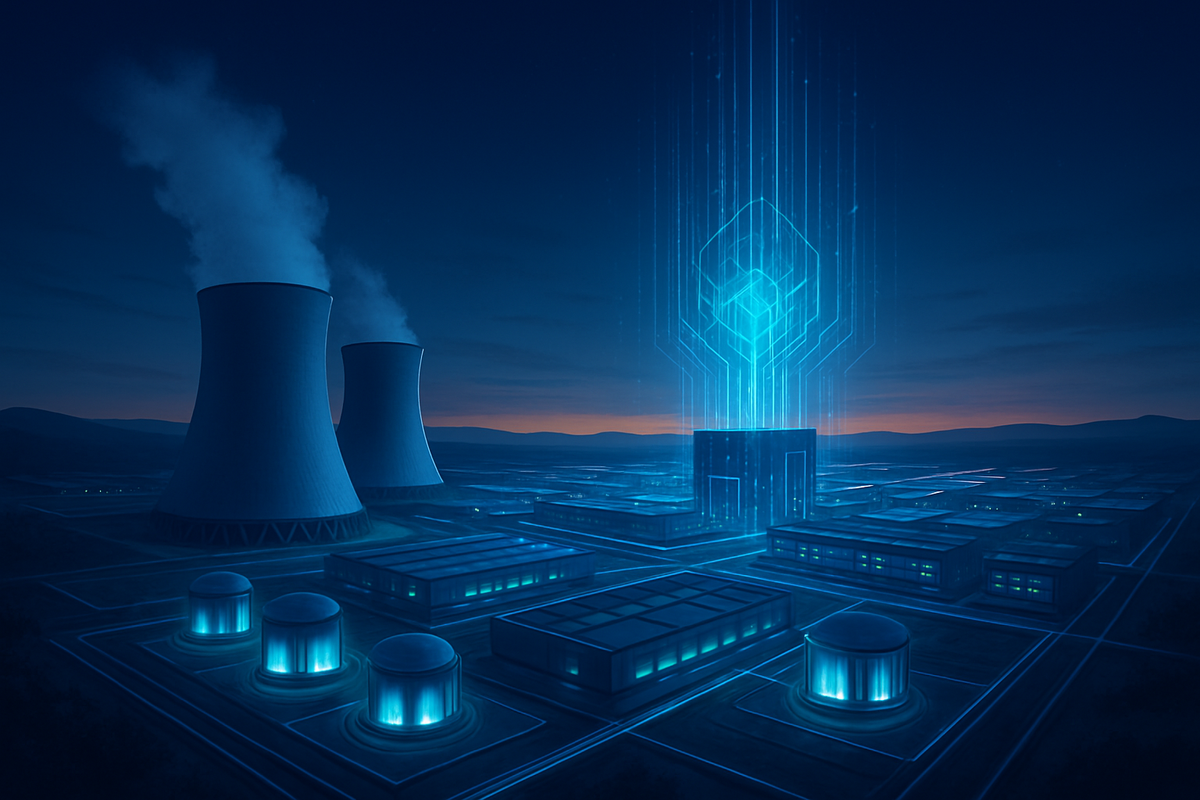
In a move that solidifies the "Nuclear Renaissance" as the defining energy trend of the decade, Meta Platforms (NASDAQ: META) has announced a series of landmark nuclear energy agreements aimed at powering its burgeoning artificial intelligence infrastructure. On January 9, 2026, the company unveiled a massive 6.6-gigawatt (GW) nuclear procurement strategy, effectively positioning itself as one of the world's largest corporate purchasers of carbon-free, 24/7 baseload power. This strategic pivot follows a year of mounting pressure on Big Tech firms to solve the "AI power paradox"—the reality that the electricity required for next-generation generative AI models is far outstripping the capacity of existing wind and solar grids.
The immediate implications of these deals are profound, signaling a shift from experimental interest in nuclear energy to large-scale, long-term operational integration. By securing power through the mid-2030s, Meta is attempting to insulate its AI roadmap from the volatility of the broader energy market and the physical constraints of the U.S. electrical grid. For the nuclear industry, these contracts provide the multi-billion-dollar capital commitments necessary to modernize aging facilities and accelerate the deployment of advanced reactor technologies that have lingered in the developmental phase for years.
The Ohio Power Play: Meta’s Triple-Threat Strategy
The centerpiece of Meta’s announcement is a three-pronged partnership involving established utility giants and innovative startups. Following a Request for Proposals (RFP) issued in late 2024, Meta has signed a historic 20-year power purchase agreement (PPA) with Vistra Corp (NYSE: VST) for over 2,600 megawatts (MW) of nuclear energy. This deal encompasses power from the Perry and Davis-Besse plants in Ohio and the Beaver Valley plant in Pennsylvania. Notably, the agreement includes funding for 433 MW of "uprates"—physical upgrades to existing reactors to increase their output—marking the largest corporate-backed capacity expansion in the history of the U.S. nuclear fleet.
Beyond existing infrastructure, Meta is betting heavily on the future of advanced nuclear technology. The company has entered a strategic partnership with Oklo Inc (NYSE: OKLO) to develop a 1.2 GW advanced nuclear power campus in Pike County, Ohio. This project will utilize Oklo’s "Aurora" powerhouse reactors, with Meta providing early-stage procurement funding and prepaying for power to fast-track construction, which is slated to begin later this year. Additionally, Meta has committed to a massive 2.8 GW project with the Bill Gates-backed TerraPower, involving the deployment of up to eight Natrium advanced reactors. These units feature molten salt energy storage, allowing them to function as "nuclear batteries" that can surge output during peak demand.
This aggressive procurement timeline is directly linked to Meta’s "Prometheus" AI supercluster located in New Albany, Ohio. First revealed in July 2025, Prometheus is a 1-gigawatt AI supercomputer cluster that Mark Zuckerberg has described as the "engine room" for the company’s personal superintelligence initiatives. With Prometheus expected to become fully operational in 2026, Meta’s deals with Vistra and Oklo provide a direct pipeline of reliable power to the very region where its most energy-intensive assets are located.
Market Winners: The Nuclear "Gold Rush" for VST and OKLO
The financial markets reacted sharply to the news, with nuclear-linked stocks seeing significant gains. For Vistra Corp, the deal is a transformative validation of its "nuclear-heavy" strategy. By securing a 20-year PPA with a credit-worthy counterparty like Meta, Vistra has gained the financial certainty required to pursue license renewals for its aging plants, potentially extending their operational lives by another two decades. Analysts suggest this deal sets a new floor for the valuation of existing nuclear assets, which are increasingly viewed as "irreplaceable infrastructure" in the AI era.
Oklo Inc stands as perhaps the biggest winner in the advanced nuclear space. For a company that was once viewed as a speculative play on Small Modular Reactors (SMRs), the 1.2 GW Meta partnership provides the commercial "anchor" needed to move from pilot projects to industrial-scale deployment. The prepayment structure of the deal significantly de-risks Oklo’s capital expenditure requirements, a perennial hurdle for nuclear startups. This move also puts pressure on other SMR competitors to secure similar "hyperscaler" partnerships or risk being left behind in the race for site permits and supply chain priority.
However, the "losers" in this scenario may be smaller industrial players and regional utilities that lack the deep pockets of Big Tech. As Meta, Microsoft (NASDAQ: MSFT), and Amazon (NASDAQ: AMZN) lock up gigawatts of nuclear capacity, there are growing concerns about "power crowding." If the most reliable carbon-free energy is reserved for data centers, smaller businesses and residential consumers may be left with more intermittent renewable sources or more expensive fossil-fuel-based "peaker" plants, potentially leading to higher regional electricity costs and regulatory friction.
A Broader Trend: Big Tech’s "Manhattan Project" for Energy
Meta’s move is the latest and largest in a series of dominoes falling across the tech sector. In 2024 and 2025, we saw Microsoft partner with Constellation Energy (NASDAQ: CEG) to restart the Three Mile Island Unit 1, and Google (NASDAQ: GOOGL) sign a deal with Kairos Power for a fleet of SMRs. This trend signifies a fundamental shift in how the world’s most powerful companies view their supply chains. In the 2010s, tech companies bought carbon offsets and wind credits; in the 2020s, they are becoming direct financiers and operators of the energy grid itself.
This "Manhattan Project" for energy is driven by the sheer physics of AI. Unlike traditional cloud computing, training and running Large Language Models (LLMs) requires a constant, massive "baseload" of electricity that cannot be interrupted by a cloudy day or a lack of wind. Nuclear energy is the only carbon-free source capable of meeting this demand at scale. This has led to a rare moment of alignment between Silicon Valley, the nuclear industry, and federal regulators. The U.S. government has increasingly signaled support for streamlining the permitting process for SMRs and extending the lives of existing plants, viewing the marriage of AI and nuclear power as a matter of national economic competitiveness.
Historically, the nuclear industry has been plagued by cost overruns and decades-long construction delays. However, the involvement of tech giants brings a "move fast" mentality and, more importantly, a willingness to pay a premium for speed and reliability. This is fundamentally changing the economics of nuclear power, shifting the burden of financial risk from the public taxpayer to the private tech shareholder.
What Comes Next: The Long Road to Commissioning
While the headlines are monumental, the physical reality of nuclear power moves at a much slower pace than software development. The short-term challenge for Meta will be managing the "gap years" between 2026 and 2030. While some of the Vistra capacity is existing and can be diverted relatively quickly, the new builds from Oklo and TerraPower are not expected to contribute significantly to the grid until the early 2030s. Meta will likely need to continue relying on a mix of natural gas and renewable credits in the interim, which could complicate its "net zero" climate pledges.
Long-term, the success of these deals hinges on regulatory execution. The Nuclear Regulatory Commission (NRC) remains a bottleneck, and any safety setback or significant delay in the first wave of SMR deployments could sour the market’s appetite. Investors should watch for the "first concrete pour" at the Oklo site in Ohio as a key milestone. If these advanced reactors can be built on time and on budget—something the nuclear industry has historically struggled with—it will pave the way for a massive expansion of the technology worldwide.
Furthermore, we may see Meta and its peers move even further "upstream." There is already speculation that tech companies might begin investing directly in uranium mining and enrichment facilities to secure their entire fuel supply chain. The strategic pivot required for a social media company to become a nuclear energy stakeholder is massive, but in the era of AI, energy is the ultimate currency.
Conclusion: The New Foundation of the Digital Age
Meta’s 6.6 GW nuclear commitment marks a point of no return for the technology industry. By tethering its future to the atom, Meta is acknowledging that the path to artificial intelligence is paved with massive amounts of physical energy. The deal is a windfall for Vistra and a life-line for the advanced nuclear sector, represented by Oklo and TerraPower, providing the commercial validation and capital needed to move beyond the laboratory.
For the market, this event signals that the "AI trade" is no longer just about chips and software; it is increasingly about the infrastructure that keeps the lights on. Moving forward, investors should closely monitor the progress of these nuclear projects and the potential for similar deals from other energy-hungry sectors like heavy manufacturing and green hydrogen production.
The lasting impact of Meta’s atomic ambitions will be measured not just in stock prices, but in the stability of the U.S. electrical grid and the pace of AI innovation. As the first reactors from these deals come online at the turn of the decade, we will see if the marriage of 20th-century physics and 21st-century code can truly deliver on the promise of the AI revolution.
This content is intended for informational purposes only and is not financial advice.