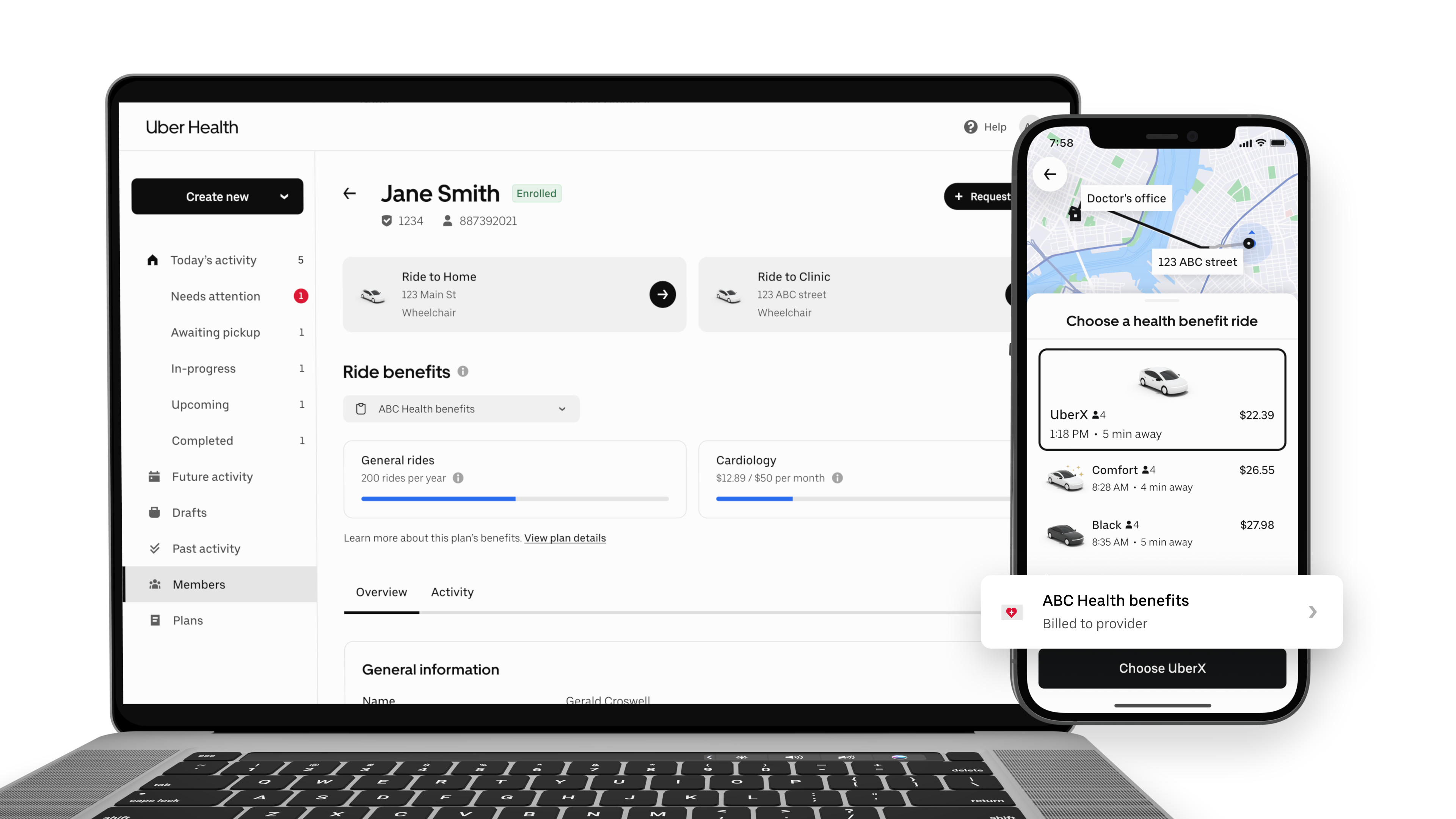
SAN FRANCISCO, Feb. 24, 2026 (GLOBE NEWSWIRE) -- Uber Health today announced the launch of its rider self-booking feature, a new platform capability that enables healthcare and disability service organizations to offer their riders the ability to book their own organization-funded trips directly in the Uber app. The launch marks the latest milestone in Uber Health’s efforts to modernize patient and nonmedical transportation (NMT) to make healthcare more accessible, convenient, and easy to navigate.
Self-booking is already in pilots with leading healthcare providers and systems, including Ronald McDonald House New York, which is leveraging the capability to seamlessly coordinate transportation for families, with transportation costs funded directly by RMH-NY as part of its donor-supported programs. It is also in pilots with leading organizations serving the intellectual and developmental disabilities (I/DD) communities.
Rider self-booking enables healthcare systems, providers, and entities serving the I/DD community to create and fund rides programs through the Uber Health dashboard. With customizable parameters for trip distance, ride limits, and eligibility, including the ability to set annual budgets as well as rules by location categories—allowing rides only to medical facilities, for example—organizations maintain full visibility and oversight while riders enjoy a seamless self-booking experience.
“We understand the challenges healthcare organizations face when it comes to transportation, and know that Uber Health’s scale and reliability can help address them head-on,” said Jen Shepherd, Global Head of Uber Health. “Rider self-booking offers riders more autonomy and control while giving health systems, providers, I/DD organizations, and Financial Management Services (FMS) a simpler and more reliable way to manage their transportation programs without the administrative stress.”
The new capability offers major benefits to both healthcare providers and I/DD organizations, while addressing persistent operational industry challenges.
Benefits For Healthcare Providers & Systems
Front desk staff and schedulers have historically shouldered the burden of booking rides on behalf of end users. Rider self-booking shifts this model by drastically reducing the number of individual coordinators needed to manage a transportation policy, freeing staff to focus on higher-value care coordination while helping reduce operational costs.
In addition to reducing administrative workload, self-booking can also help boost care continuity and health outcomes for patients. Riders can request rides on-demand close to their appointment times, with rides arriving in as little as 10 minutes, and early pilot results show an 86% reduction in trip cancellation or driver/rider missed connection rates.
Benefits For I/DD Organizations
Managing individual transportation budgets has historically required manual reimbursement processes and receipt tracking, creating significant administrative complexity. Self-booking helps reduce this burden and simplify budget oversight. And for I/DD individuals, convenient, on-demand transportation to jobs, appointments, community centers, and errands provides more day-to-day agency and autonomy. These riders can also opt into a streamlined “Simple mode” with larger text, fewer buttons, and simplified navigation for enhanced accessibility; and choose what they want to communicate to their driver under the accessibility settings in the app—whether that’s a hearing impairment, vision impairment, or requiring a service animal.
Across both use cases, one-time policy setup, predefined ride restrictions, and shared funding controls help reduce fraud, waste, and abuse (FWA) while maintaining high standards for safety, compliance, and program visibility. And to support an intuitive rider experience, riders can use the Uber app on their own phones to view eligibility, track usage, and manage trips independently—all without needing a credit card for self-booked rides covered through their provider.
Importantly, healthcare providers, systems, and I/DD organizations can still continue to book transportation on behalf of riders if needed or preferred. These coordinator trips can draw from riders’ pre-set trip limits or spend budget, creating a flexible way to support many types of riders and track all usage in one unified setting; once organizations have set limits and/or budgets, as riders take those trips, both coordinators and the riders themselves can track what remains.
For more information about rider self-booking, see here.
About Uber Health
We believe in a world where engaging with your healthcare is simple and convenient. Built on Uber's expertise, scale and reliability, Uber Health delivers an expansive platform that makes ancillary healthcare benefits — spanning transportation, prescription delivery and grocery delivery — easy to understand and even easier to use. Today, over 4,000 healthcare organizations use Uber Health to streamline care coordination, improve the patient experience and drive better health outcomes.
Uber Health Media Contact
press@uber.com
A photo accompanying this announcement is available at https://www.globenewswire.com/NewsRoom/AttachmentNg/68d2dfc0-778d-4d02-a005-c73de0d73d9d