In the industrial landscape of 2026, a clear boundary has emerged in 3D scanning: while high-precision stationary scanners remain the gold standard for lab-based precision manufacturing, the "wireless revolution" is conquering the field.
For heavy machinery, infrastructure, and non-movable assets, traditional cabled devices often fall short. The shift to wireless is not meant to replace controlled laboratory measurements of small parts; rather, it is a strategic necessity for large-scale objects in situ. By removing physical constraints, wireless scanners have become the standard for on-site inspection, allowing efficiency and flexibility to flow freely across the heavy industrial floor.
Why Industrial Measurement Demands Wireless Solutions
In modern industrial scenarios, wireless functionality is a "must-have" for three core reasons:
- Large-Scale Part Measurement: When scanning wind turbine blades or aircraft wings, tethered devices are restricted by cable length, creating safety hazards and snagging risks.
- Confined & Complex Spaces: Inside engine bays or intricate piping, cables severely limit dexterity. Wireless freedom allows for 360° scans without blind spots.
- Harsh & Field Environments: On construction sites or assembly lines, the ability to operate without external power or bulky workstations enables true "grab-and-go" scanning.
Core Benefits: Mobility to break spatial boundaries, Safety to protect personnel and equipment, and Efficiency to slash setup times.
Leading Wireless Technologies in 2026
The market currently utilizes three primary wireless architectures:
|
Type |
Technical Approach |
Key Features |
Best Use Case |
|
Wireless Module |
Wi-Fi 6 / 5G transmission |
High precision; relies on workstation computing |
Large molds, automotive assembly |
|
Standalone |
Built-in GPU/CPU & screen |
No PC required; real-time on-device rendering |
On-site reverse engineering, quick quality control |
|
Wireless Tracking |
Optical tracker + Wireless probe |
Eliminates the need for markers (targets) |
Aerospace, large-scale rail transit |
Top-Tier Metrology Scanners: The 2026 Elite List
1. SHINING 3D: The Pioneer of Wireless Innovation
SHINING 3D has long been a frontrunner in the wireless metrology race, consistently pushing the boundaries of what a handheld device can do.
- FreeScan Omni: This flagship stands as the industry’s first metrology-grade standalone scanner capable of handling the entire workflow—from scanning to final inspection—on a single standalone terminal. With its integrated screen and CNAS-certified accuracy, it is the ultimate tool for inspecting immobile objects in the field.

- FreeScan Trak Nova: For massive structures, the Trak Nova offers metrology-grade tracking without pasting markers. By using a dynamic optical tracking system, it delivers superior volumetric accuracy and stability, making it the "efficiency king" for large-scale industrial assembly.
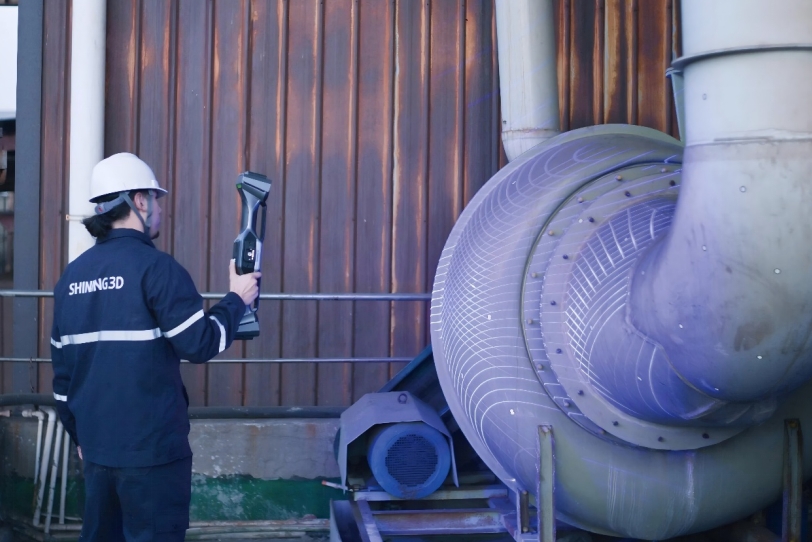
- Certified Precision for Quality Control: Unlike consumer-grade portable solutions, both the Omni and Trak Nova are engineered for rigorous Quality Control (QC) environments. They are fully compliant with international metrology standards, including ISO 10360 and VDI/VDE 2634, ensuring that every data point is traceable and reliable for high-stakes deviation analysis and dimensional inspection.
2. CREAFORM: The Speed & Portability Standard
Creaform continues to dominate the "true portability" segment with its HandySCAN series, specifically the 2026 EVO Elite generation.
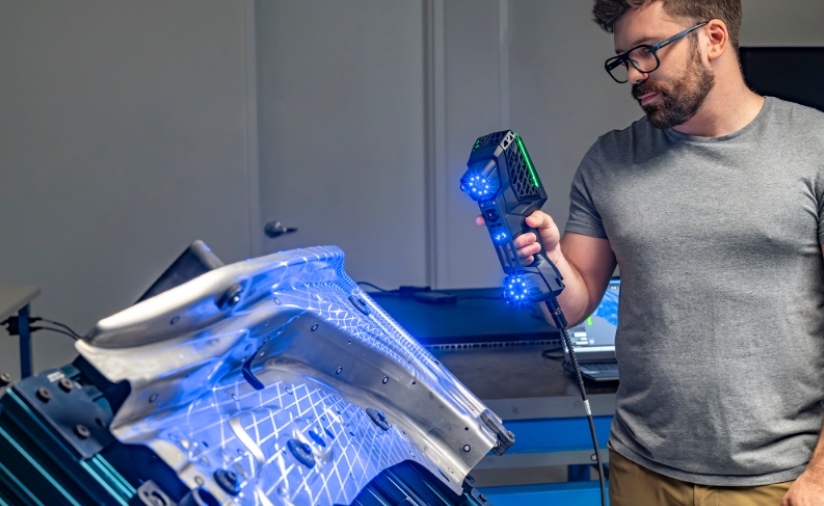
- Onboard Intelligence: The EVO Elite features a color LCD onboard screen for real-time feedback, moving the brand closer to a fully standalone experience by displaying key metrics directly on the device.
- TRUportability™ via Mobility Kit: While the scanner itself remains a powerhouse of precision, its wireless freedom is unlocked through the dedicated Mobility Kit. This external battery and wireless communication link allow users to sever the cord to the laptop, providing a tether-free experience for up to several hours of continuous site work.
- Factory-Floor Resilience: Weighing less than 1kg and featuring ISO 17025 accredited calibration, it is designed for the most demanding QA/QC workflows. Its dynamic referencing allows both the scanner and the part to move during the process without losing accuracy, making it perfect for the vibrating environments of active factory floors.
3. ARTEC 3D: The Standalone Visionary
The Artec Leo remains the most intuitive "all-in-one" scanner on the market, having pioneered the concept of a scanner with a built-in "brain."
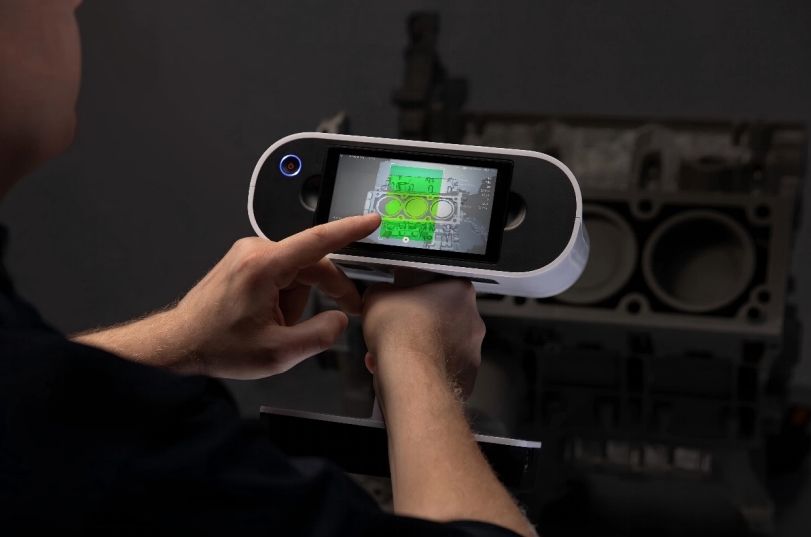
- NVIDIA-Powered Autonomy: With an onboard NVIDIA Jetson processor and a 5.5" HD tilt-screen, the Leo acts like a professional video camera for 3D data. You can see the 3D model built in real-time as you walk around the object.
- The Go-To for Reverse Engineering: While its high-speed VCSEL structural light excels at capturing complex geometry and organic textures for reverse engineering and rapid digitization, it is designed for agility rather than the ultra-strict, traceable metrology required for heavy-duty QC inspection. Its strength lies in "capture-and-go" workflows where speed and surface detail take precedence over micron-level deviation reporting.
Conclusion: Choosing Your Path
The transition to wireless metrology is about removing barriers—not just physical cables, but the constraints on where and how precision can be applied. Whether it’s the all-in-one inspection power of the SHINING 3D FreeScan Omni, the markerless tracking of the FreeScan Trak Nova, the proven mobility of Creaform EVO, or the intuitive autonomy of Artec Leo, the industry has reached a turning point.
The goal is no longer just about capturing data; it is about achieving absolute accuracy with zero constraints. By selecting the wireless path that fits your specific workflow, you are embracing a more agile, responsive, and data-driven manufacturing future.
Media Contact
Company Name: SHINING 3D
Email: Send Email
Country: China
Website: https://www.shining3d.com/