As of March 3, 2026, AutoZone, Inc. (NYSE: AZO) stands as a titan of the American retail landscape, embodying a "boring but beautiful" investment thesis that has consistently outperformed sexier tech-driven growth stories. While the broader market often fixates on Artificial Intelligence and the next frontier of software, AutoZone has quietly built a multi-decade empire on the back of brake pads, batteries, and alternators.
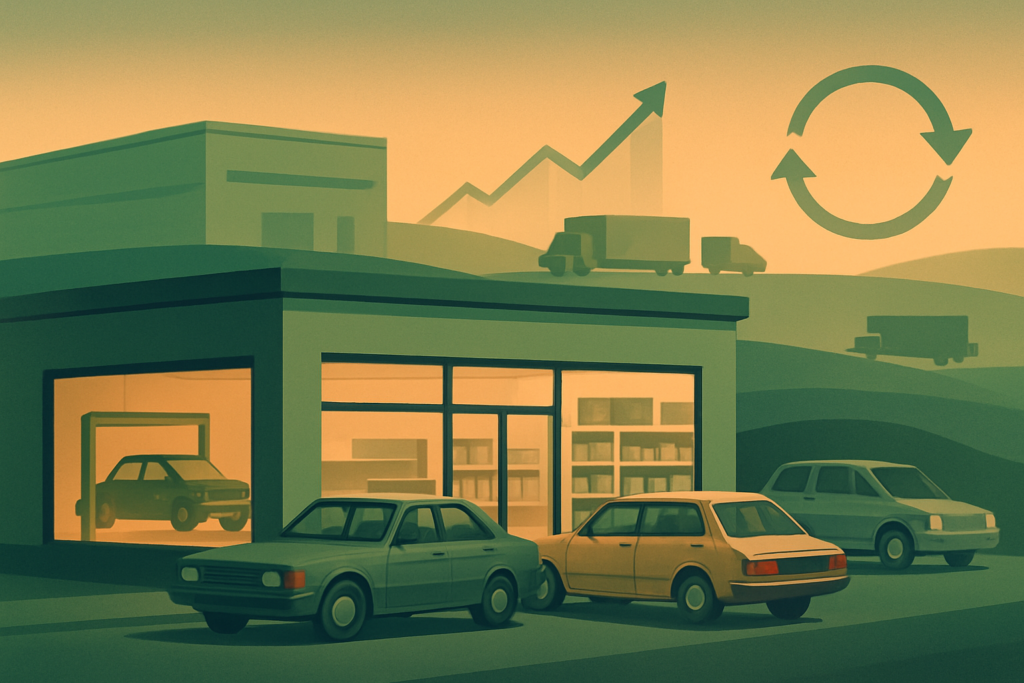
In a world defined by economic uncertainty and fluctuating consumer confidence, AutoZone remains a premier "recession-resistant" play. The company’s relevance in 2026 is underscored by a unique macro-economic environment: high new-vehicle prices and elevated interest rates have forced consumers to hold onto their cars longer than ever before. This "repair-not-replace" mentality has turned AutoZone’s orange-and-black storefronts into essential infrastructure for the American commuter.
Historical Background
The AutoZone story began in 1979 in Forrest City, Arkansas, originally launched as a division of wholesale grocer Malone & Hyde. Founded by J.R. "Pitt" Hyde III, the first store operated under the name "Auto Shack." Hyde’s vision was simple yet revolutionary: bring the organized, customer-centric retail experience of a supermarket to the gritty, disorganized world of automotive parts.
The company rebranded to AutoZone in 1987 after a legal dispute with Radio Shack and went public on the New York Stock Exchange in 1991. Over the decades, AutoZone transformed from a regional DIY (Do-It-Yourself) shop into a sophisticated logistics powerhouse. Key milestones include the 1996 acquisition of ALLDATA (automotive diagnostic software), which gave the company a foothold in the professional repair market, and the 1998 launch of its aggressive share repurchase program—a strategy that would define its financial identity for the next quarter-century.
Business Model
AutoZone operates a high-margin, cash-generative business model focused on the automotive aftermarket. Its revenue is primarily split between two categories:
- DIY (Do-It-Yourself): Traditionally AutoZone’s bread and butter, accounting for roughly 75% of revenue. This segment serves individual car owners performing their own maintenance.
- DIFM (Do-It-For-Me) / Commercial: This segment services professional garages and mechanics. While historically smaller than its rival O’Reilly Automotive (NASDAQ: ORLY), AutoZone has spent the last five years aggressively expanding its commercial footprint.
The engine of this model is a sophisticated "hub-and-spoke" distribution network. Large "Mega-Hubs" carry over 100,000 unique parts, feeding smaller satellite stores multiple times a day. This ensures that when a customer walks in for a niche part for a 15-year-old truck, AutoZone likely has it in stock or can get it within hours—a critical competitive advantage in a "need-it-now" industry.
Stock Performance Overview
AutoZone’s stock performance is a masterclass in shareholder value creation. As of early March 2026, the stock trades at approximately $3,869.12.
- 1-Year Performance: The stock has seen a solid 10.6% gain over the past twelve months. Despite some volatility in late 2025 due to tariff concerns, the stock rebounded strongly in early 2026 following better-than-expected earnings.
- 5-Year Performance: Investors who bought in early 2021 have seen their capital grow by ~226.5%, vastly outstripping the S&P 500.
- 10-Year Performance: Over the last decade, AZO has delivered a compound annual growth rate (CAGR) of nearly 20%. This performance is not just due to sales growth but a relentless reduction in the share count. AutoZone is famously a "share cannibal," having retired nearly 30% of its outstanding shares over the last ten years, significantly boosting Earnings Per Share (EPS).
Financial Performance
In its Q2 2026 earnings report, released today (March 3, 2026), AutoZone reported net sales of $4.27 billion, an 8.1% increase year-over-year. Domestic same-store sales grew by a healthy 3.4%, while international markets showed even stronger double-digit growth.
The company’s financial profile is unique due to its negative shareholder equity (currently around -$3.4 billion). This is not a sign of distress, but a deliberate capital structure choice. AutoZone uses its massive free cash flow and strategic debt to buy back its own stock, essentially returning all retained earnings and more to shareholders.
- Margins: Operating margins remain industry-leading at approximately 20%.
- EPS: Q2 2026 GAAP EPS was $27.63, beating analyst estimates of $27.42.
- Debt: Total debt stands at ~$8.6 billion, with management maintaining a disciplined adjusted debt-to-EBITDAR ratio of 2.5x.
Leadership and Management
In January 2024, Phil Daniele took the helm as CEO, succeeding long-time leader Bill Rhodes, who now serves as Chairman. Daniele is a 30-year AutoZone veteran, having risen through the ranks in merchandising and supply chain roles. His leadership has been characterized by a focus on "velocity"—improving the speed of delivery to commercial customers to close the gap with competitors.
The management team, including CFO Jamere Jackson, is widely respected on Wall Street for its disciplined execution and unwavering commitment to the "AutoZone Playbook": driving sales, managing expenses, and returning excess cash to shareholders.
Products, Services, and Innovations
AutoZone’s core product line revolves around hard parts (alternators, starters, brakes), maintenance items (oil, filters), and accessories. Its private-label brand, Duralast, is one of the most recognized and trusted names in the aftermarket, providing high margins and customer loyalty.
Innovation at AutoZone in 2026 is less about "gadgets" and more about logistics and data. The company is currently rolling out its "Next-Day Delivery" capability to nearly 100% of the U.S. population. Furthermore, its proprietary Z-net software helps both DIYers and commercial technicians identify the exact parts needed for complex repairs, reducing return rates and improving service speed.
Competitive Landscape
The "Big Three" of the auto parts world—AutoZone, O'Reilly Automotive (ORLY), and Advance Auto Parts (NYSE: AAP)—dominate the market, but their fortunes have diverged.
- AutoZone vs. O'Reilly: O'Reilly has historically led in the commercial (DIFM) space. However, AutoZone is narrowing that gap by expanding its Mega-Hub network to 200 locations.
- AutoZone vs. Advance Auto Parts: AZO has been a major beneficiary of AAP’s recent struggles. As Advance Auto Parts shuttered stores and divested assets (like Worldpac) in 2024 and 2025, AutoZone successfully captured displaced customers and increased its market share.
Industry and Market Trends
The primary tailwind for AutoZone is the aging U.S. vehicle fleet. In early 2026, the average age of a light vehicle on American roads reached a record 13.0 years.
- The Sweet Spot: The most profitable period for parts retailers is when a vehicle is between 6 and 14 years old—the window when major components begin to fail but the car is still worth repairing. The "peak sales" years of 2014-2019 have now moved squarely into this sweet spot, providing a guaranteed demand floor for the next several years.
Risks and Challenges
Despite its dominance, AutoZone faces several headwinds:
- Electric Vehicle (EV) Transition: EVs have fewer moving parts (no spark plugs, oil filters, or mufflers). While the transition is slower than initially predicted, it represents a long-term structural risk to the internal combustion engine (ICE) parts business.
- Accounting Volatility: Recent LIFO (Last-In, First-Out) non-cash charges, totaling nearly $100 million in late 2025, have occasionally muddied GAAP earnings results.
- Tariff Exposure: With a significant portion of parts sourced from overseas, any escalation in global trade tensions or new import tariffs can squeeze gross margins.
Opportunities and Catalysts
- International Growth: Mexico and Brazil represent the company’s most exciting growth frontier. With 913 stores in Mexico and a rapidly scaling presence in Brazil (152 stores), these markets offer higher growth rates than the mature U.S. market.
- Commercial Expansion: AutoZone currently holds only about 4-5% of the highly fragmented commercial market. If it can successfully leverage its Mega-Hubs to gain even a few more percentage points of share, the revenue upside is multi-billion dollar.
Investor Sentiment and Analyst Coverage
Wall Street remains largely bullish on AZO. Institutional ownership is high, with major firms like Vanguard and BlackRock holding significant stakes. Analysts frequently cite AutoZone as a "top pick" for defensive portfolios. While some retail investors are deterred by the high nominal share price (over $3,800), the company’s refusal to split the stock is seen by many as a signal of its focus on long-term, institutional-quality compounding.
Regulatory, Policy, and Geopolitical Factors
Regulatory focus on "Right to Repair" laws is a significant tailwind for AutoZone. These laws ensure that independent shops and DIYers have access to the diagnostic data and parts needed to fix modern cars, preventing manufacturers from monopolizing repairs. Conversely, tightening environmental regulations and mandates for EV adoption remain the primary policy-driven risks that management must navigate over the coming decade.
Conclusion
AutoZone, Inc. remains a cornerstone of the automotive economy. By March 2026, the company has proven that its "share cannibal" financial strategy, paired with a focus on the aging vehicle fleet, is a winning formula. While the shift toward vehicle electrification looms on the distant horizon, the immediate future for AutoZone is bright, fueled by international expansion and a revitalized push into the commercial market. For investors, the takeaway is clear: as long as Americans are driving older cars, AutoZone’s orange-and-black signs will likely continue to represent one of the most reliable engines of wealth in the retail sector.
This content is intended for informational purposes only and is not financial advice. 3/3/2026.