As of March 3, 2026, the global energy landscape is undergoing a period of intense volatility and strategic recalibration. At the center of this storm sits Marathon Petroleum Corporation (NYSE: MPC), the largest independent refiner in the United States. While the broader market grapples with the transition to a low-carbon economy and the immediate fallout of geopolitical tensions in the Middle East, Marathon Petroleum has emerged as a fortress of capital discipline and operational efficiency.
The company is currently in focus not just for its massive refining footprint, but for its role as a "capital return machine." Under a newly minted leadership team and a strategy refined over a decade of consolidation, MPC has positioned itself to capture outsized margins during supply shocks while maintaining a defensive moat through its midstream partnership, MPLX LP (NYSE: MPLX). With the stock trading near all-time highs and a recent CEO transition signaling continuity rather than disruption, investors are closely watching whether Marathon can sustain its "golden age" of profitability amidst a shifting regulatory and geopolitical tide.
Historical Background
Marathon Petroleum’s history is a story of strategic evolution and massive scaling. While the "Marathon" name dates back to the late 19th century as part of the Ohio Oil Company (a Standard Oil offshoot), the modern MPC was forged in 2011 when it was spun off from Marathon Oil Corporation. This independence allowed the downstream entity to focus exclusively on refining, marketing, and logistics.
The defining moment of the last decade came in 2018 with the $23 billion acquisition of Andeavor (formerly Tesoro), which transformed MPC into the largest refiner in the U.S. and provided a critical gateway to West Coast markets. This was followed by the transformative 2021 sale of its Speedway retail chain to 7-Eleven for $21 billion. The Speedway divestiture was a masterstroke of corporate strategy; rather than reinvesting in low-margin retail growth, the board used the proceeds to launch one of the most aggressive share repurchase programs in corporate history, retiring nearly 30% of its outstanding shares in just a few years.
Business Model
Marathon Petroleum operates a diversified downstream energy business model bifurcated into two primary segments:
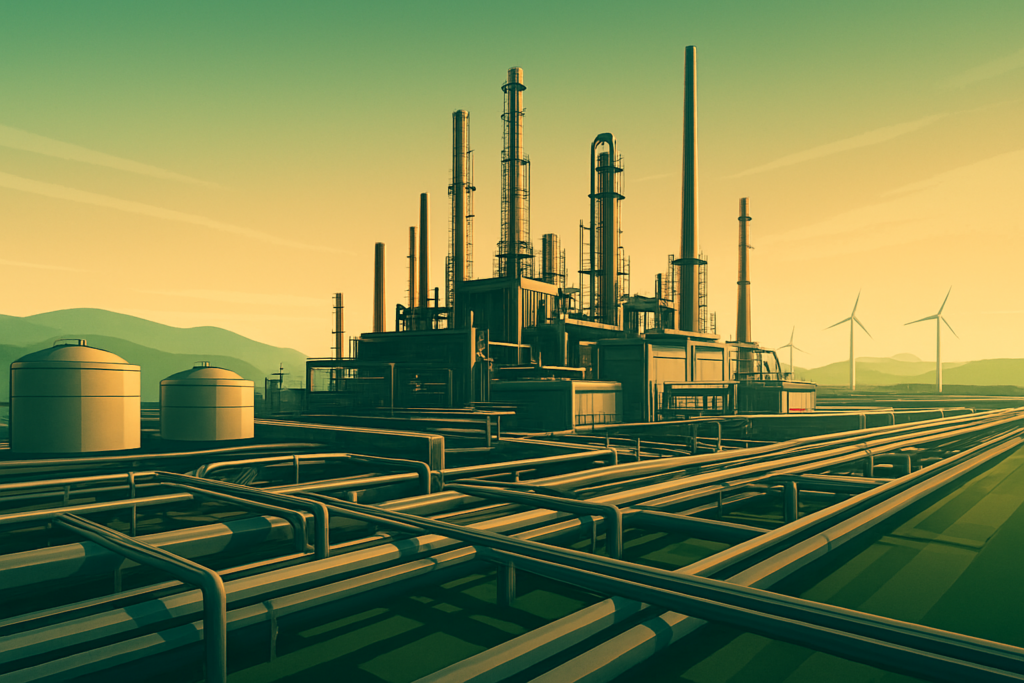
- Refining & Marketing: This is the company’s core engine, consisting of 13 refineries with a combined crude oil throughput capacity of approximately 3.0 million barrels per day (mbpd). These assets are strategically located across the Gulf Coast, Midwest, and West Coast, allowing the company to optimize feedstock costs and reach diverse end-markets.
- Midstream: Conducted primarily through its majority ownership in MPLX LP, this segment includes a vast network of pipelines, terminals, and natural gas processing plants. The midstream business provides a stable, fee-based cash flow stream that often offsets the inherent volatility of refining margins.
The company’s customer base ranges from wholesale fuel distributors and airlines to industrial users. By integrating its refining operations with a massive logistics network, MPC captures value at every stage of the hydrocarbon molecule’s journey from the wellhead to the fuel tank.
Stock Performance Overview
Marathon Petroleum has been a standout performer in the energy sector over the last decade. As of March 3, 2026, the stock trades at $209.82, having recently touched a 52-week high of $210.42.
- 1-Year Performance: The stock has surged approximately 28% over the past twelve months, significantly outpacing the S&P 500. This was driven by persistent tightness in global diesel markets and a series of "beat-and-raise" earnings quarters.
- 5-Year Performance: Long-term shareholders have seen a staggering return of over 280%. In early 2021, MPC was trading in the $50 range; its ascent to over $200 marks one of the most successful turnarounds in the post-pandemic energy landscape.
- 10-Year Performance: Including reinvested dividends, MPC’s total return exceeds 750%, placing it in the top tier of all industrial stocks. This performance is largely a result of the company’s "Value over Volume" strategy, which prioritized shrinking the share count over expanding refining capacity.
Financial Performance
Financial results for the full year 2025, reported in February 2026, underscore the company’s "cash cow" status.
- Earnings: In Q4 2025, MPC reported adjusted net income of $1.2 billion, or $4.07 per share, handily beating analyst consensus.
- Revenue: Annual revenue for 2025 exceeded $130 billion, supported by high utilization rates (95%) and a best-in-class refining margin capture of 105%.
- Cash Flow & Buybacks: The company generated over $14 billion in net cash from operations in 2025. True to its mandate, it returned $4.5 billion to shareholders during the year.
- Balance Sheet: With a debt-to-capital ratio maintained below 30% and a cash hoard of nearly $6 billion, MPC enters 2026 with one of the strongest balance sheets in the industry.
Leadership and Management
On January 1, 2026, MPC underwent a seamless leadership transition. Maryann T. Mannen, formerly the company’s President and CFO, succeeded Michael Hennigan as Chairman, President, and CEO.
Mannen is widely respected by Wall Street for her role as the architect of MPC’s capital allocation framework. Her appointment signals a "continuity play"—a commitment to the disciplined spending and aggressive shareholder returns that defined the Hennigan era. The board, composed of industry veterans and former executives from across the energy and logistics sectors, remains focused on operational rigor and ESG integration without sacrificing the core profitability of the refining segment.
Products, Services, and Innovations
While traditional gasoline and diesel remain the bread and butter, MPC is aggressively pivoting toward "Refining 2.0."
- Renewable Fuels: The Martinez Renewables facility in California, a 50/50 joint venture with Neste (HEL: NESTE), is now fully operational at its capacity of 730 million gallons per year. This, along with the Dickinson facility, makes MPC a global leader in renewable diesel.
- High-Margin Upgrades: In 2026, the company is deploying $1.5 billion in capital, not for new refineries, but for "margin enhancement" projects. This includes a new high-pressure distillate hydrotreater at the Galveston Bay refinery to produce ultra-low sulfur diesel and upgrades at the Garyville facility to maximize premium gasoline exports.
- Digitalization: The company’s "Refinery of the Future" initiative uses AI and predictive maintenance to reduce unplanned downtime, which MPC estimates has added roughly $0.50 per barrel to its capture rate.
Competitive Landscape
MPC competes in an oligopolistic market against other refining giants like Valero Energy Corporation (NYSE: VLO) and Phillips 66 (NYSE: PSX).
- Versus Valero: While Valero is often cited as the "pure-play" refining leader with a superior renewable diesel footprint (through Diamond Green Diesel), MPC’s integration with MPLX gives it a more stable valuation floor during refining downturns.
- Versus Phillips 66: PSX is more diversified, with a massive chemicals business (CPChem). However, MPC has recently outperformed PSX in refining "capture rates," demonstrating better operational execution in its core plants.
- Competitive Edge: MPC’s primary edge is its scale and its location in the PADD 2 (Midwest) and PADD 3 (Gulf Coast) regions, which benefit from access to cheap Canadian and Permian crudes.
Industry and Market Trends
As of March 2026, the refining industry is navigating a "Year of Volatility."
- The "Middle Distillate" Crunch: Global diesel and jet fuel inventories remain at historical lows. Western refinery closures in 2024-2025 have left the market vulnerable to supply shocks.
- U.S. Advantage: U.S. refiners currently enjoy a massive competitive advantage over European peers due to lower natural gas and electricity prices. In 2026, the cost to run a refinery in the U.S. is nearly 70% lower than in the EU on an energy-adjusted basis.
- EV Impact: While EV adoption is slowing gasoline demand growth, the impact on "heavy" products like diesel and aviation fuel remains negligible, supporting MPC's shift toward distillate-heavy production.
Risks and Challenges
Despite the stellar performance, several headwinds loom:
- Regulatory Compliance (RINs): The cost of Renewable Identification Numbers (RINs) remains a volatile expense. Any tightening of EPA mandates for 2026-2027 could squeeze margins.
- Operational Risk: Refining is an inherently dangerous high-pressure business. Any major fire or unplanned outage at a Tier-1 facility like Galveston Bay could significantly impact quarterly earnings.
- Feedstock Costs: The recent geopolitical flare-up in the Middle East has spiked Brent crude prices. While refiners generally benefit from high prices (due to higher crack spreads), an overly high oil price can lead to "demand destruction" at the pump.
Opportunities and Catalysts
- The "Strait of Hormuz" Premium: The late-February 2026 closure of the Strait of Hormuz has sent global crack spreads into the $30-$40 range. As a domestic U.S. refiner with no direct exposure to the Persian Gulf, MPC stands to benefit immensely from this global product scarcity.
- M&A Potential: With a massive cash pile, analysts speculate that MPC could look to acquire smaller, niche refining assets or further increase its stake in midstream logistics.
- MPLX Restructuring: There is persistent chatter about a potential full roll-up of MPLX, which could simplify the corporate structure and unlock further valuation upside.
Investor Sentiment and Analyst Coverage
Wall Street remains overwhelmingly bullish on MPC. Out of 24 analysts covering the stock, 19 maintain a "Buy" or "Strong Buy" rating. The median price target sits at $204.00, though recent geopolitical events have prompted several firms to revise targets toward the $225.00 mark.
Institutional ownership remains high, with Vanguard and BlackRock holding significant positions. Retail sentiment is also positive, often fueled by the company’s consistent dividend growth and the psychological benefit of the massive buyback program, which creates a perceived "floor" for the stock price.
Regulatory, Policy, and Geopolitical Factors
The current geopolitical situation—specifically the Operation Epic Fury strikes in February 2026 and the subsequent naval blockade in the Middle East—has redefined the energy landscape. These events have highlighted the strategic importance of U.S. refining independence.
On the domestic front, the EPA’s "Set 2" final rule for the Renewable Fuel Standard (RFS) is expected by late March. Investors are bracing for higher biomass-based diesel targets, which would favor MPC's Martinez facility but potentially increase costs for its traditional refining units. Additionally, the ongoing debate over carbon border adjustments could eventually favor efficient U.S. refiners over higher-emitting international competitors.
Conclusion
Marathon Petroleum Corporation stands at the apex of the U.S. downstream sector as we move through early 2026. By successfully pivoting from a growth-at-all-costs model to a framework of strict capital discipline and shareholder returns, the company has delivered generational wealth to its long-term investors.
While the transition to a greener economy presents long-term existential questions, MPC’s current strategy focuses on the "bridge" period—harvesting massive cash flows from traditional hydrocarbons while building a scalable renewable footprint. In an era of heightened geopolitical risk and energy insecurity, MPC’s 3-million-barrel-per-day capacity is not just a corporate asset; it is a critical pillar of Western energy logistics. Investors should remain watchful of refining margins and RINs costs, but for now, the "Marathon" continues with a clear path forward.
This content is intended for informational purposes only and is not financial advice. Today’s date: 3/3/2026.