LOS ANGELES, CA / ACCESS Newswire / March 18, 2026 / TransAstra, a Los Angeles-based space infrastructure company, is conducting an investor- and customer-funded study to define a mission to capture a small near-Earth asteroid for use in space industries.
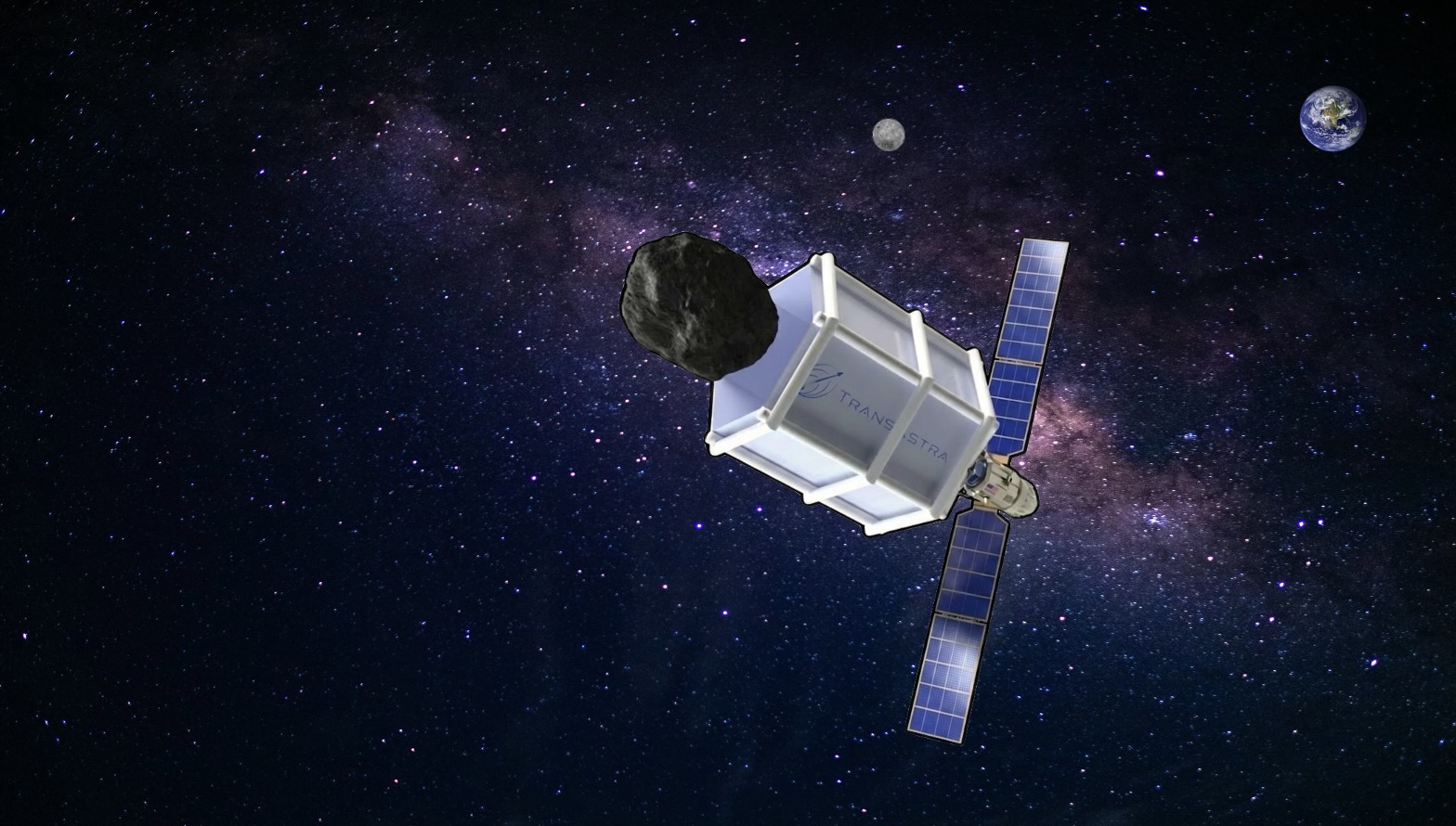
Working with the University of Central Florida, Purdue University and NASA's Jet Propulsion Laboratory, the "New Moon" project is analyzing the engineering, scientific and economic feasibility of relocating an approximately 100-ton asteroid into a safe orbit near Earth.
The study will examine mission architecture, spacecraft systems, asteroid trajectories and potential orbital destinations as part of a broader effort to enable future resource utilization in space.
"This feasibility study lays the groundwork for accessing space resources close to Earth and could open the door to an industrial revolution in space," said Joel Sercel, chief executive officer of TransAstra.
The concept envisions identifying a suitable small asteroid, constraining it with a capture system, and maneuvering it into a stable orbit near Earth, where it can be studied and eventually processed for materials. TransAstra expects the first asteroid capture mission could launch as early as this decade, with a potential rendezvous in 2028 or 2029.
"For 60 years, we've explored the solar system by launching everything we needed from Earth," Sercel said. "Moving an asteroid into a controlled orbit would demonstrate that we can begin using the resources already available in space so humanity can operate sustainably beyond Earth."
Scientists have long viewed near-Earth asteroids as potential sources of fuel, metals and construction materials that could support sustained activity in space, said Dr. Robert Jedicke, an astronomer at the University of Hawaii's Institute for Astronomy who specializes in detecting and tracking near-Earth objects.
"Some of these bodies contain metals we can use for manufacturing or water that can be converted into rocket propellant, and all contain inert material that can provide radiation shielding for spacecraft and crews," Jedicke said.
Access to such resources could fundamentally change how missions beyond Earth orbit are supplied and sustained, added Dr. Daniel Britt, Pegasus Professor of Astronomy and Planetary Sciences at the University of Central Florida. "The population of asteroids TransAstra identified represents some of the most accessible material in the solar system," Britt said. "If we can learn to use resources that already exist in space, it reduces the need to launch everything from Earth, marking a major step toward a sustainable space economy."
"We estimate roughly 260 small asteroids - each up to about 20 meters in diameter - could be accessible targets for future missions," Sercel said. "That suggests about a million tons of usable material may be within reach."
TransAstra has spent more than a decade developing technologies for detecting, capturing and processing asteroids and has received contracts from U.S. government agencies including NASA, the U.S. Air Force and the U.S. Space Force.
TransAstra demonstrated elements of this technology during an experiment aboard the International Space Station in October 2025, testing its Capture Bag system's ability to secure objects in microgravity.
"The New Moon mission is the natural next step after more than a decade of research and development," said Dr. Thibaud Talon, chief engineer at TransAstra. "Our team now holds 23 patents covering the key technologies required for asteroid mining, including detection, capture, movement and processing of space resources."
The technology could also have applications closer to Earth. Because the same system used to enclose an asteroid can secure irregular or tumbling objects, it could also capture large pieces of orbital debris that threaten satellites and other spacecraft.
Interest in asteroid mining is also growing among national security planners because space resources could support future infrastructure beyond Earth orbit. Materials derived from asteroids could support propellant depots, in space manufacturing and radiation shielding for spacecraft operating in cislunar space and beyond.
In a Feb. 5, 2026, article in SpaceNews, Maj. Gen. Stephen Purdy, military deputy to the assistant secretary of the Air Force for space acquisitions, noted that the U.S. Space Force is beginning to pay closer attention to companies developing asteroid mining technologies.
"That was a community I didn't really pay attention to a couple of years ago," Purdy said. "Now I'm paying attention."
TransAstra expects to complete the New Moon mission study by May 2026.
CONTACT:
Caleb Freeman Sacker
calebsacker@transastra.com
9496164522
SOURCE: Trans Astronautica Corporation
View the original press release on ACCESS Newswire